By Don Urquhart, Times Chronicle
To share this story click here to generate a link.
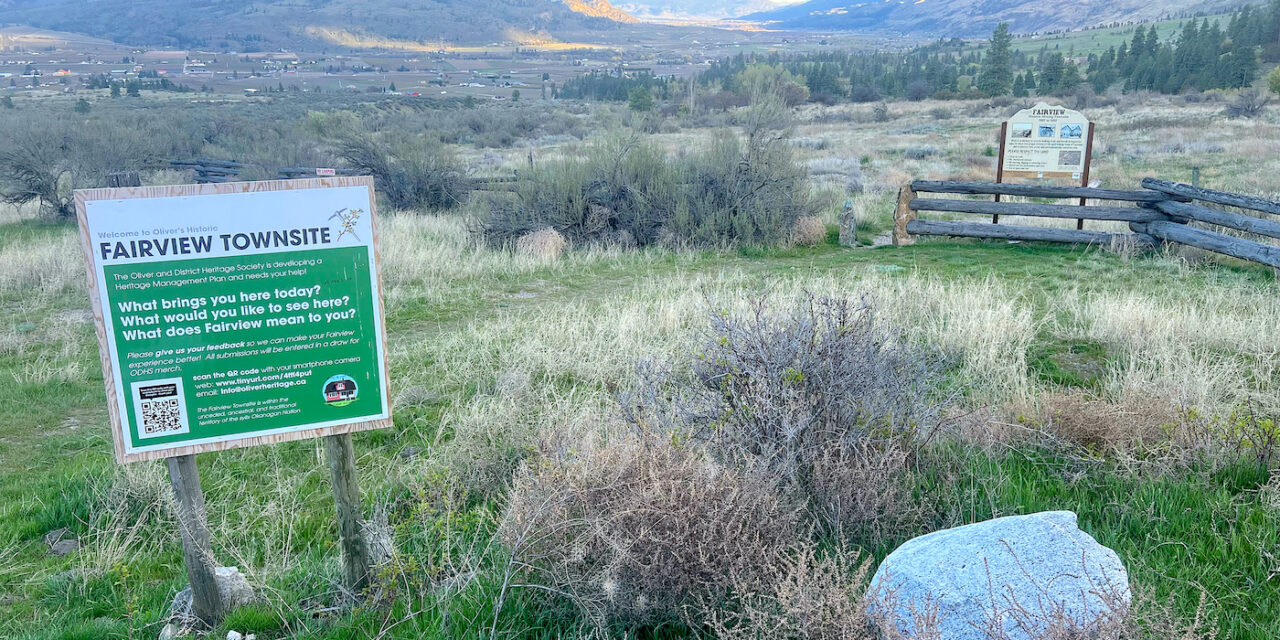
The Fairview townsite is on the road to becoming a more significant attraction for both locals and tourists as plans are in the works to further develop what was the forerunner to the town of Oliver, as a full-fledged interpretive site.
Where once the “finest hotel in the BC interior” stood, trails now run around remains of the foundation and where dignified homes of the rich from over a century ago once proudly stood, only the trees and lilacs they planted remain as reminders of Fairview’s once prominent existence.
The move to develop the old townsite comes after the Oliver & District Heritage Society (ODHS) took over as the land manager for the historic site located on Crown Land in an agreement with the Regional District of Okanagan-Similkameen (RDOS) to which the land is let by the Province.
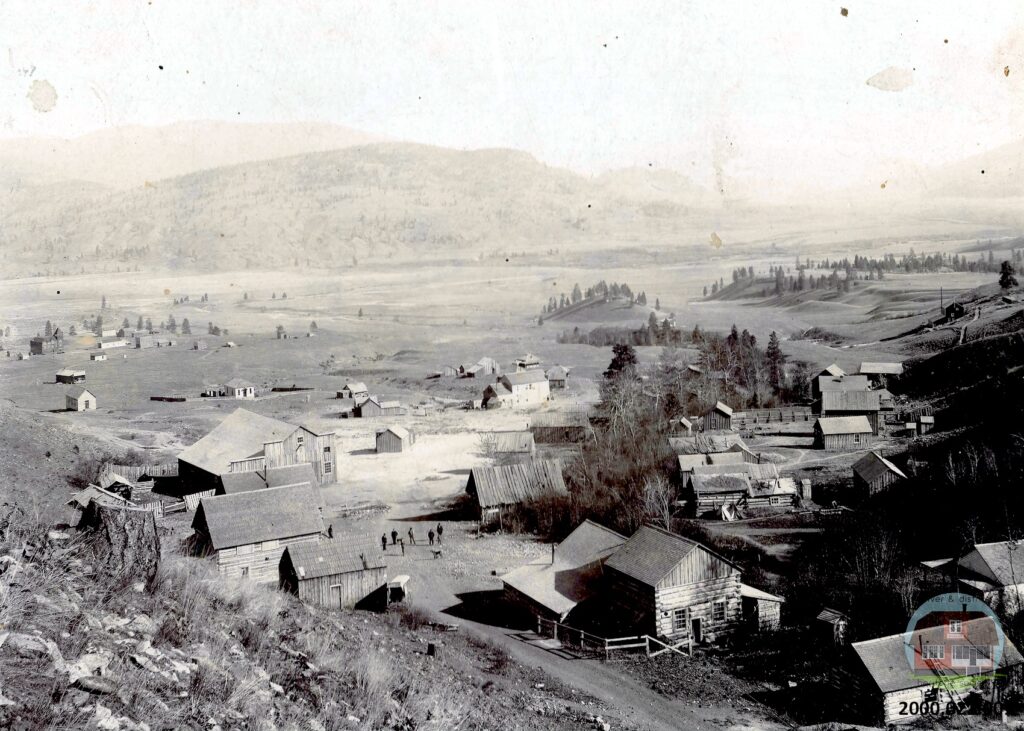
The Fairview townsite in its glory days. ODHS photo.
Until last fall the RDOS had a Heritage Services Agreement with the Fairview Historic Townsite Society (FHTS) which managed the roughly 32 hectares (80 acres) of land comprised of bits of foundation, trails, plants and trees planted by the original settlers and an information sign and parking lot on an adjacent piece of land owned by the Okanagan Historical Society.
“Sadly the Fairview Historic Townsite Society disbanded last year and the RDOS was left with this land that doesn’t have a manager, doesn’t have anyone looking after its heritage interests and equally important its ecological interest,” says Darren Halsted, Executive Director of the Oliver & District Heritage Society.
After much back and forth the ODHS board made the decision to take on the project despite the fact it’s not actually within the boundaries of the town of Oliver, in part because it is essentially the Oliver origin story.
“Fairview was the sort of forerunner to Oliver and there were all sorts of stories that developed about it,” Halsted says. He adds that the townsite remains the most asked-about topic by locals and tourists alike at both the museum and the archive.
“It’s sort of one of those ethereal topics – the ‘ghost town’ connected to gold where the hotel burned down and sadly people died.” It was also around the same time that Camp McKinney got its start, also as a gold mining settlement although it didn’t flourish quite as much as Fairview.
But as is common, myths and misconceptions compound decade over decade. One of these twists of historical record was that in its heyday Fairview was the largest town on the west coast, north of San Francisco. Clearly untrue Halsted says that claims it had a population of 5,000 was in reality more like 500.
“But these myths are why people are interested in it,” he adds. “These myths build up so we decided that rather than risk the potential for that site to be redeveloped and lost, we felt it was important to improve the trails around the site so that it’s more accessible.”
Its importance runs beyond the heritage angle with the antelope brush ecosystem environmentally Red Listed because it’s endangered. “So there are also impacts for the flora and fauna on that land,” he said.
Under the agreement with the RDOS the society will manage the site and improve it. This could see the ODHS tapping its vast catalogue of photographs to help portray what the site used to look like.
“We’re looking at the possibility of some sort of visual augmentation like virtual reality on people’s phones,” Halsted said. “So that is pretty exciting,” he adds before reeling off a list of things that need to be done first.
A key part of this will be to remove the invasive species that have flourished, in part due to past developments and attempts at clearing the land which was actually counterproductive.
“We’ve got a lot to do, we’re working on plans at the moment in terms of how to re-fence it in an environmentally sensitive manner, how we improve access around trails without encouraging further invasive species, how we control invasive species and remove the ones that are there and how to support the flora and fauna of the natural habitat,” he says.
And then there are other basic housekeeping things like garbage bins, parking seating and possibly picnic tables at some point.
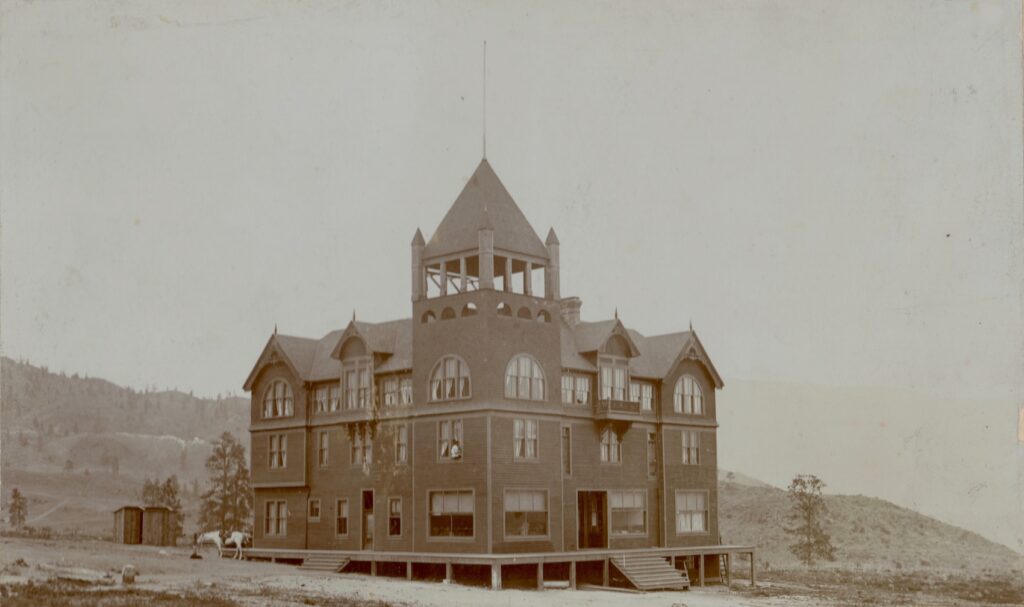
The Fairview Hotel burned down killing two people. ODHS photo.
A report is currently being prepared by a landscaping firm that will help guide the restoration and invasive species control. “We will be guided by the report on how we develop the site to meet the objectives,” he says adding that it’s going to remain largely as it is, but with better access and information. “We’re not going to develop it to be a fun fair,” he laughs.
That report should be completed by this summer with Halsted saying the money came not from Oliver taxpayers but from the RDOS budget. Going forward grant money from various levels of government will be key to driving the project forward.
“We’re hoping very much that people in the community will want to come on board with this. People tell us that this is a really important place, so please, we want people to partner with us to help us . . . this is a big project.”
He adds there is a potential financial spinoff for the area as well. “If people in the town get excited by it, people outside the town will too and they will come and they’ll spend more money. It’s good for everybody,” he adds.
Anyone wishing to volunteer can contact the ODHS by calling 250-689-6677 or emailing info@oliverheritage.ca.