By Don Urquhart, Times Chronicle
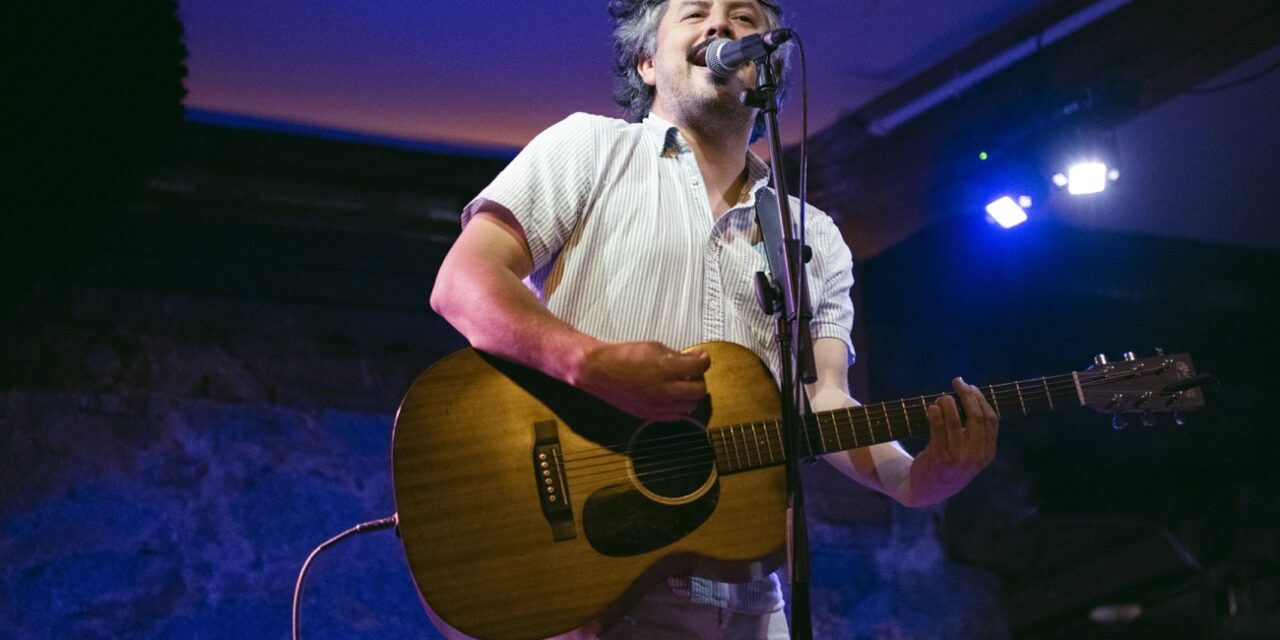
By his own estimation, Francis Baptiste is in a good place. He’s already preparing to head into the studio in December as his next album comes together, and the Vancouver-based musician and Osoyoos Indian Band member is busy playing gigs focused on his second album – Sənk̓lip, the Trickster – which came out in early August.
This weekend will see Baptiste play in Summerland on Friday and Penticton at the Dream Cafe on Sunday evening. He’ll have a bass player and drums for these concerts, a bit of a change-up from his often solo acoustic appearances.
“The Trickster came out on August 2, and I haven’t really been to the Okanagan since the album came out, so I’m going to come out and play it for everybody and kind of share that new album with the Okanagan,” he said speaking to the Times Chronicle from Vancouver.

The cover of Francis Baptiste’s second album – Sənk̓lip, the Trickster – which dropped on August 2.
Contributed photo
He admits the two Okanagan gigs are as much an excuse to come home to visit his family and friends as they are about promoting his new album.
But make no mistake he is excited to play the two shows, and perhaps more so the Dream Cafe date as Oliver’s Great White North will be playing warm up for him. Growing up on the “not so mean streets” of Oliver together, he and Great White North’s Mike Szalay, Sid Ruhland, Sean Petersen and Polo Veintimilla are long time friends.
All this certainly helps account for his more blissful turn, but there’s more and it certainly makes for a more upbeat conversation than a previous interview we did while the pandemic was somewhere near receding, leaving everyone scarred in one way or another.
The journey to ultimately get the Trickster out was a long one for Baptiste, strewn as it was with the deleterious debris of personal struggle. “It was really tumultuous recording for that record,” he says.
“It happened in this like year or two of my life where I didn’t have a job, I had no income coming in. I had full custody of my son and we were living alone in East Van, which was like $1,500 a month, and I didn’t have any way to pay rent or groceries or anything.
“So I was hitting the streets every day with my guitar, and the only stream of income I had was busking. I would take my guitar to Granville Island every day and my son would just kind of sit next to my open guitar case.”
It was during this period that he was writing and recording this latest album, a task made near impossible by the financial struggle and stress of it all – topped off by addiction and divorce recovery. He figures the only reason he wasn’t tossed out of his apartment was his landlord couldn’t do it because his young son was staying with him.
This surely helped tick some artistic boxes injecting some of his lyrics and music with a heavy dose of melancholy and self-reflection at the very least, producing brilliant songs like the title track “Trickster” and the undeniably universal “Work in Progress”.
“I was just in survival mode, just barely getting through it. And you can hear that struggle on the album. It’s kind of dark and morose for a lot of it,” he laughs (now).
The challenges of being a single dad, and culturally isolated also play out clearly in “Brown Eyes (Kt’pimpums) where he relates his fears of imprinting his fears on his son. He articulates this struggle in the introduction to the album, saying “My son is born-and-raised East Van. I’m from the Osoyoos Indian Band Reservation. My struggle is how to instil in him a real sense that he is a Syilx man without growing up on the Rez. This album is my attempt to cope with that struggle and address it.”
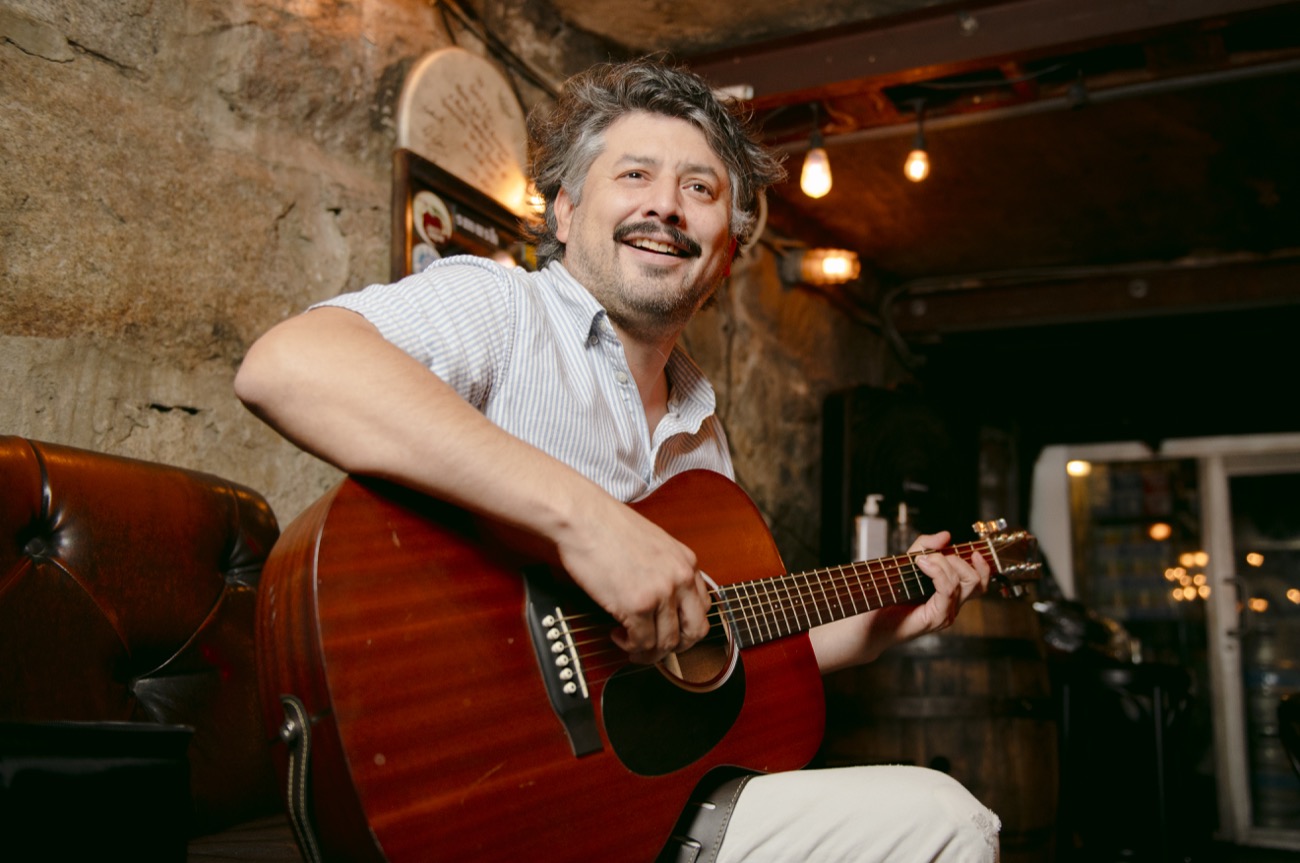
Yvonne Hanson image
It’s clear much if not all of the turmoil of a previous time is receding rapidly in the review mirror. He’s overcome depression, drinking and constant fear of homelessness.
“You’ve just got to remember to stay the path and just keep showing up and keep doing whatever you can do that week or that month. And eventually, you’ll get to the other side, and we did,” he says.
“Now I have a job. I work with this organization called the Dudes Club in the Downtown Eastside, and I’ve got a lot more gigs coming my way. The album is finished, it’s out, and I’m feeling very comfortable and stable, economically and in terms of my mood and my depression and my addiction, I feel like I’m on top of everything right now,” he says resolutely.
“I’ve gotten better in the last couple years of building a support system around myself, which includes my partner, Brittany, who’s moving in with me at the end of this month, and various family members and family friends.”
This album departs slightly from his first album “Sneqsilx (Family)” in which Baptiste features songs sung in his native language nsyilxcən (nah-silk-sen), the endangered language of the Syilx people. He says it’s a bit too much for those who don’t understand the language, which sadly includes a great many Syilx people, because it’s “a bit too much of a knowledge gap”.
“Part of my role as a performer is sharing knowledge and sharing culture. And when you spit like a whole bunch of words, there’s nothing for the audience to hold on to, for them to identify with. It becomes almost like anthropological exercise,” he says.
“But if I give people smaller doses of it, for example, there’s a song in the new album Trickster called “Speplina” which means rabbit. I can have verses that are in English so that people can still relate to a song, know the theme of a song, know what it’s about, and just give them basically a small bit of vocabulary.”
Similarly in the laconic ode to the Osoyoos Lake of his childhood the song “Lazy Lake” introduces us to the nsyilxcən for those words – “tee tee mul teeqwit”. I can guarantee that word will be rolling off your tongue by the end of the song.

Yvonne Hanson photo
He prefers this piecemeal approach “because then it bridges the gap where, ultimately, music is about sharing experiences and having that human connection between the performer and the audience, and hopefully people in the audience, being able to identify with what it’s all about and be able to identify with each other.”
“And that’s a beautiful thing about sharing this heritage, of sharing this culture with people, is it allows non-native audience members to understand things from a native perspective and through a native lens.
“That builds understanding between communities and builds understanding within this country, within this province, between people on reserve and off reserve, and knowing like, ‘hey, these are my struggles’, maybe you can relate to it.”
No one of course can relate 100 per cent to the very specific struggles in his life, but “the whole idea is that we’re all relating to each other and sharing experiences and trying to understand each other. That’s become the focus,” he adds.
I suggest that it could almost be his personal effort in furthering reconciliation efforts. “It’s funny, it’s never even really occurred to me until now, that building that understanding is what reconciliation really should be about, right?”
Living in the city he gets lots of people asking him, especially around the National Day for Truth and Reconciliation, “what does reconciliation mean to you?” He says that especially speaking to other Indigenous people in the city, everyone has a different take on it and different perspective on it.
“A lot of people want to know, especially a lot of settlers ask ‘what can I do to help reconciliation? What can I contribute to our reconciliation?’
“And the only answer that I have as an artist and as an indigenous person is to try to understand one another, and I feel like art is a perfect vessel for that, whether you’re reading a book by an indigenous author or looking at an art exhibit by indigenous artists, whether it’s visual, music or literature, I think it’s the most effective vessel for demographics understanding one another, different communities growing understanding between each other.”
There was a point he came to a realization that given the fact he writes a lot about Indigenous themes one might expect his audience would be largely indigenous, but people forget that Indigenous people are only three per cent of the population, he says.
“Obviously everyone back home loves what I’m doing, but when I’m performing, whether it’s here in Vancouver or in the Okanagan or anywhere in the country, I find that my audience is predominantly settler, not necessarily white, but people from various cultural backgrounds.
“I see very few indigenous faces in the audience, unless I come back home. That’s why I think, especially in the last few years, I’ve kind of stepped into this role of knowledge or culture sharer.”
His assumption is that the audience is largely made up of people not very aware of Indigenous issues. And if his audiences are even remotely a reflection of Canadian society, his assumption is quite likely painfully correct.
“And so I have a platform and I have the microphone. I think it’s only right that I take that opportunity to share my experiences and to explain to people what songs are about, what the language is about, and what the struggles are.”
Certainly it is a powerful combination with important learning delivered with humility, humour and tales of personal struggle and of course some fabulous music which follows.
As to what to expect in the next album from this talented artist, Baptiste says it will be more upbeat and he chuckles as he notes that his musical inclination, “kind of swings like a pendulum.” His first album – Sneqsilx (Family) – was more rock while this second album is definitely slower, more acoustic, more folky.
“When you spend a year or two kind of singing these really slow, sad songs, doing all these acoustic songs, you start to get the itch to rock out again.”
Now in the process of writing and getting ready to go into the studio there’s definitely a lot more electric guitars, louder drums, upbeat tempos he says. “I don’t always want to be that depressing, Indigenous guy singing,” he laughs.
Baptiste will play (acoustic) Friday, Nov. 22 at Giant’s Head Brewing in Summerland from 7-9:30 p.m and on Sunday, Nov. 24 Baptiste with bassist and drummer will headline a show with warm up act Great White North from Oliver at the Dream Cafe (67 Front St.) in Penticton from 8-10:30 p.m. The Giant’s Head show is free while the Dream Cafe event is $26.98 per person with tickets available online.