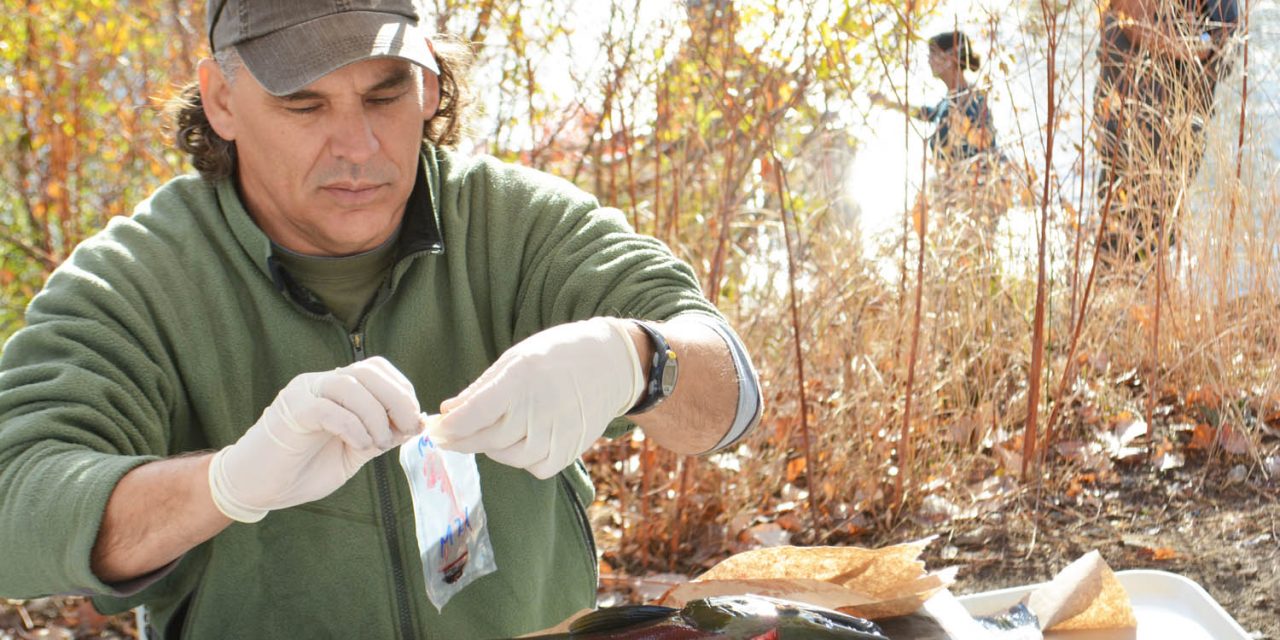
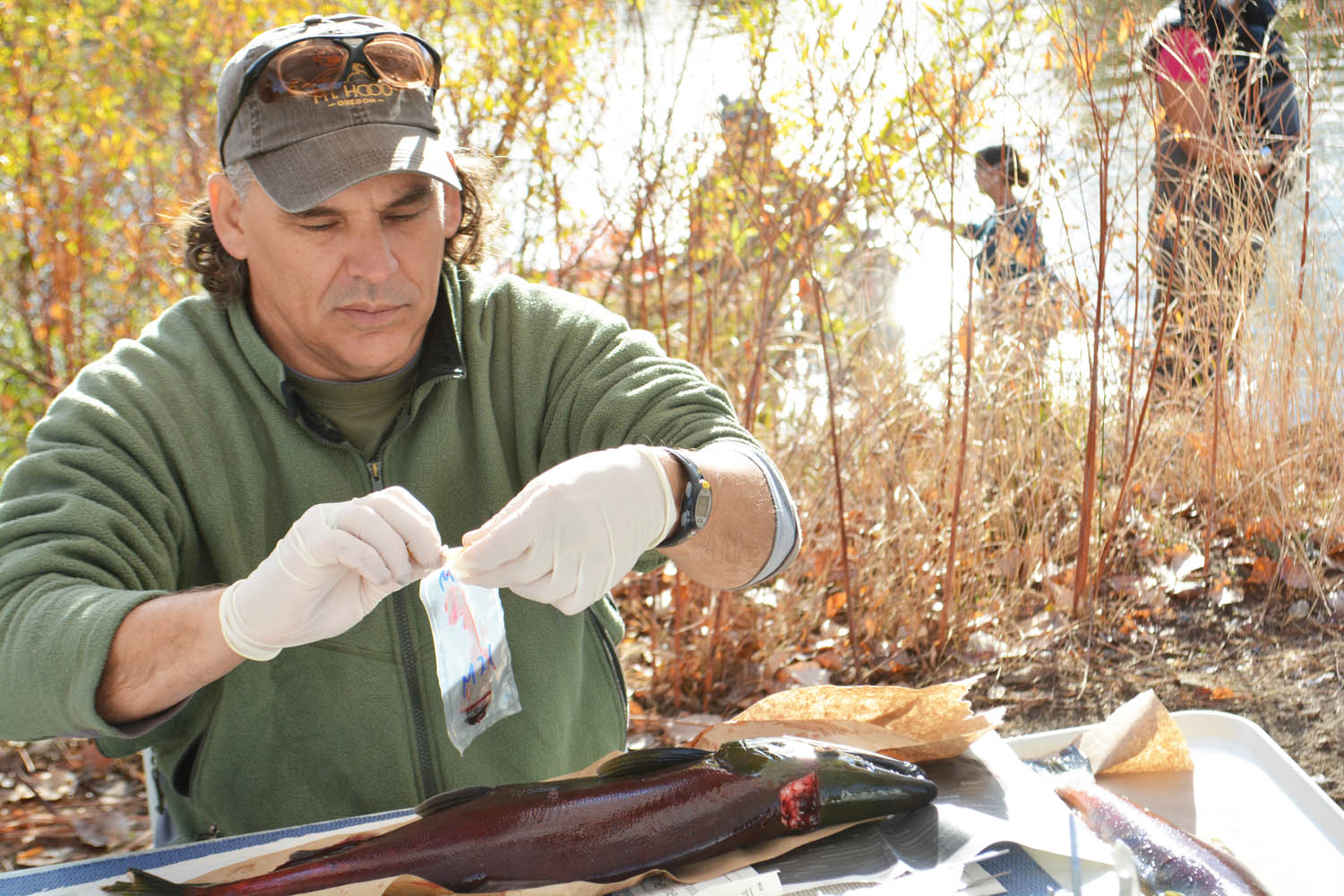
Research technician Jon Richard takes samples of the sockeye to determine if the salmon have any diseases or bacteria. (Lyonel Doherty photo)
The sun gleamed off a ruby red sockeye that Okanagan Nation Alliance (ONA) senior biologist Richard Bussanich lifted out of a steel cage in the water.
“It was an ugly year to be a salmon,” he said, handing yet another fish to ONA technician Chelsea Mathieu, who made her way to the shore.
The camp on Okanagan River north of Oliver was very organized last week with neatly arranged stations where sockeye salmon were studied in great detail.
For example, after the spawners’ milk was collected, the fish were handed off to someone else for dissection to later determine if they were diseased.
Technicians from ONA and Department of Fisheries and Oceans were “all in the same boat” monitoring the health of salmon stocks and hoping for the future.
But they were fighting an upstream battle. Bussanich said they were expecting more than 100,000 spawners in the Okanagan system this year, but only saw roughly 20,000 because of this year’s low water flows and high summer temperatures associated with an extended drought.
Bussanich noted that more than 80 per cent of the salmon died on their spawning route.
“This year they travelled through fire, low water and (hot) temperatures and they still managed to find their way home,” Bussanich said.
The sockeye’s incredible journey – which covers more than 1,200 kilometres from the Columbia River in the United States – never ceases to amaze the dedicated biologist.
“It’s a metaphor for hope. This fish is a great model of what we can do.”
He pointed out that the salmon make it through nine major dams on the Columbia River.
“We’re learning a lot about what the fish can handle,” said Bussanich. Although stocks are low, they can rebound very fast,” Bussanich said.
Out of 24 sockeye monitoring programs in North America, ONA’s and the one in Barkley Sound are trending well compared to the others, he noted.
They are even seeing sockeye in Skaha Lake between Penticton and Okanagan Falls, he added.
The biologist said they made the decision to close down the fishery earlier this year, which was a conservation-minded approach.
According to Bussanich, the Okanagan River is the primary sockeye producer in the Columbia River Basin, of which Osoyoos Lake sockeye make up 90 per cent of the stock.
Howie Wright, ONA fisheries manager, said the work they are doing really helps them predict the future of the salmon and their harvest opportunities.
“If you look at what we are seeing today compared to what we were seeing in the 1990s, it’s a very positive outlook for the numbers (of salmon) that are returning.”
Although the numbers are less than expected this year, fisheries technicians are doing their best to boost those numbers, Wright said.
He noted the importance of continuing collaboration among working groups, including discussions with American counterparts.
One issue of concern is the fact that Washington State did not close down its salmon fishery this year. The Okanagan River sockeye population is one of only two remaining populations of sockeye in the Columbia River Basin. Historically, chinook, coho, chum and steelhead were also indigenous salmon species in the Okanagan basin, but today they are either extinct or found in very low numbers.
The construction of dams, channelization, urban encroachment and water management practices have all contributed to the depletion and extinction of salmon stocks in the Okanagan River Basin.
LYONEL DOHERTY
Special to the Times
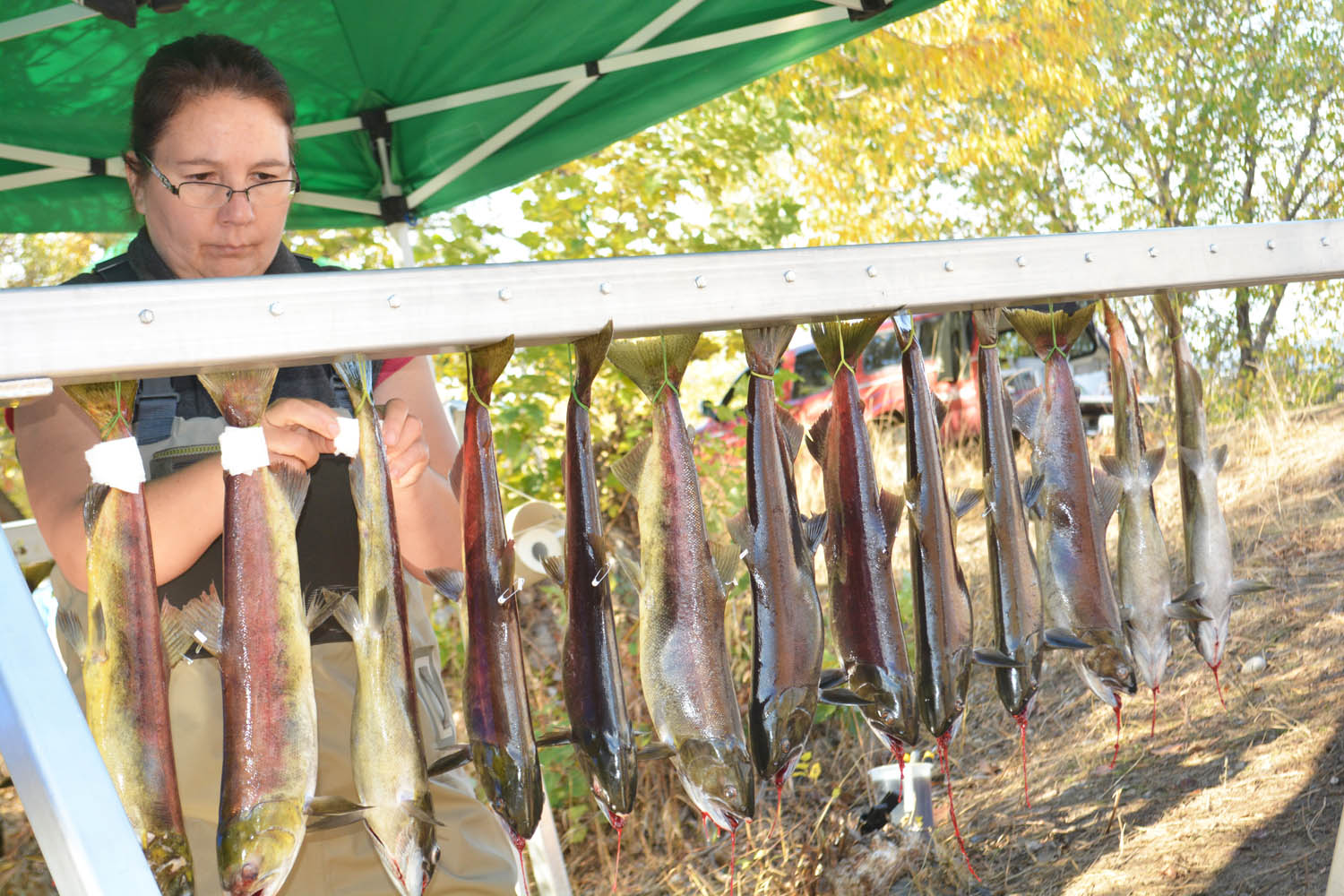
Okanagan Nation Alliance hatchery technician Doddi Terbasket prepared a group of hanging sockeye during the monitoring program last week. (Lyonel Doherty photo)