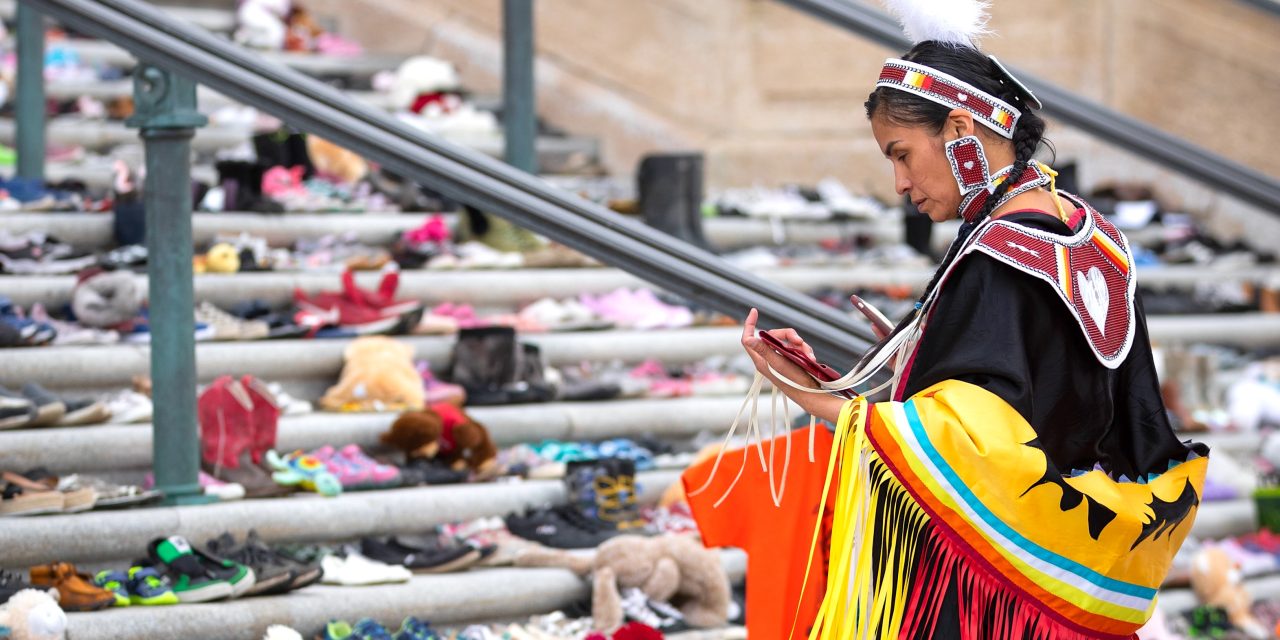
Madeline Baker, Times Chronicle
The Government of Canada has appointed an Independent Special Interlocutor to work with Indigenous communities on the issues arising from multiple unmarked graves that have been discovered at former residential school sites since 2021.
Kimberly Murray’s appointment to the new position is being called “a critical step towards respectful commemoration and justice” by the federal government, but the First Nations Leadership Council (FNLC) has some doubts based on past federal initiatives like the controversial Truth and Reconciliation Commission (TRC).
The Independent Special Interlocutor is tasked with guiding the process of ensuring respectful and culturally appropriate treatment of unmarked burial sites and any remains found within, as well as protection of the sites now and in the future.
Murray will publicly present two reports to the federal government, one to share her progress after a year and a final report detailing her findings and recommendations after two years of close dialogue with Indigenous communities, provinces and territories, and relevant churches.
Federal Minister of Indigenous Services Patty Hajdu called Murray’s appointment a response “to the many calls for action that asked for this important independent role,” and added that the government “will continue to listen to Indigenous Peoples as they share their painful truths and […] be there to support them on their journey of healing.”
Rosanne Casimir of the Tk’emlúps te Secwépemc First Nation, who saw the first of these unmarked burial sites discovered on their territory at the former Kamloops Residential School in May 2021, also spoke positively about the appointment.
“We look forward to working with Canada, the Special Interlocutor, and our brothers and sisters across the country, as we work for the children, and their relations, to achieve some measure of comfort and justice for them,” said Casimir.
However, while the FNLC said that they do welcome the development of this position and appointment of Murray, who is of Mohawk descent, they also cast some doubt on the federal government’s willingness to act on whatever information they will receive as a result.
“It cannot be forgotten that Canada bridled the work of the TRC, denying key documents and refusing to issue the TRC a mandate to investigate crimes committed at former Residential Schools,” the FNLC said in their collective statement. “The limitations placed on the TRC cannot be allowed again.”
More specifically, Cheryl Casimer of the First Nations Summit Political Executive expressed concern that the Special Interlocutor’s current mandate is “short-sighted and limited in scope.”
“This mandate must include an international and human rights legal framework, be built upon the UN Declaration on the Rights of Indigenous Peoples, and uphold the highest standards, protocols, and conventions involving missing persons and genocide to address the severity of crimes that have been committed at former Residential Schools across Canada,” said Casimer.
The FNLC feel that international oversight of any official investigation into the unmarked graves is necessary to ensure that the loss of life represented in those graves is treated as a criminal matter, which, in their view, the federal government has yet to do. As such, they feel that a Special Prosecutor should also be appointed to act on Murray’s findings.
Grand Chief Stewart Phillip, president of the Union of BC Indian Chiefs, spoke in no uncertain terms about the country’s responsibility to residential school attendees: “Canada must see the abduction, violent abuse, and murder of our children for what it was – systematic state-sponsored genocide of our people and ways of being.”
“Those who perpetrated these crimes must be held to account and brought to justice with the full force of domestic and international law through nothing less than rigorous independent investigations.”
Special Interlocutor Kimberly Murray, whose work began on June 14, said she is “honoured to have been entrusted with this important responsibility,” and “committed to supporting the work of survivors and Indigenous communities to protect, locate, identify, repatriate, and commemorate the children who died while being forced to attend Indian Residential Schools.”