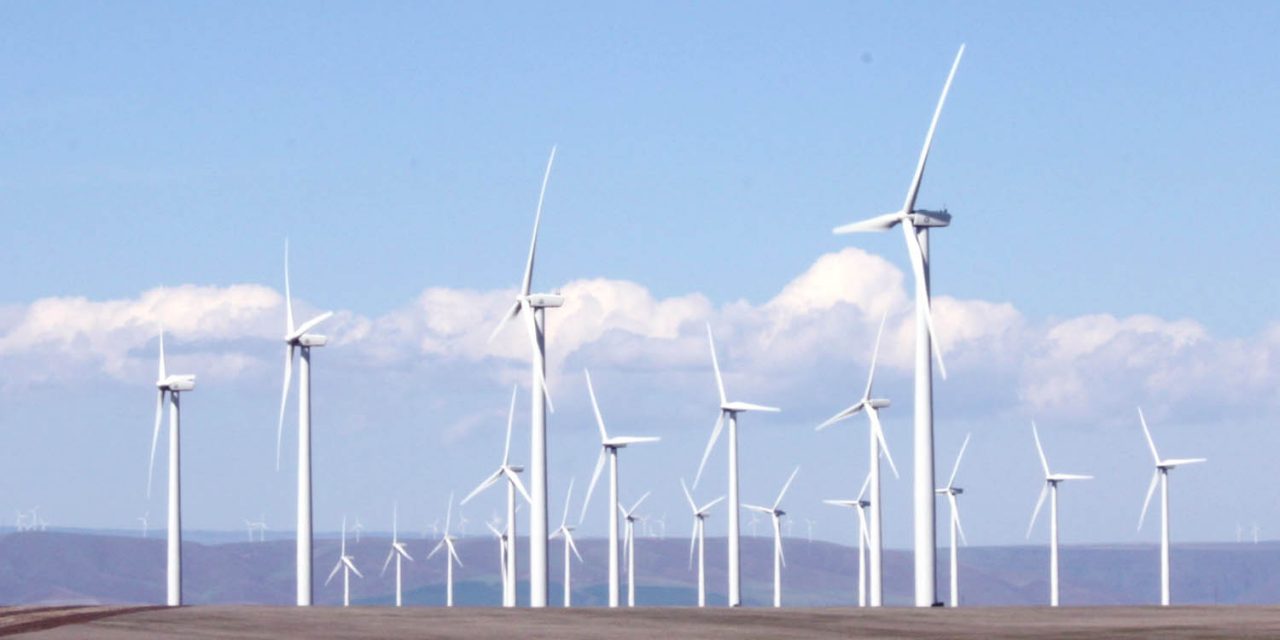
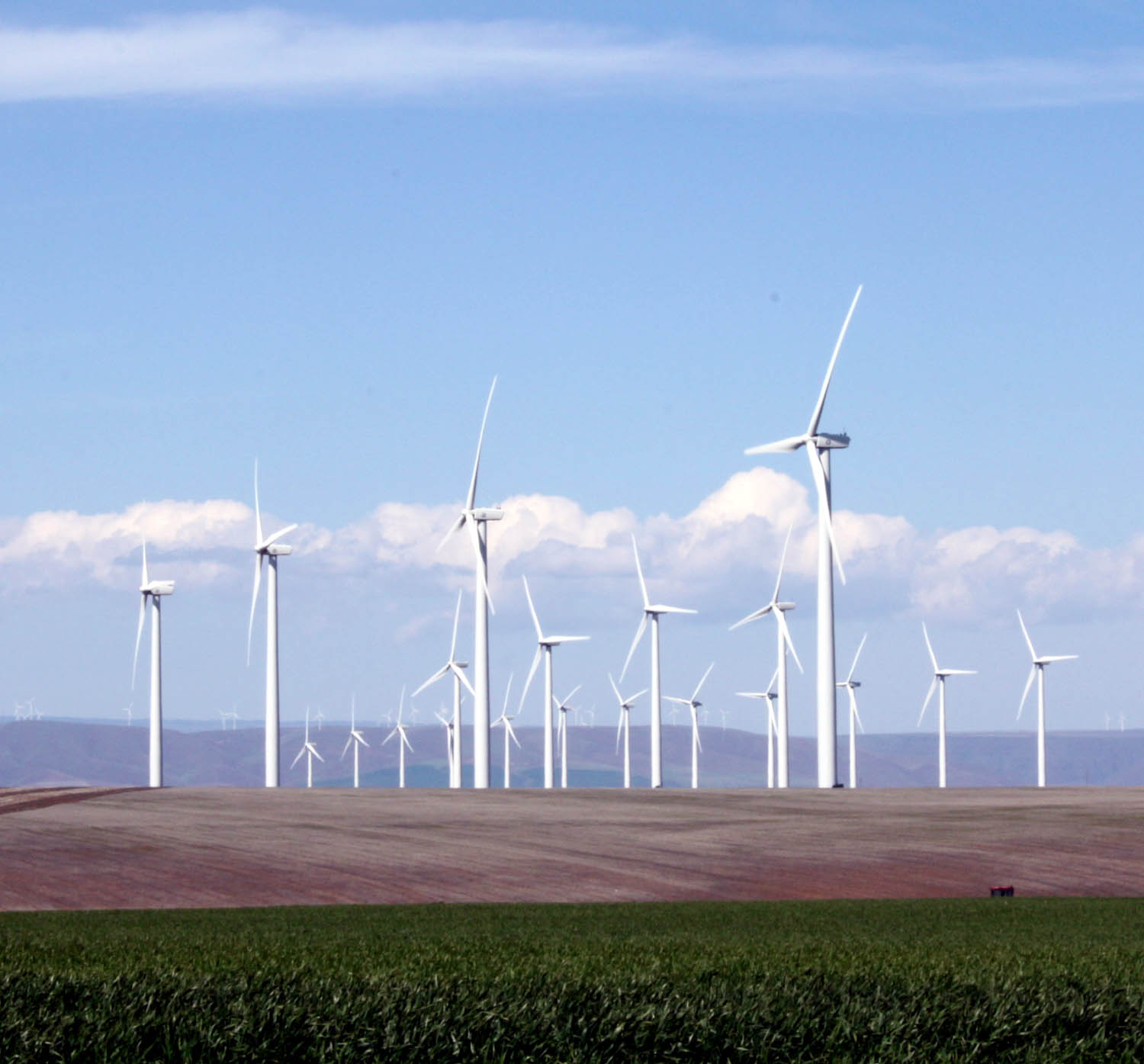
The provincial government has approved constructing the first three wind farms in the Okanagan Valley. (Photo supplied)
A White Rock company has been given approval to build the Okanagan Valley’s first ever wind farms.
Two weeks ago, BC Hydro announced it had given permission to Zero Emissions Energy Developments (ZED) to build three new wind farms in the province, two of which will sit in the Okanagan Valley.
One will be located in the Pennask area, near the high point of Highway 93C. The other will sit to the south, approximately 30 kilometres outside of Summerland, in the relatively isolated Shinish Creek area.
The third station will be outside of the Okanagan, in the Septimus Creek area south of Fort St. John.
The approvals came thanks to BC Hydro’s Standing Offer Program, which aims to encourage small-scale green energy developments in the province by providing purchasing guarantees to suitable projects.
Alastair King is the CEO of ZED. He said his company hopes to start constructing the stations in late spring or early summer of this year.
He predicts they should be producing power before the end of 2016.
He estimated ZED will hire between 25-50 people per project during construction, which means anywhere from 50-100 short-term jobs in the Okanagan Valley.
Once the projects are complete, two to three full-time workers will be needed for operations and maintenance at each station. The expected life of the projects is 25 years each.
The stations will each be composed of five wind turbines and have the capacity to generate 15 megawatts of total power.
But according to King, in reality the stations will operate at about 35-40 per cent of their total capacity over the course of the year.
“Wind is inherently inefficient. Sometimes it blows so hard that we have to shut the turbines down, and sometimes it doesn’t blow at all,” he said.
But according to Dina Matterson, the standing offer program manager at BC Hydro, BC Hydro’s large storage capacity makes integrating wind power into its grid fairly effortless.
“Wind is pretty appealing to BC Hydro simply because it’s a clean resource that integrates well with our large hydro system that is capable of storage. So we provide the reliable backbone that allows us to integrate renewables like wind,” she said.
ZED’s three new stations will add 45 Megawatts of wind energy capacity to BC Hydro’s system, bringing its total capacity to more than 700 Megawatts.
Matterson explained that BC Hydro is becoming increasingly interested in wind power, particularly because it is most efficient in the winter, when the corporation’s grid is the most taxed.
According to King, each of ZED’s new projects will produce enough energy to power an average of 2,500 homes in a year. Matterson estimated that the Shinish Creek farm near Summerland will be able to power an average of 5,000 homes a year.
While that energy will be clean and renewable, King admitted that ZED has heard concerns about wind turbines’ potential negative impact on local wildlife.
He said that environmental impact studies were a big part of the approval process for the projects and that his company spent three years studying the projects’ possible impacts on bird and bat populations.
As a result his company will build the turbines in carefully chosen locations to minimize the impacts on birds and bats.
Matterson agreed that studies undertaken during the permit process will help protect wildlife.
“Because we have such a stringent permitting system in the province, and such care is taken, I think any wind power generation that is done here will be done carefully and mindfully of birds and bats,” she said.
Peter Waterman is the mayor of Summerland. On April 20 he said he had yet to hear any complaints from members of his community about having a wind farm nearby.
He said that aside from worries about the area’s wildlife the only other major concern would be the farm’s visual impact. But since the Shinish Creek project will be fairly isolated that isn’t an issue.
“I can see people being concerned if we were putting them [wind farms] on top of Giant’s Head Mountain. In terms of visual impact … that could raise some concerns. But with this one being so hidden I don’t see any issues.”
King said he believes renewable energy is “the future,” and that the benefits of wind energy far outweigh any drawbacks. He said that for him the new projects are more about leaving a legacy than simply putting up turbines.
“It wasn’t about building wind farms for me personally. It was about [creating] minimal impact and leaving a legacy for my kids,” he said.
“I have a young family and it’s important to me that we really leave this place better than it is now.”
TREVOR NICHOLS
Special to the Times