Lyonel Doherty
Times-Chronicle
This is the first of a series of articles gleaned from the recent “Fairview After Dark” tour hosted by Rebecca Rizzo, curator of the Oliver Museum.
Watch out for the black widows.
That was Rizzo’s warning when she began the dimly-lit tour of the old Fairview townsite recently.
“Has everyone signed a waiver form?”
Gee, that was a spooky question. Where’s the nearest exit?
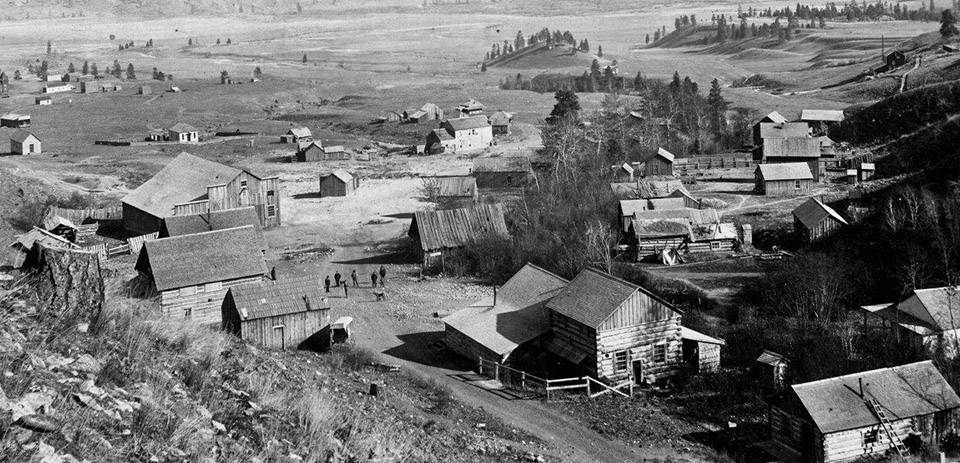
Rizzo said the Town of Fairview quickly developed after settlers started to stake their claims within these hills in the hopes of striking gold. It all started in 1887 when a prospector by the name of “One-Armed Reed” and his associate began to pan for gold in what we now call Reed Creek. Although they discovered traces of gold, their findings weren’t large enough to warrant further exploration and so they moved on.
A year later, two other men, Fred Gwatkins and George Sheehan, were granted land by the Crown to begin mining. This sparked the beginning of Fairview’s gold rush as many mining companies and individuals began to buy land to search for gold.
“The upper town was a miner’s haven where you could hear the constant clamor of the stamp mills, the whinnies of horses, and the clinking of hammers as the miners bored deeper into the hillsides,” Rizzo said.
She noted the first Golden Gate Hotel was built in 1892 by F.R Kline. It was a favourite place for miners to spend their hard-earned money, which in those days would consist of $3 or $4 daily.
When a local butcher took over management, the hotel became nicknamed the “Bucket of Blood.”
“Every Saturday night, miners, farmers, and merchants would pack into the hotel to boisterously enjoy beer and whiskey, hoping to catch a good brawl at some point during the evening . . . a Golden Gate guarantee.”
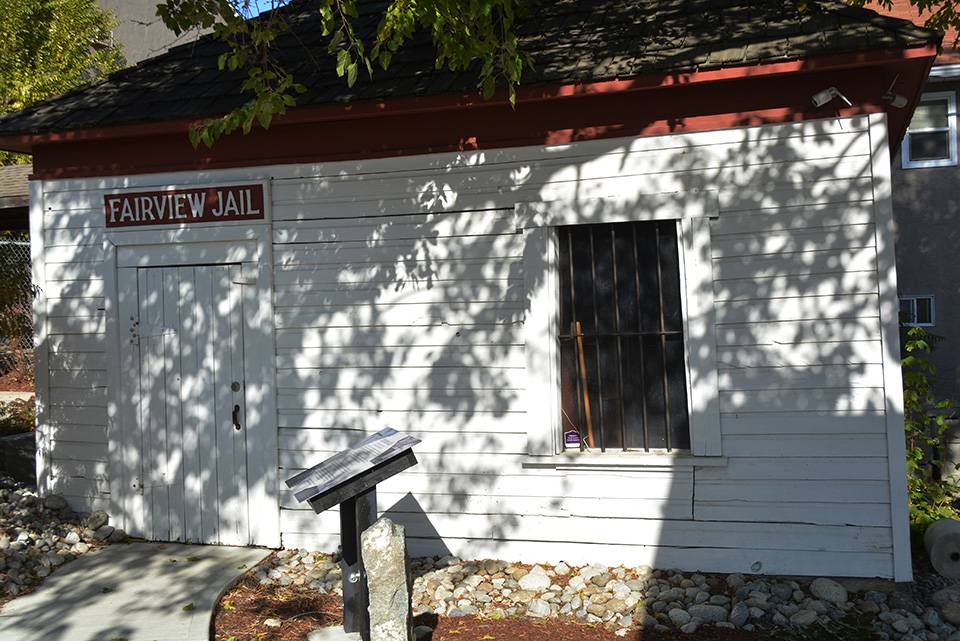
The Fairview Jail (circa 1896) held some wily characters in its time.
(Lyonel Doherty photo)
Rizzo disclosed the interesting history of Blasted Church, which was dismantled and moved to Okanagan Falls around 1929.
When work began on carefully deconstructing the church, the workers found that the structure was too well-built, and they had great difficulty trying to loosen the nails to remove the walls and roof.
“Eventually, they had the innovative idea to lodge a single stick of dynamite inside, and, after closing the church’s doors and windows, they lit the fuse. The dynamite created enough force from the tiny explosion to loosen the nails, and the workers were able to complete the project.”
Rizzo said the first physician to set up practice in Fairview was Dr. Benjamin de Furlong Boyce, who was hired by one of the mining companies in 1893. He often travelled on horseback as he made house calls.
“The first patient he lost in town was a 12-year-old boy named Peter Tholl, who would not respond to treatment after he contracted diphtheria. Peter was the first of many young victims that were taken by the disease in 1893.”
On the doctor’s first night in the community, an old miner complained that he could not hear a fiddler nearby. Having recently sold his claim and being flush with money, the miner offered $500 (a massive sum at the time) to Dr. Boyce if he could fix his hearing.
The doctor believed the hearing loss was due to impacted wax build-up in the ear canal and offered to fix the problem. The deal was made, and once Dr. Boyce had removed the obstruction, the miner’s hearing returned. But that night the old codger’s hearing was so good that he claimed he was kept awake by the ticking of his watch.
In 1897 a new doctor (R.B. White) moved to town and also conducted his practice on horseback, with his dog as an assistant (the canine trailed behind him on house calls).
The doctor’s first case was the amputation of a miner’s leg which had been crushed in the mines. Although the surgery was a success, it had to be performed in a tent, with only a jackknife and shots of sharp whiskey to aid in reducing the pain. The wound was tied off with some sewing thread and butcher’s string.
“You can imagine the screams of his poor patient,” Rizzo said.
The tour touched on the McCuddy family and their long history in the South Okanagan. In 1904 they moved to Fairview where they opened a general store, which was the hub of the community.
The family reportedly brought several “firsts” to Fairview: the first radio, the first Model T car, and in 1906, the first telephone.
Rizzo said the Fairview Jail was built around 1896.
“Very little is known about the prisoners that were housed in the (two) cells, although it is thought that they were frequented by miners who drank up their savings and were locked in to ‘dry out’ by the resident constable.”
One story involved Constable J.R Brown who brought a prisoner into lock-up.
“During the transport, what was described as a ruckus broke out, and shots were fired at the agitators. Suddenly, the prisoner, who was not responsible for the disturbance, tripped and fell over, leaving Constable Brown horrified that he had shot the prisoner by mistake. To the constable’s relief, the man soon stood up and dusted himself off.”
Rizzo told her rapt audience that only a few serious crimes were ever recorded in Fairview.
One of them took place in 1893, when a mine foreman stabbed a fellow worker during an argument over mining licenses, but the victim luckily survived. As the trial for the foreman grew closer, the constable found that many eyewitnesses were being blackmailed and bribed to leave the country before they could testify. As a result, the witnesses had to be placed under police protection.
(Stay tuned for the next installment when Rizzo will tell the tale of Hotel Fairview and the great fire.)