By Don Urquhart, Times Chronicle
Okanagan fruit farmers rallied in Osoyoos’ Gyro Park on Tuesday to raise awareness of their plight after catastrophic climate events over the past couple of years have left the sector reeling.
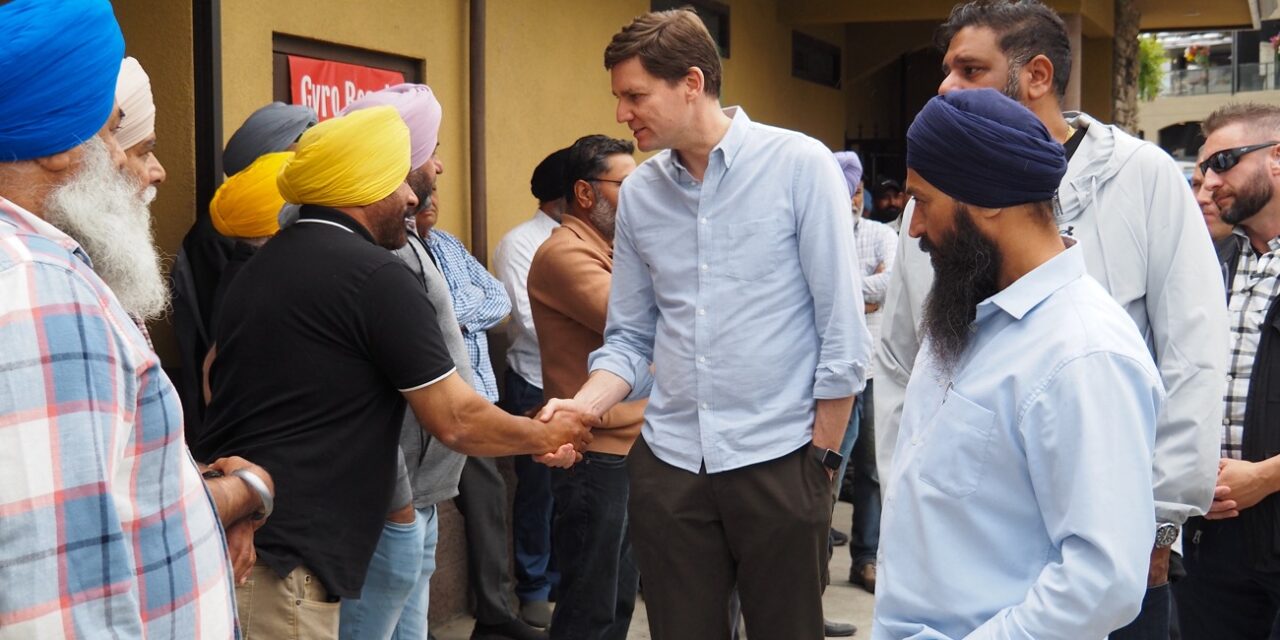
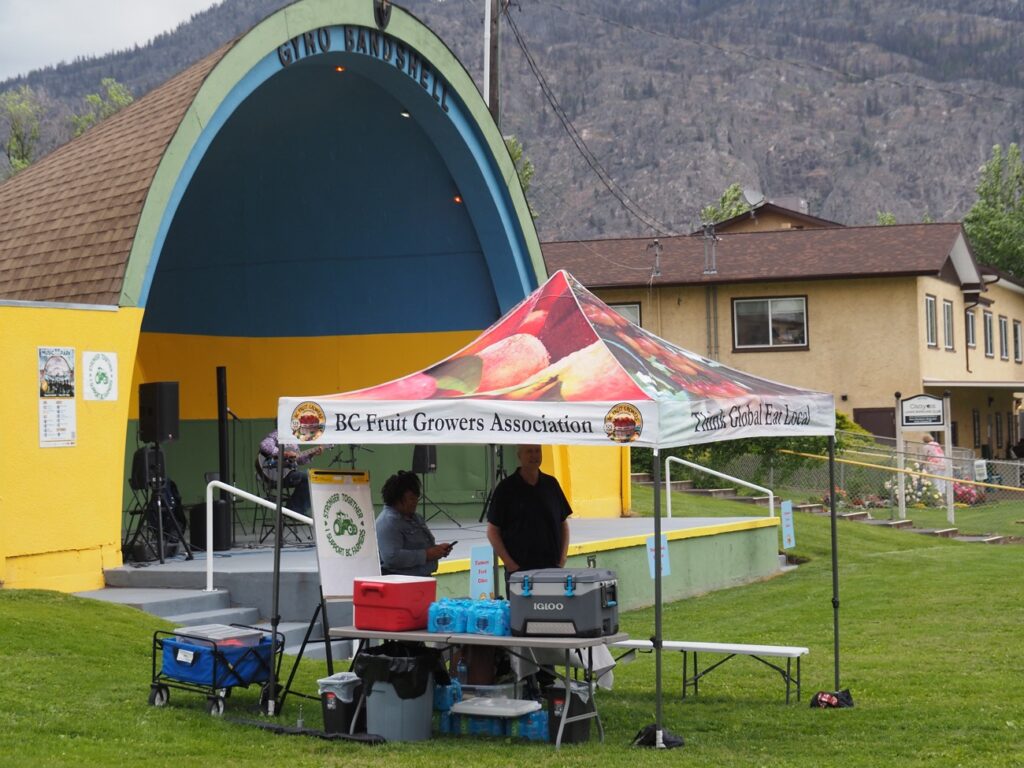
Nearly 100 farmers attended the “Stronger Together – BC Fruit Growers’ Association Rally for Farmers” to raise awareness and appeal for support from the provincial government, retailers and consumers. Earlier the association discussed the problems faced by Okanagan fruit farmers with BC Premier David Eby and his team who were holding caucus meetings in Osoyoos this week.
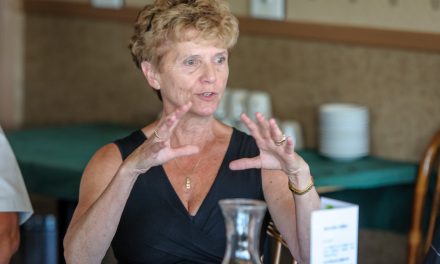
BC Fruit Growers’ Association (BCFGA) board member Mani Gill, a farmer who grew up in a farming family in Osoyoos but now farms with his young family near Kelowna, highlighted the event was not a protest but simply a rally and public education event.
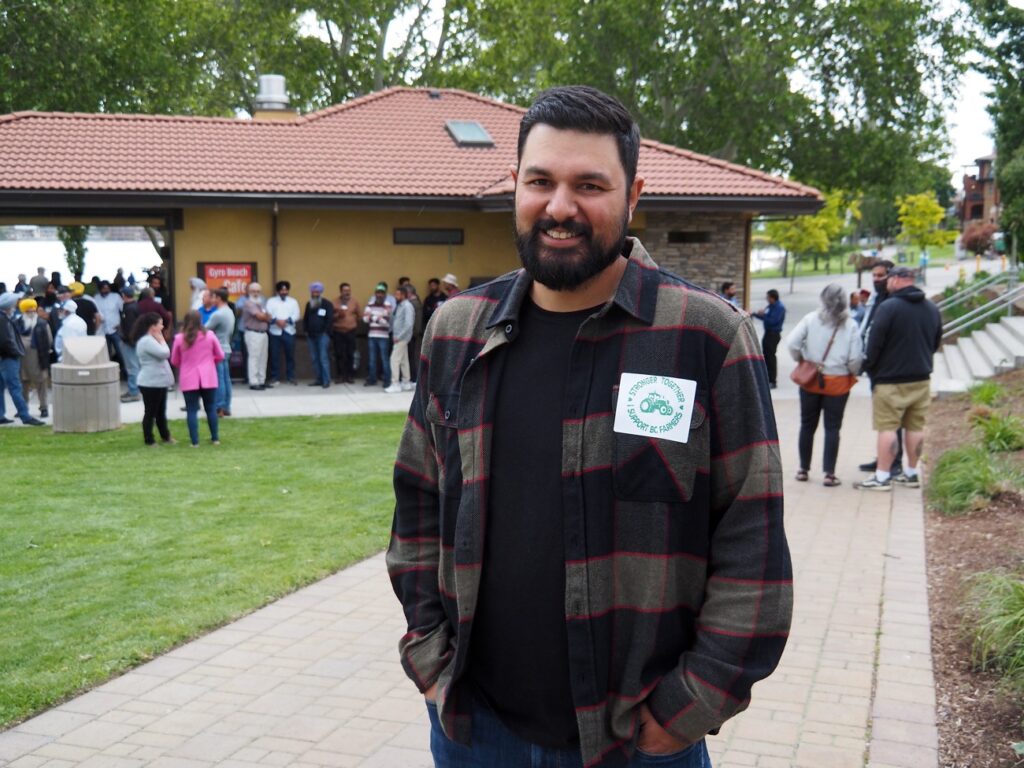
BC Fruit Growers’ Association (BCFGA) board member Mani Gill.
“We’re farmers from the Okanagan, we grow apples, peaches, cherries, grapes, whatever and we’re just here to show that we are together in this,” he said.
“We are trying to get the public on our side and to educate the public and let the government know the struggles that we’ve been going through in recent years.”
Gill said it was important for both the public and the government to hear their stories because “every farmer here is struggling right now. It’s just to let them know what our struggles are.”
With bad crop years recurring over the last few years he adds that this past January was “horrible, with a lot of people at their breaking point now.”
He says farmers and the association are grateful for the $80 million pledged by the province to replant and build resilience saying, “it’s a great gesture, we’re thankful for it, but it doesn’t help today and we’re desperate today.”
But even with the $80 million, for every $1 the province is putting in, the farmers are putting four, five or six dollars and farmers just don’t have that kind of money, Gill says.
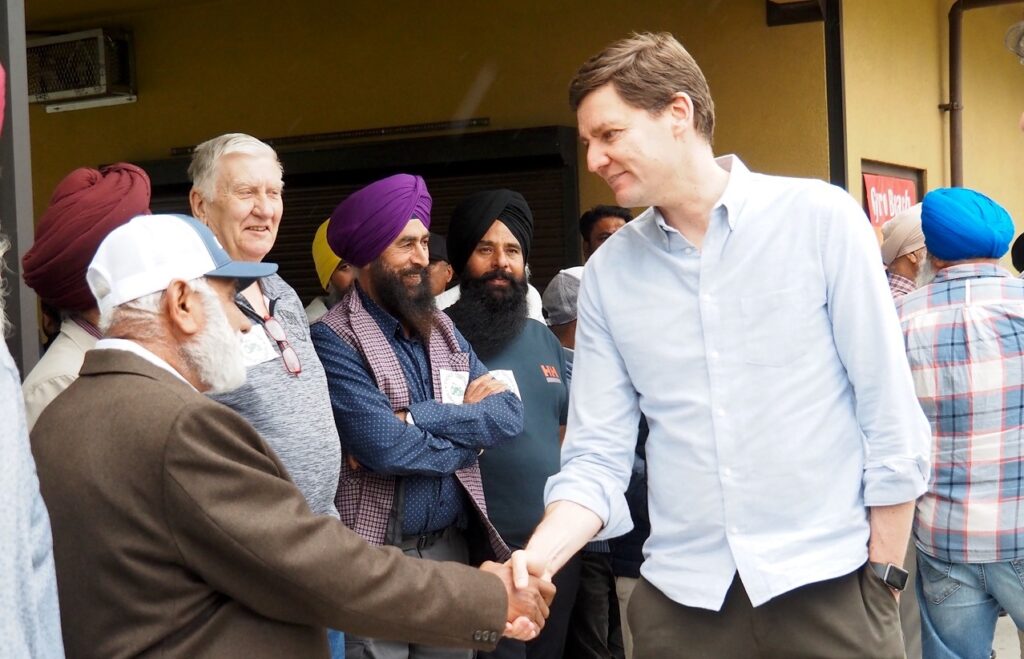
“Yes we appreciate it but we don’t have that capital to put into that replant program, so it’s a nice gesture but it doesn’t help us today,” Gill said. “Farmers have gone deep into their savings and those savings are dwindling,” he adds.
Help is needed to get through this year, he says. “If next year is another bad year the family farms are going to be gone in the valley,” he warns.
It’s sad to see how farmers are suffering he says. “I grew up on a family farm, my parents raised us on farms, they paid for our education, they made a great living from it, but you know, as young farmers we want to get be in the industry but the last four years have just been brutal.”
Climate change is the key factor he says, highlighting the Okanagan farmers went through three major weather events including a 40C and a -30C. He says competition from south of the border on pricing is another factor but the main issue is climate and after the January deep freeze there’s no crop on many of the trees.
“They say money doesn’t grow on trees, but for us it does and if we don’t have any crop there’s no revenue coming for us and this year we still have to spend money to keep those trees alive.” This includes costly inputs like fertilizer and spraying. “If we don’t have any revenue coming in how can we sustain this?”
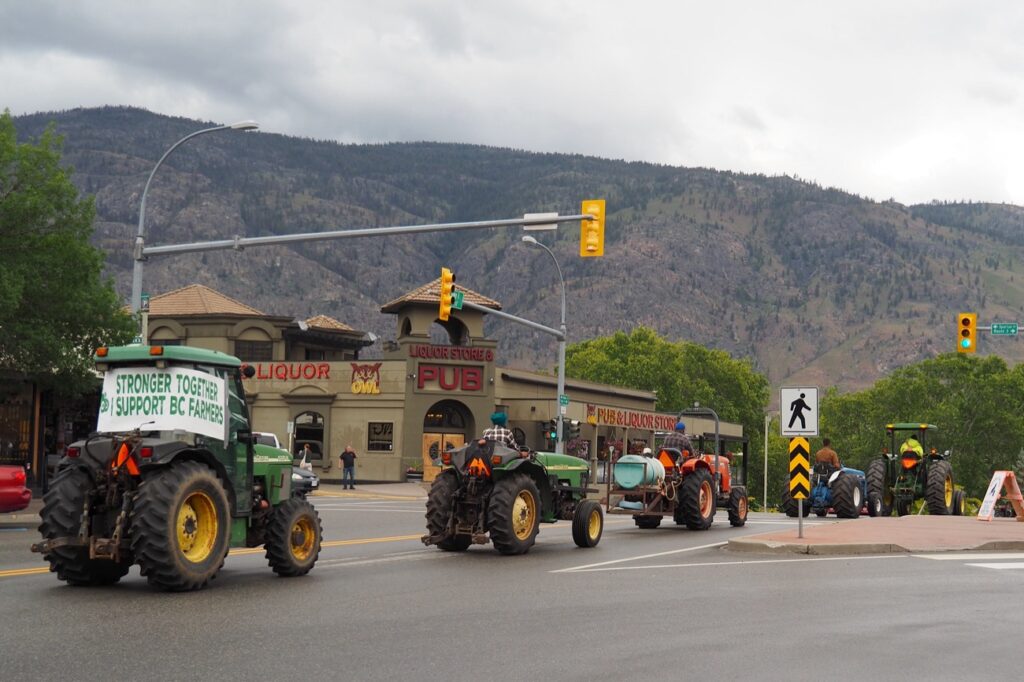
Fruit farmers drive their tractors down Main St. in Osoyoos on their way to the Stronger Together – BC Fruit Growers’ Association Rally for Farmers.
A problem he cites with the provincial support is that replacement trees or vines will only produce, in the case of apples, about five years after the tree is planted and for grapes about two years.
Gill says the public can help by making conscious choices to purchase BC products and retailers have a key role to play by not only stocking BC produce but marking it clearly so consumers can easily spot it amidst products from the US or other countries.
“If you don’t see BC products than you should tell the store managers, ‘hey where’s all the BC products?’” Gill urges. He adds that provinces like Ontario and Quebec and the retailers there, are much better at supporting farmers.
“As farmers we are optimistic. We want to farm, we love what we do, but it’s just we’re at a point where we just need help. We don’t like asking for handouts, but it’s at that point where we need to get by and maybe this is a restart of the industry.”
Along with discussions, the BCFGA took Eby and his team for a first hand look at a local orchard that has been family-farmed for over 40 years. “The farmer just doesn’t know what to do,” he added
“His orchards, the trees are dying, and there’s no crop on the trees. We told them our stories, and I hope they take that back and look at it because we do grow great fruit in this valley.”
The Times Chronicle spoke to Eby on the sidelines of the 85th St. Plaza Ribbon Cutting on Tuesday afternoon where he explained that the $80 million replant program does require co-investment by the farmers.
“And one of the realities of the tree farmers and grape farmers is that it’s a multi-year wait for the new vines and the new trees to be productive,” Eby said.
He added that one of the additional pieces that was highlighted by the association is the combination of the rules of the federal crop insurance program and the delay in realizing the benefits of the replant program. This translates to “quite a catastrophic situation,” he observed.
Eby says the province is working with the federal government on the crop insurance issue to modernize it and insurance responses to the crop failures.
“We’re also looking at programs to provide additional support to these farmers. It’s an awful situation. I saw the cherry trees with lots of leaves and no cherries and similar grievous results are being faced by the grape growers as well. It’s quite a terrible situation.”
He added that the BCFGA is bringing forward proposals to the province around initiatives like low interest loans, and further assistance to help farmers through the difficulties.
“We are going to have to work with the sector and the feds pretty closely to find solutions here because of the scale of what farmers are facing,” Eby said.