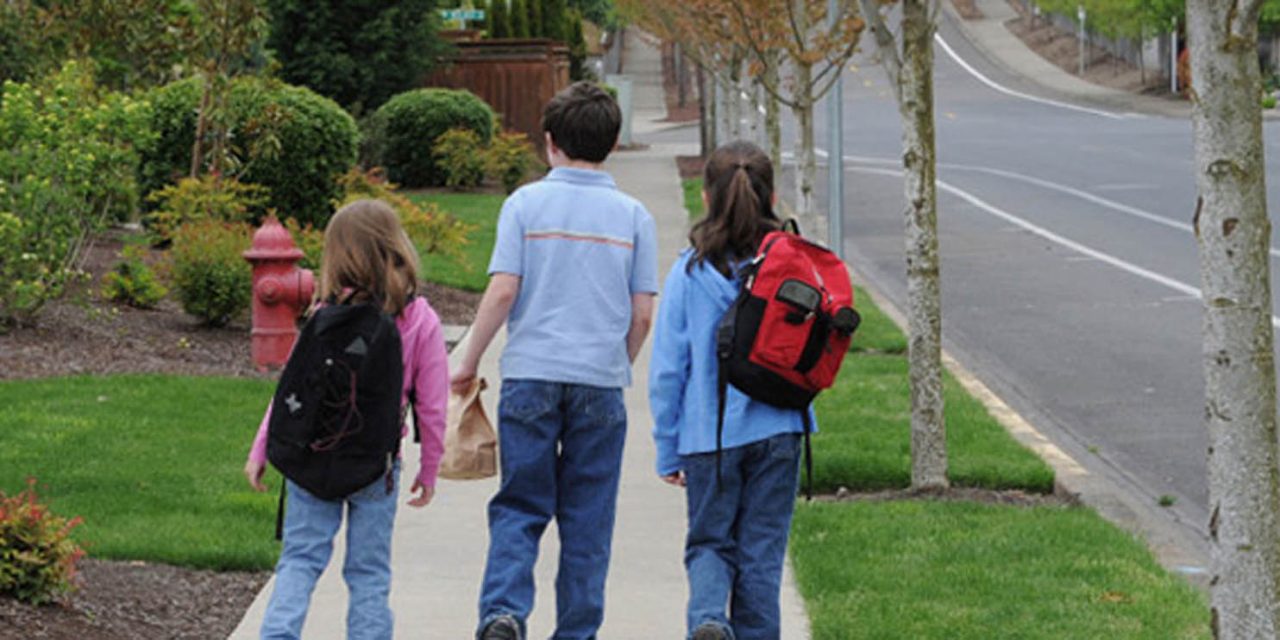
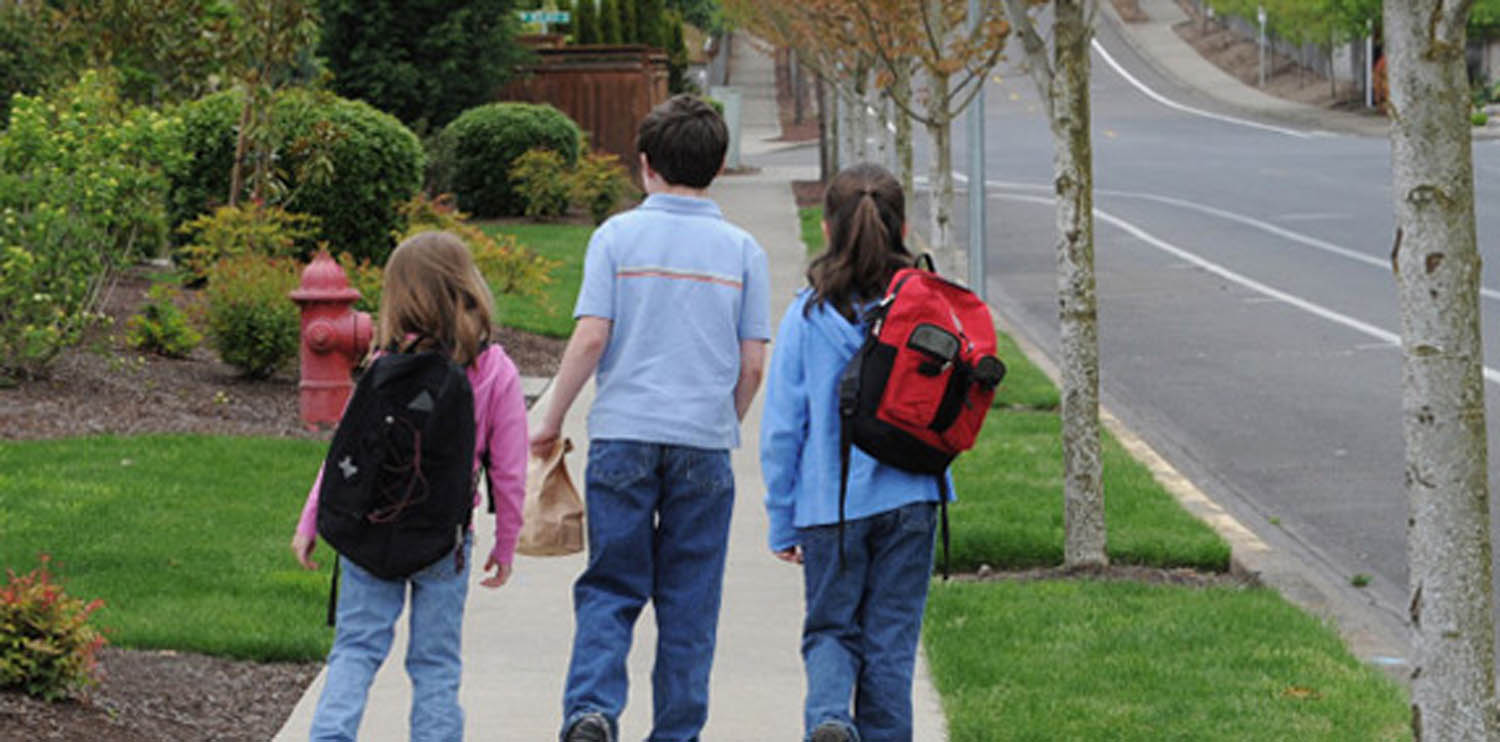
With children heading back to school next Tuesday, the B.C. government, ICBC and police are asking drivers to watch for children, especially in or around school zones and expect more traffic on our roads. RCMP and Speed Watch volunteers will be closely monitoring drivers’ speeds in school zones across the province. Parents are encouraged to review the rules of the road with their children and go over their daily route to and from school. (Photo supplied)
With hundreds of thousands of children across British Columbia – and hundreds here in Osoyoos – returning to school next week following the Labour Day holiday weekend, ICBC is warning drivers and members of the public to be careful, slow down and use extra caution in all school zones across the province.
In British Columbia, 78 children aged five to 18, on average, are injured in crashes in school or playground zones every year, says the latest statistics from ICBC.
With children heading back to school next Tuesday, the B.C. government, ICBC and police are asking drivers to watch for children, especially in or around school zones and expect more traffic on our roads
RCMP and Speed Watch volunteers will be closely monitoring drivers’ speeds in school zones across the province.
Parents are encouraged to review the rules of the road with their children and go over their daily route to and from school.
The start of the school year is also a great time for parents to consider carpooling with another parent in their neighborhood for school drop off and pick up or allowing their child to walk or cycle to school if possible to help reduce traffic congestion and vehicle carbon emissions.
“We all need to do our part to keep children and students safe,” said Todd Stone, B.C.’s Minister of Transportation and Infrastructure. “That means expecting busier roads and giving yourself plenty of travel time so you aren’t rushing and can stay focused on the road. Use extra caution especially around school zones.”
Minister of Education Mike Bernier echoed the same thoughts.
“When parents send their kids back to school this fall, they expect them to come home safely at the end of the day,” said Bernier. “It’s up to all of us as drivers, as parents, and as students to slow down, be alert and obey the rules of the road.”
Police officers will also be monitoring and patrolling school zones to ensure children will be able to arrive and leave school grounds without fear for their safety.
“Police will be closely monitoring drivers’ speeds in school zones to make sure they stick to the 30-km/h speed limit,” said Chief Constable Neil Dubord, Chair of the B.C. Association of Chiefs of Police Traffic Safety Committee. “We want children to get a safe start to the school year so we’re asking drivers to be extra careful on our roads and watch for children.”
Driving the proper speed and paying careful attention to what you’re doing in school zones will prevent virtually all of the accidents and incidents that are taking place in school zones, says ICBC.
Management from ICBC continues to issue public warnings at the beginning of each school year to remind drivers and the public at large that it’s time to use extra precaution in early September when children are returning to the classroom.
“The start of the school year is an exciting time for children so road safety may not be top of mind for them,” said Lindsay Matthews, ICBC’s director responsible for road safety. “We’re encouraging parents to talk to their children about the rules of the road and their daily route to school. Even older children need to be reminded about road safety.”
Tips for drivers:
- Every school day, unless otherwise posted, a 30 km/h speed limit is in effect in school zones from 8 a.m. to 5 p.m.
- When you’re dropping off your children in school zones, allow them to exit the car on the side closest to the sidewalk. Never allow a child to cross mid-block.
- If a vehicle’s stopped in front of you or in the lane next to you, they may be yielding to a pedestrian, so proceed with caution and be prepared to stop.
- Watch for school buses. Vehicles approaching from both directions must stop for school buses when their lights are flashing.
- Before getting into your vehicle, walk around your vehicle to make sure no small children are hidden from your view. Always look for pedestrians when you’re backing up.
Tips for parents and kids:
- Review ICBC’s child pedestrian safety tips with your children and post them in your home.
- In the Lower Mainland, 46 children aged five to 18 are injured in crashes in school or playground zones every year.
- On Vancouver Island, 12 children aged five to 18 are injured in crashes in school or playground zones every year.
- In the Southern Interior, 14 children aged five to 18 are injured in crashes in school or playground zones every year.
- In North Central B.C., seven children aged five to 18 are injured in crashes in school or playground zones every year.
ICBC provides free road safety educational materials to B.C. schools to help students from kindergarten to grade 10 learn about road safety topics unique to their grade level using fun and interactive activities.
Annual crash and injury averages based on 2009 to 2013 data reported by ICBC. Annual fatal average based on 2009 to 2013 police-reported data.
SPECIAL TO THE TIMES
Osoyoos Times