By Don Urquhart, Times Chronicle
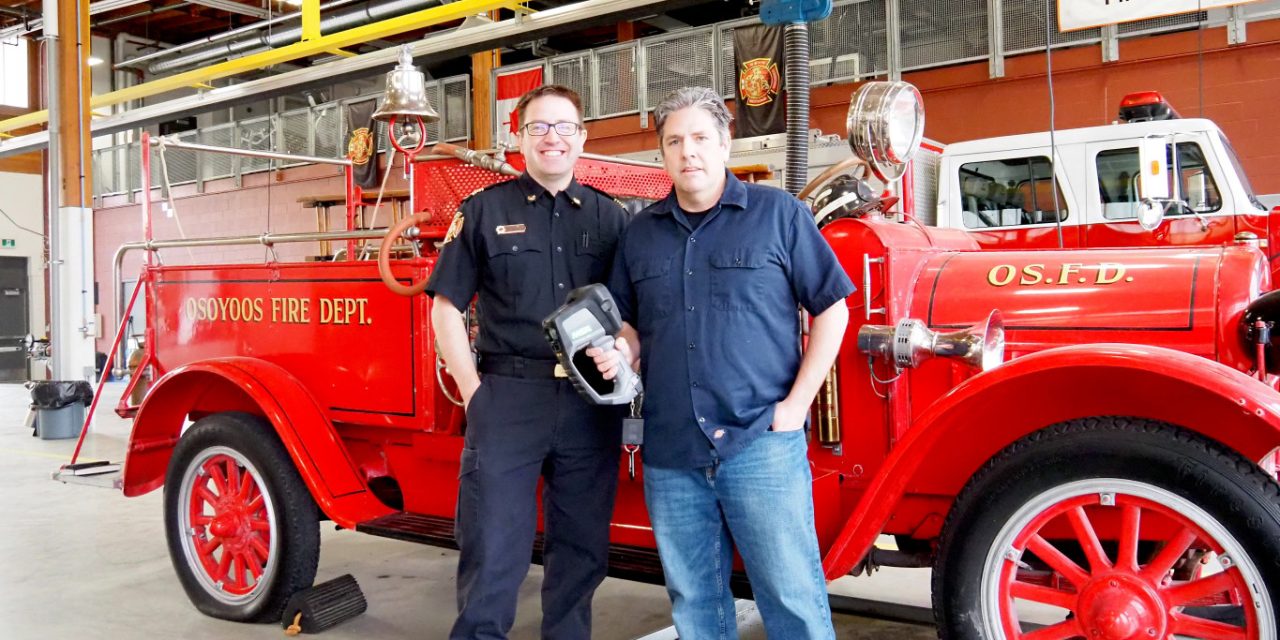
Osoyoos Fire Rescue (OFR) is now fully outfitted with two thermal imaging cameras at each of its two fire halls, a nearly $17,000 purchase made possible by donations during and after the Nk’Mip Creek wildfire.
The new camera is in addition to one existing newer generation camera and replaces a nearly 14-year-old camera that had reached its end of life.
Because the fire department operates a primary fire hall in the west of Osoyoos on 74th Ave. alongside a secondary one in East Osoyoos on 51st St., it needs two of the cameras.
Having two is important OFR Chief Corey Kortmeyer notes, saying: “We don’t have to try to take one device which is a life-saving device, and pass it around.”
He adds that the two fire halls are a necessity, particularly in summer when simply getting from one side of Osoyoos to the other can be slow.
As locals are well aware, the population expands from just over 5,000 to 10,000 and even upwards of 20,000 people on a summer long weekend.
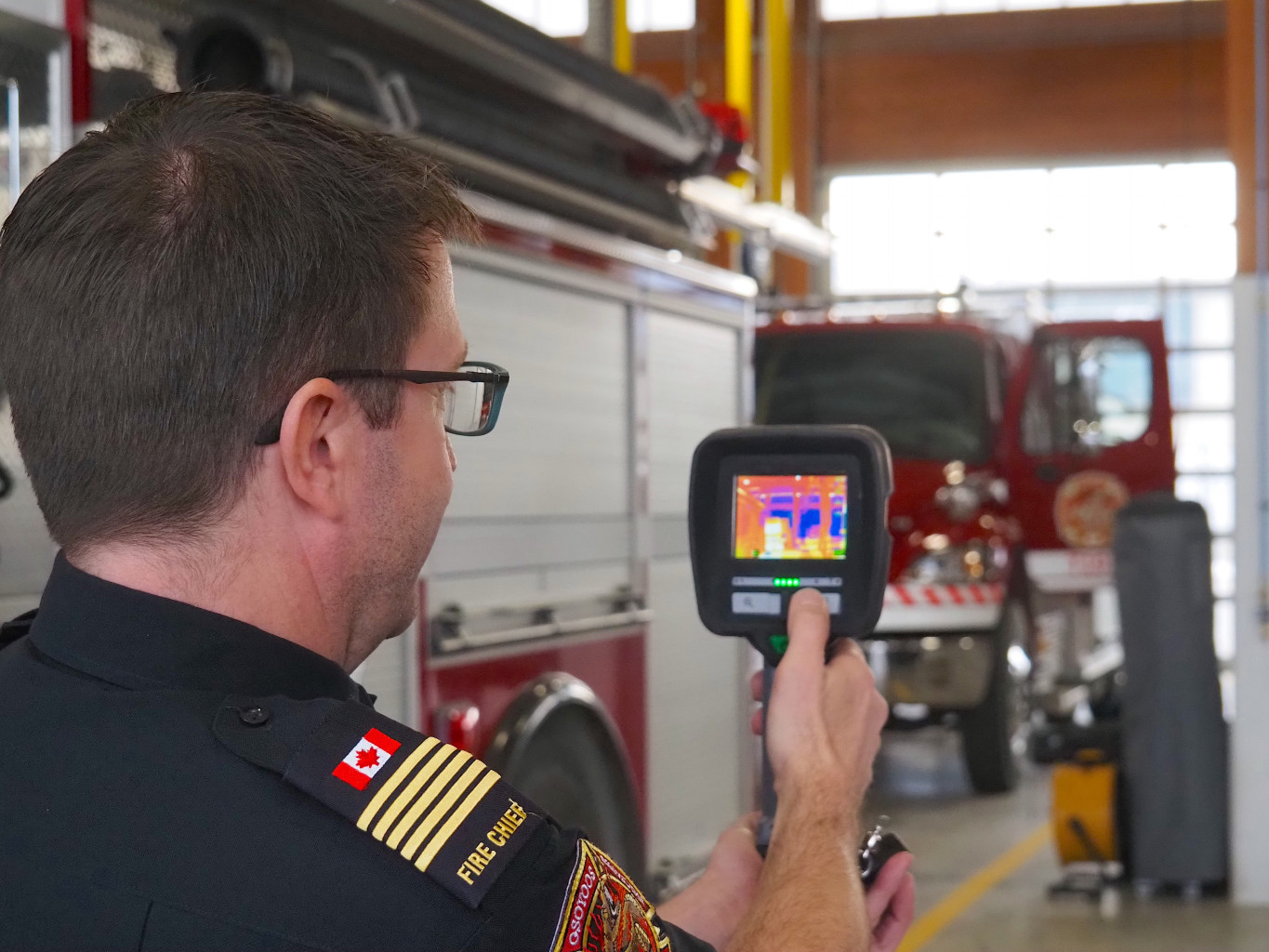
Fire Chief Corey Kortmeyer demonstrates the new thermal imaging camera. Don Urquhart photo.
The importance of the thermal imaging camera cannot be overstated he says, describing it as a “lifeline for a firefighter.”
The hand-held camera provides a clear picture of the actual fire situation based on heat intensity.
“The advantage of thermal imaging cameras is that they cut through the smoke so entering into a live fire if it’s zero visibility and we’re looking for you or your child, without the thermal imaging camera we’re banging around.”
“It’s absolutely huge for us because it will differentiate the pile of blankets lying beside the child from the child itself.” This is particularly important in zero visibility “where doing an interior search you can’t really tell the difference between a dog and a human being.”
The thermal imaging camera “paints that picture,” he says, adding “without the thermal imaging camera, you’re just guessing.”
With this camera, he notes firefighters can see the entire environment with the LED screen showing all the temperature differentials throughout the room.
“It allows us to be highly effective and very quick, especially when looking for someone.”
It also means they don’t need to rip down drywall to check for hotspots that are still burning but not visible and to check if the fire has spread internally through the structure from the point of origin.
This saves significant costs and Kortmeyer says when viewed from this perspective it pays for itself within a year or two. More significantly, however, it saves lives – both the public and firefighters.
Featuring the latest technology the camera has various settings offering different ways of viewing the temperature differentials and includes a laser distance feature that can also show the temperature of distant objects.
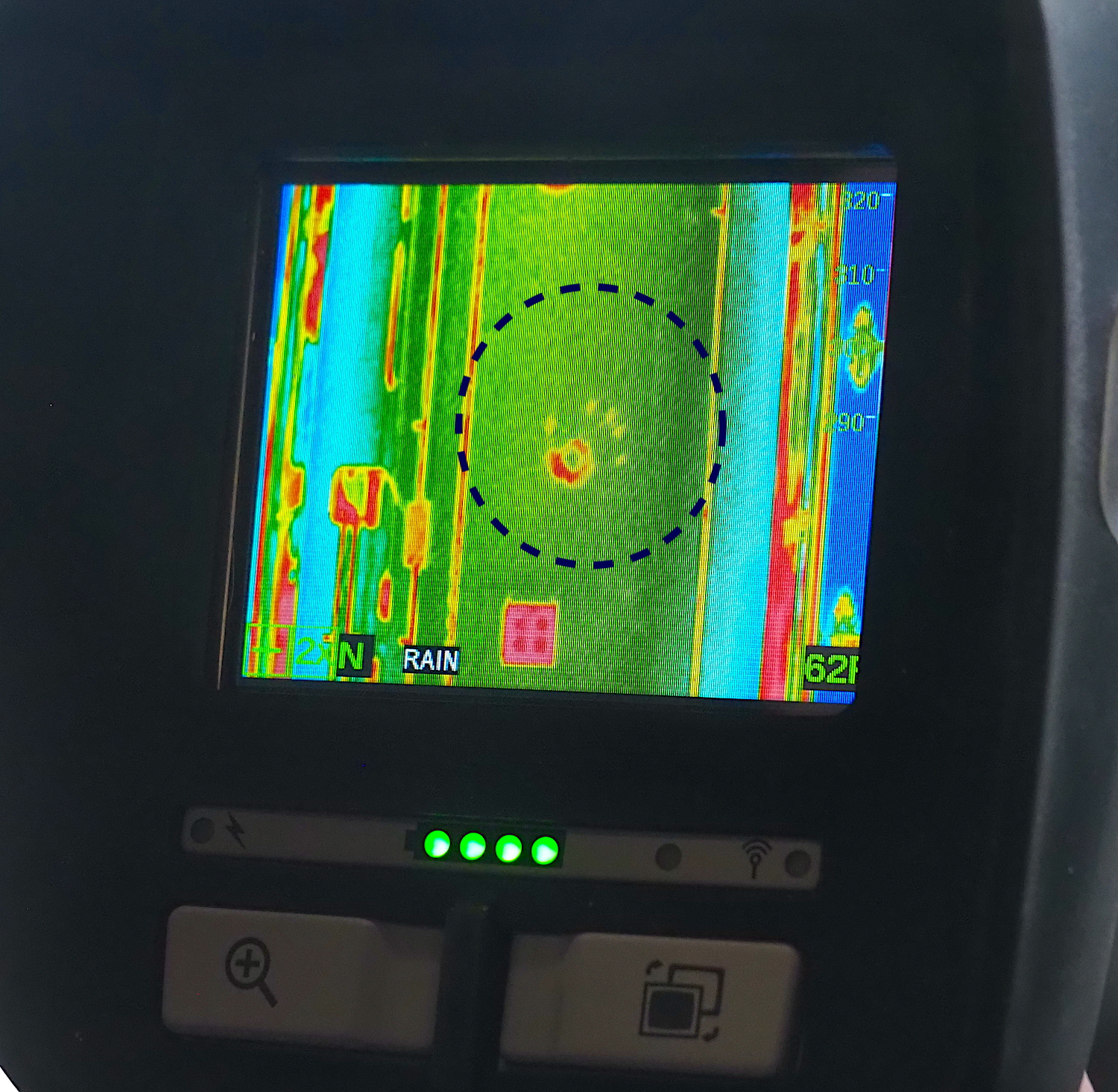
The new thermal imaging camera is far more sensitive than the OFR’s previous camera. Circled above is the thermal “print” left behind from briefly placing a hand on a concrete wall. The camera also shows electrical power lines. Don Urquhart photo.
Kortmeyer also emphasizes that it was important to let the community know that their donations have gone towards this piece of equipment which ultimately contributes back to the community.
“I want to get it out that the donations that we received during the Nk’Mip Creek wildfire through the charitable society went to purchase another thermal imaging camera,” Kortmeyer says.
He notes that with the significant cost involved the purchase would not have been possible if it had not been for the donations that poured in from businesses and the public both during and after the wildfire that threatened Osoyoos in 2021.
“What we want to do moving forward is really recognize the Osoyoos Firefighters Charitable Society,” he added. The society does much of the background work in terms of fundraising and managing donations that come in.
“But they haven’t really been visible,” he notes, adding that public perception centres more around the fire department itself.
“The structure we have here as we have some paid personnel and everybody below that are paid on-call volunteers, or ‘professional volunteers’ as I like to call them.”
What many residents may not realize is that the charitable society is comprised of the firefighters themselves and of course spouses when the “all hands on deck” events take place.
“I think for people that realize that not only is the fire department up and running for the 24 seven but the members are also putting the time into raising funds that will go back into the community,” Kortmeyer says.
Firefighter Chris Parker has been a key champion of fundraising for a number of years and then through the charitable society when it was established two or three years ago.
The society now handles all fundraising for charities, families in need, and donations to hospitals including the Oliver hospital and Vancouver General Hospital’s burn unit, etc.
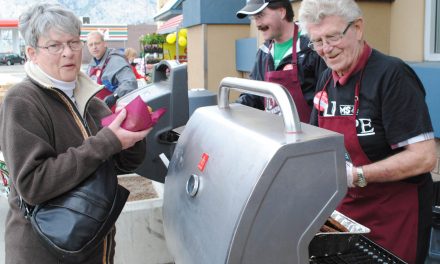
These fundraising efforts include the famous “Oyster Feed,” dinners and dances, drive-through BBQs, and general fundraising.
And while the Oyster Feed no longer exists in name, it continues as a dinner and dance – absent of course during the pandemic years.
The Osoyoos Firefighters Charitable Society Dinner and Dance will return on April 22 at the Osoyoos Curling Club.
“That dinner and dance has been our biggest fundraiser and basically the money that we raise from it goes to helping out,” Parker says, adding that they raise up to $30,000 at the event.