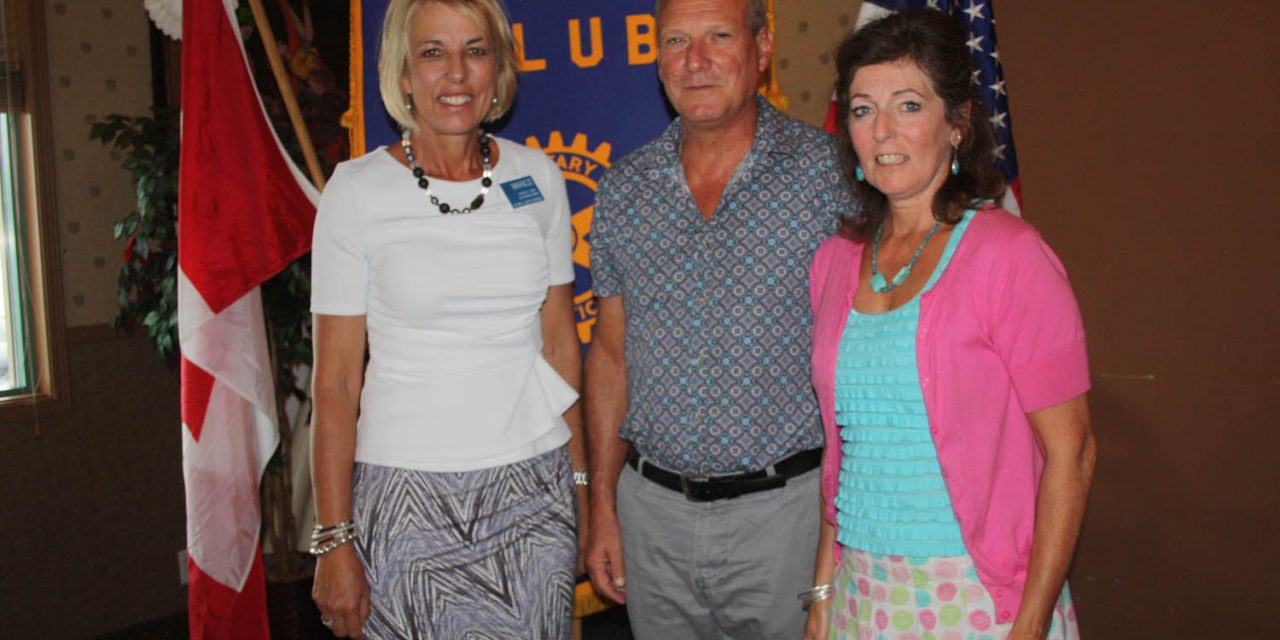
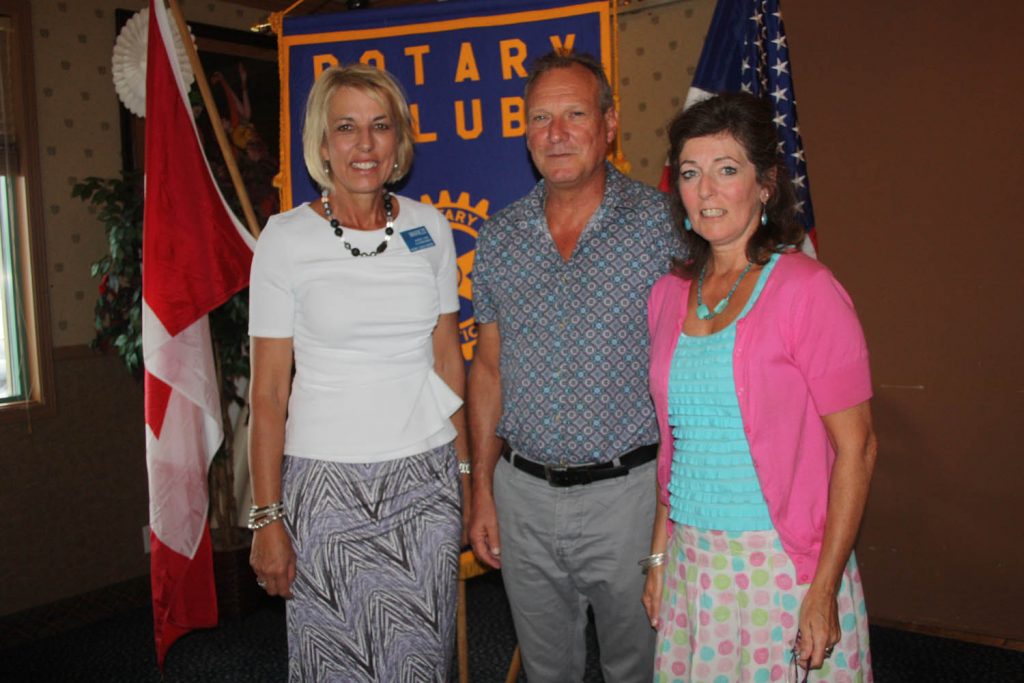
From left are outgoing Rotary Club of Osoyoos President Marieze Tarr, Trevor Caldecott and Sandra Shaw. Caldecott and Shaw spoke to Rotarians about the plight of India’s exploited population of Dalits, formerly called “untouchables.” (Keith Lacey photo)
After a recent eye-opening excursion to India, an Osoyoos couple has committed to raising awareness about the plight of one of the world’s most oppressed group of people.
Trevor Caldecott and his wife Sandra Shaw travelled to India in February and came away shattered at the persecution of more than 250 million Dalits.
The Dalits are the “most exploited people in the world” and represent a group in India formerly known as “the untouchables,” said Caldecott during a powerful presentation to the Osoyoos Rotary Club June 23.
Dalits are considered totally impure and unworthy to be considered a part of India’s longstanding caste system, he said.
The term Dalit means downtrodden, broken or crushed, he said.
Strictly speaking, they have been born outside the caste system and are considered soulless, outcast people with no connection to Brahma, the Hindu god who created the caste system from parts of his body, said Caldecott.
One in every four Indians is a Dalit and they are considered so impure that their mere touch severely pollutes members of all other castes, he said.
Untouchability is a distinct Indian social institution and it legitimizes and enforces practices of discrimination against people born into particular castes and legitimizes practices against the Dalit that are humiliating, exclusionary and exploitive, said Caldecott.
“They have no status in India,” he said.
Almost all Dalits are forced to live in horrific living conditions since the formation of India’s caste system more than 3,000 years ago, he said.
“To the average Indian … they do not exist,” he said.
Millions of Dalits are forced to borrow money from illicit loan sharks and they remain indebted and must work off the debt over the course of their entire lifetime, he said.
During the visit in February, Caldecott said he and his new wife of one year were “overwhelmed” by the dire poverty and living conditions the Dalits were forced to live in, but equally impressed by their humility and determination to try and rise from the oppression, he said.
“We just didn’t realize the enormity of the problem,” he said.
More and more young Dalits have been able to attend the public school system over the past several years, but they are badly mistreated by children who come from higher castes and they are not allowed to drink water from a fountain or touch utensils needed to eat, he said.
There are no provisions in the Indian constitution that deal directly with the caste system and the current government has done very little to make changes to the system in any progressive manner, he said.
In 1950, the Indian government introduced a series of practical measures to try and reverse the Dalits’ historical position and a percentage of government jobs and parliamentary positions were also reserved for the Dalit people.
But there is very limited application and implementation of the proposed changes mainly due to the lack of English education for the Dalits, he said.
“Most of them drop out of school,” he said.
The good news is Good Shepherd mission moved into India and has opened more than 100 schools for Dalit children since 2001, he said.
There are more than 1,700 staff and 25,000 students being taught and they are all learning English, which will help immensely as they pursue higher education and access to decent jobs, he said.
For Dalits, an English education is the only way forward because without it, they can’t qualify for the benefits and privileges of government affirmative action programs, he said.
Without an English-based education, Dalit students can never advance to higher-level English schools or gain entrance to the Central Government university, he said.
Good Shepherd now has more than 75 health care workers in 15 states providing quality health care initiatives to the Dalits, he said.
Shaw talked about the success of the Good Shepherd Operation Mobilization International (MBI), the volunteer organization they belong to that brought them to India in February.
“We were looking for some volunteer work to try and give back to the world,” she said.
Good Shepherd ministries has not only helped improve education and health care for the Dalits, but has also started anti-trafficking campaigns, the creation of micro loans and an advocacy program to the local and provincial governments, she said.
It was reassuring to visit a slum area and see dozens of kids learning English even though there were no desks and very limited resources available to them, she said.
She and her husband also visited an orphanage filled with 50 or so young girls who have been rescued from the sexual slave trade.
“They now have the opportunity to go to school and learn a trade,” she said. “You just can’t imagine what some of these young girls have already been through.”
Good Shepherd has established the Dalit Freedom Network Canada and all money donated goes towards continuing the fight to improve the lives of the Dalits in India, she said.
She and her husband said they hope the Osoyoos Rotary Club might get involved in sponsoring some children or a program.
Anyone wishing more information or to make a donation or get involved can contact the Dalit Freedom Network Canada by calling toll-free at 1-888-592-2238 or going online at www.dalitfreedom.net.
KEITH LACEY
Osoyoos Times