By Roy Wood, Special to the Times Chronicle
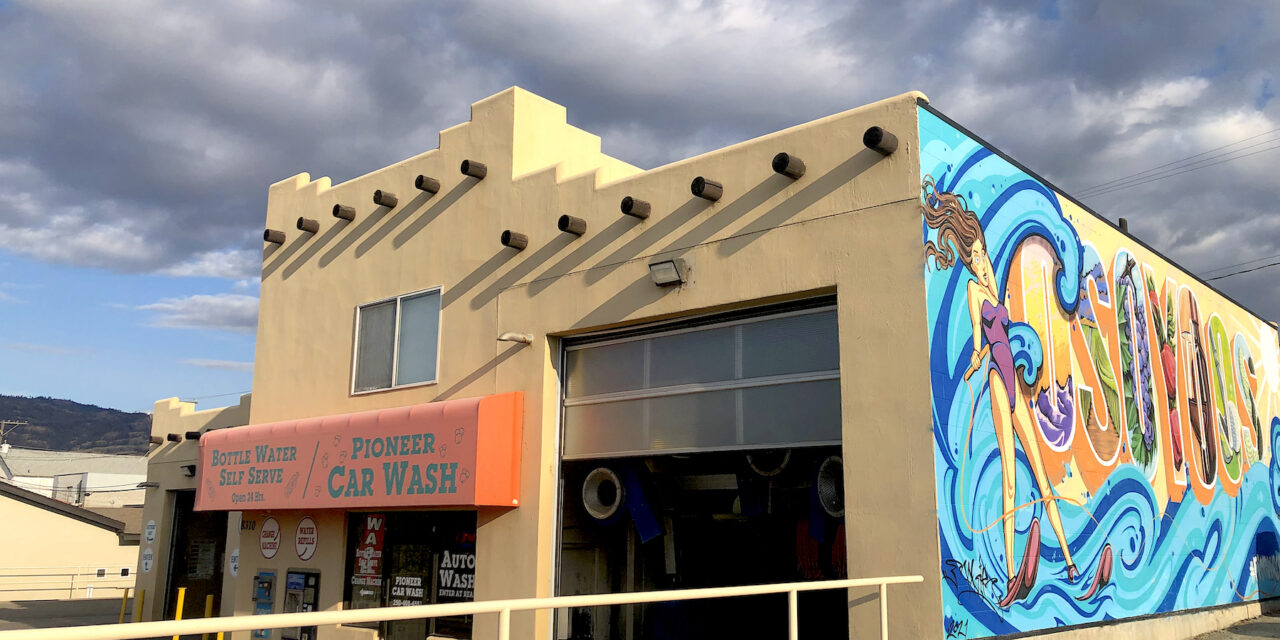
While full implementation of water metering is two or three years away in Osoyoos, one local business got its wish this week to switch from flat-rate to metered billing for its water consumption.
Pioneer Car Wash owners Alf and Anna Kole petitioned council earlier this year to make the change, citing what they believe would be considerable savings if they are billed based on actual consumption.
“We are being charged a flat fee for water and sewer, but since we got our 2024 taxes for the car wash, there is a huge difference between the flat rate and what the cubic meter rate is between our competitor in Oliver,” they said in a letter to the town.
“The car wash is a unique business (for) which the volume of water can fluctuate significantly. Being charged by meter instead of flat rate, in our opinion, would be a more fair way of paying for our water and sewer.”
A report to council from finance director Jim Zakall indicated that the Pioneer Car Wash water and sewer charge based on a flat rate for 2024 would be about $14,408. If it were billed on a metered basis, it would be reduced by $4,353.
The report also compared Pioneer to a similar car wash in Oliver, where water meters have been in use for several years. The Oliver charge for 2023 was more than $5,000 lower at $9,357.
Following some discussion this week, council acceded to the Kole’s request and unanimously passed a resolution to begin immediately billing the car wash by meter for water and sewer.
In the “CAO comments” section of the report, Rod Risling indicated that he expects further requests similar to this one.
Citing the significant increases in water and wastewater fees in the 2024 budget, Risling said many users have been reviewing their usage and their bills.
“Until such time that the billing program incorporates both a flat fee and variable rate based on consumption, there are going to be users that believe the existing flat fee system is unfair as they do not reflect their usage,” he said.
Installation of water meters throughout the municipality and implementation of a metered billing system “is likely 2-3 years away,” Risling said. “Therefore, it is likely that further requests will result to a shift of billing from a flat fee to metered rate.”
Zakall said that while such requests do have an impact on the workloads of his department, “I’m OK with this moving forward. …
“The positive thing about this is that we’re showing that we’re doing something … (and) staff is getting accustomed to the systems. … There’s way more positives coming out of this than negatives.”
While the resolution says that metered billing includes water and sewer, the meters in question actually measure only the volume of water flowing into a home or business.
However, the same data is used to calculate sewer charges. Risling explained: “It’s based on a formula. So much goes in, so much has to come out. … There is irrigation and that type of thing, but that’s all worked into it.”