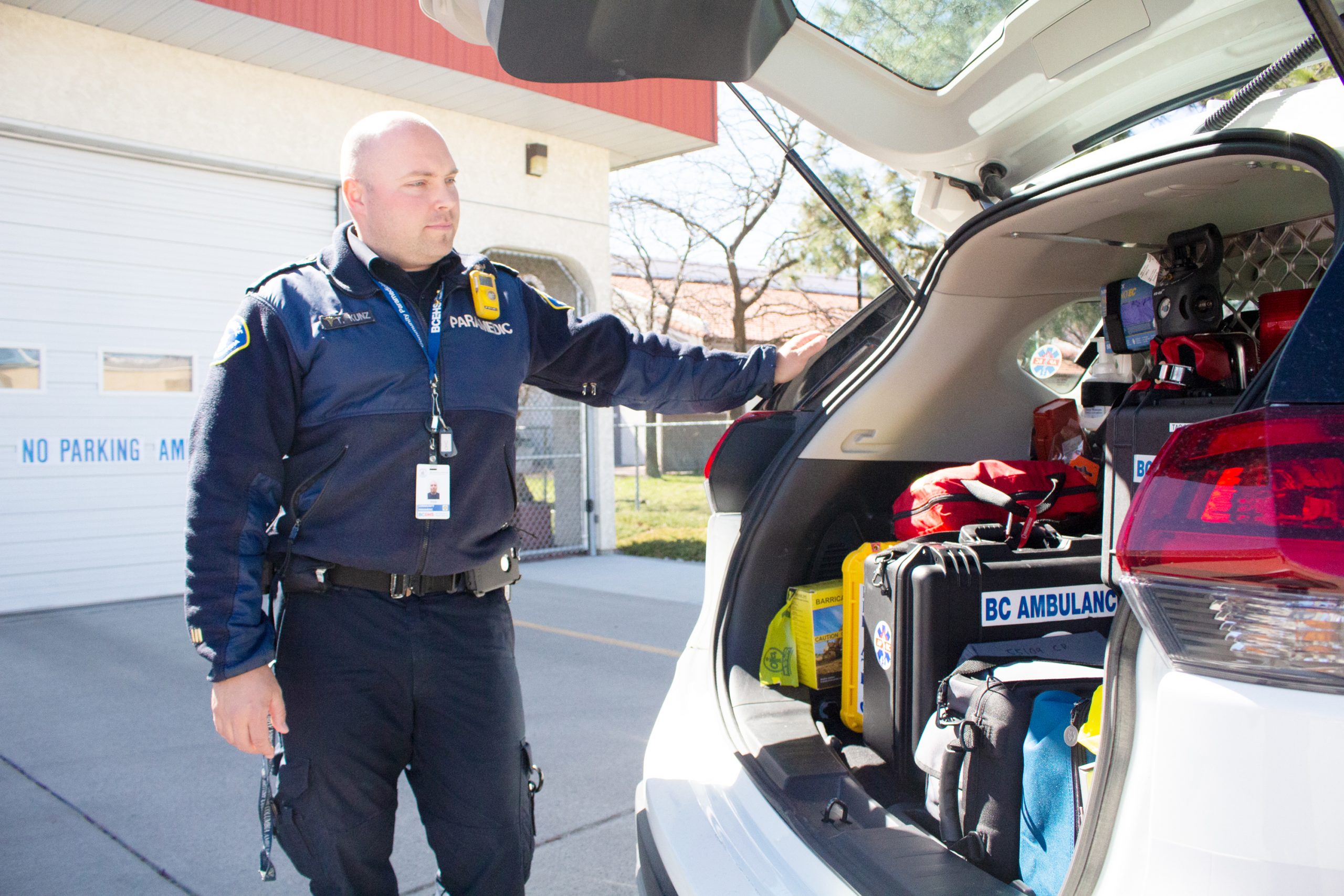
Todd Kunz is a different kind of paramedic, dealing in preventative care and helping address some of the gaps in a health care system which is experiencing staffing shortages in rural areas like Osoyoos. (Dale Boyd / Osoyoos Times)
By Dale Boyd
Osoyoos Times
With every second crucial during an emergency, staffing shortages have paramedics in B.C. looking for new ways to address gaps which are leaving areas like Osoyoos understaffed.
Current workloads are unsustainable according to Ambulance Paramedics and Emergency Dispatchers of BC, including in Osoyoos which relies heavily on on-call staffing.
On March 22, there were no ambulances available in Osoyoos during the day, and on March 25, there were no ambulances available at night according to data from the provincial paramedic group.
The closest station nearby is in Oliver, which would see a minimum 25 minutes of response time, under ideal circumstances and if staff are not otherwise tied up in Oliver.
“If Oliver ambulances were unavailable, the next closest units would be in Penticton or Keremeos,” said Jessica Chilton, communications director with Ambulance Paramedics and Emergency Dispatchers of BC.
Part-time or “on-call” employees can make it difficult to recruit and retain staff with no guarantee of reliable hours leaving rural communities with fluctuating staffing numbers.
• Read more: Doctors will be on-call overnight at SOGH emergency
“Relying so heavily on an on-call population of paramedics means they are going to look to other centres to get more regular employment,” Chilton said.
For years, Todd Kunz worked as a paramedic in the Lower Mainland, while living in the South Okanagan, for that very reason. However, part of a relatively new program to B.C. he is now working full-time doing what he loves in the community he was born and raised in.
Kunz is a community paramedic, a position which is taking some of the pressure off of first responders.
Working as a paramedic for 20 years in B.C., Kunz has transitioned to a much different role over the last year in Osoyoos as a community paramedic.
“When you call an ambulance, we’re reacting to a situation or responding to help. Whereas the community paramedic role is a lot more preventative,” Kunz said.
The role helps build relationships in the community and works collaboratively with Interior Health to close gaps in the healthcare system.
A typical day for Kunz involves checking in with a number of clients who have ongoing or chronic health issues like asthma, emphysema, diabetes, heart disease or chronic obstructive pulmonary disease (COPD).
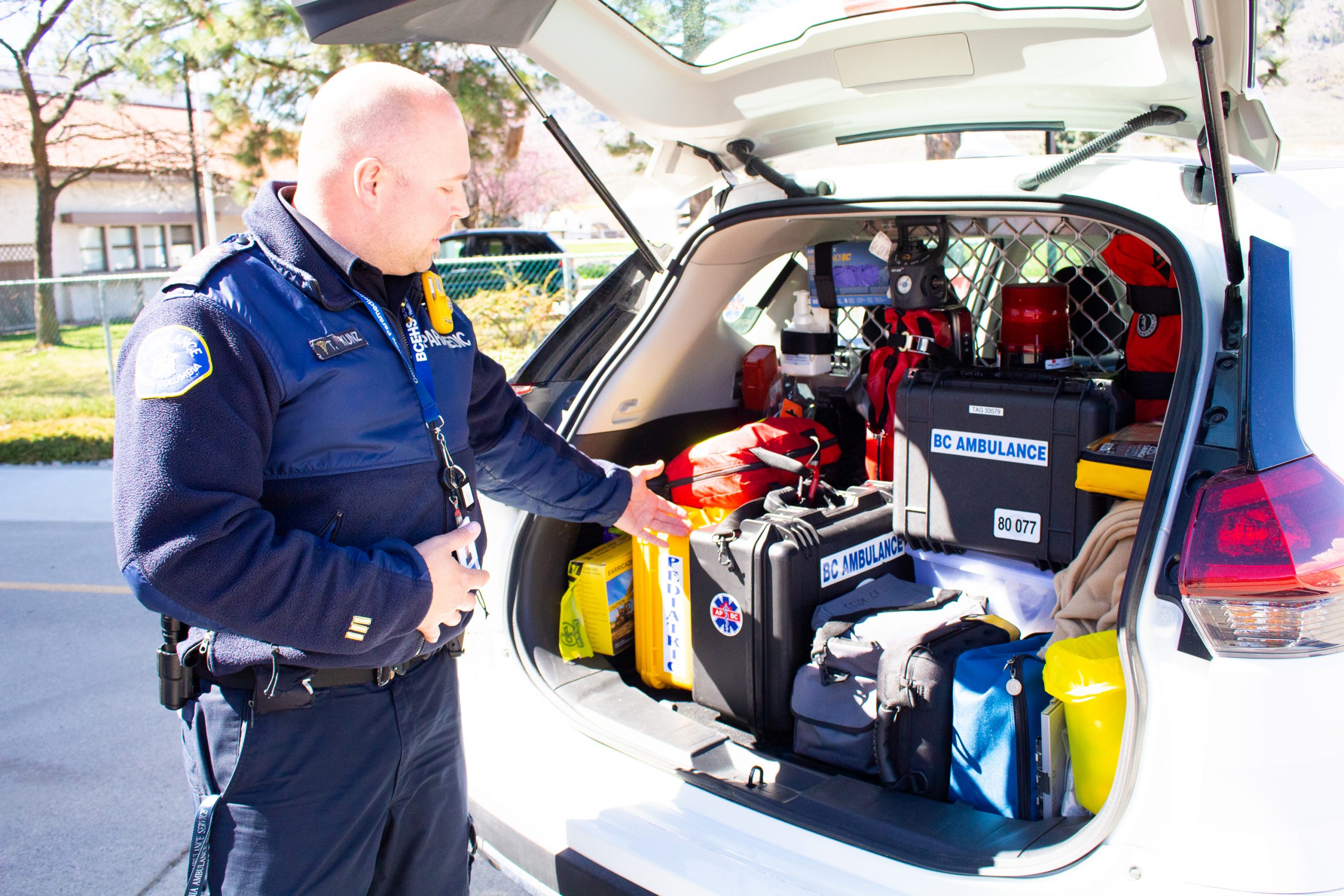
Todd Kunz, a community paramedic based in Osoyoos, spends a lot of his time on preventative care and checking in on patients with ongoing or chronic health issues. (Dale Boyd / Osoyoos Times)
Kunz is performing wellness checks, risk assessments and working closely with his client’s care teams to see how to provide more education and help in the home.
“We’re learning it’s a lot more necessary to provide preventative care in the home rather than reacting. We’re spending a lot of time teaching and educating and working with their primary care providers and physicians,” Kunz said. “We’re responding to the home instead of shipping them up to the hospital.”
Working with clients to establish a care plan can also reduce strain on the health care system. Educating patients on their conditions can reduce unnecessary 911 calls or help them prepare in the event they do need to go to the hospital.
“We really work with them to understand their conditions and what to do about them,” Kunz said.
With experience in larger metropolitan areas like Vancouver, where Kunz worked for 11 years, he describes the community paramedic role as “way different.”
“It’s a lot more methodical. We spend a lot of time in the client’s home, getting to know them, building those relationships,” Kunz said. “It’s great. The one thing in a normal role as a paramedic you never really get to see what the follow-up care is, or you only see them for a short time.”
• Read more: OSS student getting head start on paramedic studies
Community paramedics like Kunz are bringing a more full-circle kind of health care to rural areas.
“It’s great to see and feel that connection and then you really get to know their needs. Having that follow-up care, it brings that personable approach into it. It’s a lot of fun,” Kunz said.
He also enjoys getting the opportunity to pass on his experience and knowledge to newer paramedics in the area. Working where he was born and raised, on a full-time basis, is a major plus for Kunz. He also contributes by teaching the public through CPR training, naloxone training, drug prevention and teaching programs in schools among many other educational and community-based roles.
“I never, at any point in my career, thought I would be full-time back in my community,” Kunz said. “It’s great just to give back to your community that you were raised in.”
Being raised in a community the size of Osoyoos, he also gets an extra familiarity with his clients, some of whom he’s known for a long time.
“It’s pretty neat. At first, I thought it might be a little awkward, for them, not as much for me I’m comfortable with the job, but they are fantastic. They open up to me, it’s personable and you’ve got that relationship, that trust now,” Kunz said.
Assisting and working in tandem with first responders and health care providers can help keep 911 calls down and reduce impacts on the overall healthcare system. Community paramedics may not solve all staffing issues, but expanding the program is definitely a boon to rural areas like the South Okanagan, according to Chilton.
“That’s definitely one solution other communities could benefit from,” Chilton said. “It’s something we see a lot of value in. That is really a stable staffing model.”