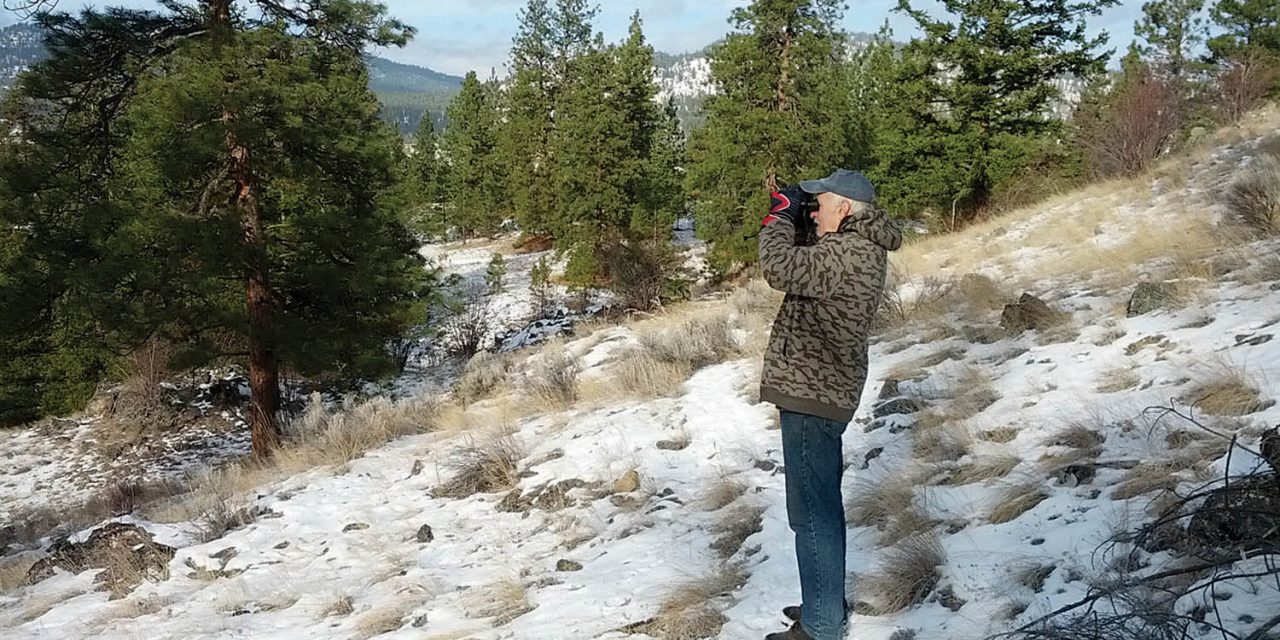

Ron Laplante from Penticton peers through binoculars during the 35th annual Oliver-Osoyoos Christmas Bird Count on Saturday, Dec. 28. Thirty-six observers took part in the count, which resulted in 18,970 birds of 102 species recorded. The number is reportedly the lowest number since 2002.
Dick Cannings photo
The 35th annual Oliver-Osoyoos Christmas Bird Count was held on Saturday, Dec. 28 with 36 observers in 12 parties taking part, plus three additional feeder watchers.
The counters spent the day searching the count area for birds and recording the numbers of all the different species seen.
This year there were 18,970 birds of 102 species found. Although the species total is above the 35 year average, this is the lowest number of species since 1999. The total number of birds is the lowest number since 2002.
The main reason for the low numbers was the total absence of the “erratic winter finches.” Species such as Pine Siskin, Common Redpoll, Evening Grosbeak plus a few others are referred to as erratic winter finches because of the huge fluctuations in numbers from year to year.
In normal years they move into our area for the winter in good numbers, but some years they just don’t show up and will move to another part of the country to winter.
Some years our area has had the influx such as 2001 when we recorded almost 1,000 Common Redpolls.
This year we had zero. Our 102 species recorded this year is the highest total in the BC Interior with Penticton being second with 96 species, so our count retains its title as the best count in the BC Interior.
Our most abundant species this year was European Starling, as usual. The starlings spend the winter here in large flocks, scouring the orchards and vineyards for any remaining fruit.
There were a few interesting highlights for the day. A weedy field along the Okanagan River held a Golden-crowned Sparrow and Swamp Sparrow, only the sixth record for both these species. A Rusty Blackbird found near Road 22 provided our 12th record.
Our best sighting was a count week (three days before and three days after the count date) Hermit Thrush that was found in the Osoyoos Oxbows for only our third winter record.
Of interest was the 425 Eurasian Collared-doves, a new record high.
This species was introduced to the Bahamas a few decades ago and then made it across to Florida. Since then it has been rapidly colonizing the entire continent.
Last year we had a record high 188 collared-doves, so the numbers here are continuing to expand rapidly.
Despite some people’s fears that the collared-doves are displacing our native Mourning Doves, there is no sign of Mourning Dove numbers declining, and we recorded them in above-average numbers this year.
The data collected from our Christmas Bird Count, along with the 2,300 other counts done throughout the Americas is part of the longest running wildlife survey in the world.
The information collected is critical to the monitoring of the health of our bird populations and helping to guide conservation actions.
Thanks to all those who took part and helped make the count a huge success.
Doug Brown
Special to the Chronicle