By Times Chronicle Staff
British Columbians are being urged to prepare for seasonal hazards, such as having a grab-and-go bag prepared, as the warming weather increases the likelihood of climate-related emergencies, including spring flooding, wildfires and drought.
The Province is warning that warming weather in the coming weeks will cause snowpack to melt, leading to increased spring runoff. When paired with heavy or extended rainfall, this can heighten the risk of flooding in rivers, streams and lakes.
“Preparing for emergencies is a team effort, and as warmer weather arrives, it’s equally important that people have their own emergency plan, have a grab-and-go bag ready and know what to do in all types of emergency situations,” said Kelly Greene, Minister of Emergency Management and Climate Readiness.
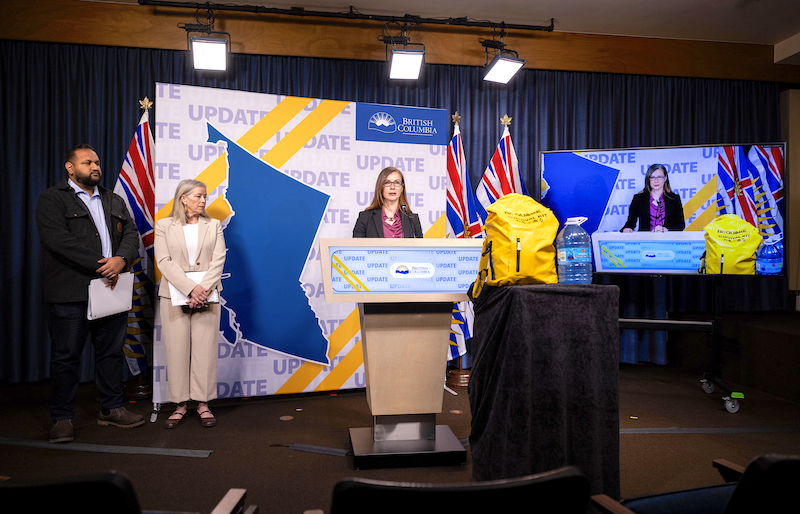
Kelly Greene, Minister of Emergency Management and Climate Readiness speaks during a press conference in Victoria on Apr. 16. Looking on (left to right) Ravi Parmar, Minister of Forests, and Randene Neill, Minister of Water, Land and Resource Stewardship. In the centre front an example of a “grab-and-go” bag and water. Government of BC photo
The latest snowpack surveys from the River Forecast Centre, released on Wednesday, April 9, 2025, show BC’s overall snowpack is at 79 per cent of normal. Comparatively, in April 2024, the provincial snowpack averaged 63 per cent of normal, the lowest it had been in 50 years.
Drier than normal conditions in parts of the province, even though it’s only April, combined with long-term water supply challenges, “mean we already need to be mindful of water use,” said Randene Neill, Minister of Water, Land and Resource Stewardship. As such the Province said it will continue to update its Drought and Water Scarcity Response Plan and invest in long-term water security, including through the $100-million Watershed Security Fund.
Flooding and drought preparedness
Those living in low-lying areas are encouraged to move equipment and other assets to higher ground and clear perimeter drains, eavestroughs and gutters. People should be on alert if they notice a rapid change in water levels, especially a drop, as this indicates a problem upstream, and call local fire, police or public works departments in your area immediately if you suspect something is out of the ordinary.
As for drought, many parts of the province experienced one of the most severe droughts in recorded history last year. As BC continues to get less rain than average, it’s having a lasting impact on water levels and there is potential for prolonged drought this year, the Province said, adding communities and businesses are encouraged to take steps to use water more efficiently and plan for potential drought conditions.
Wildfire preparedness
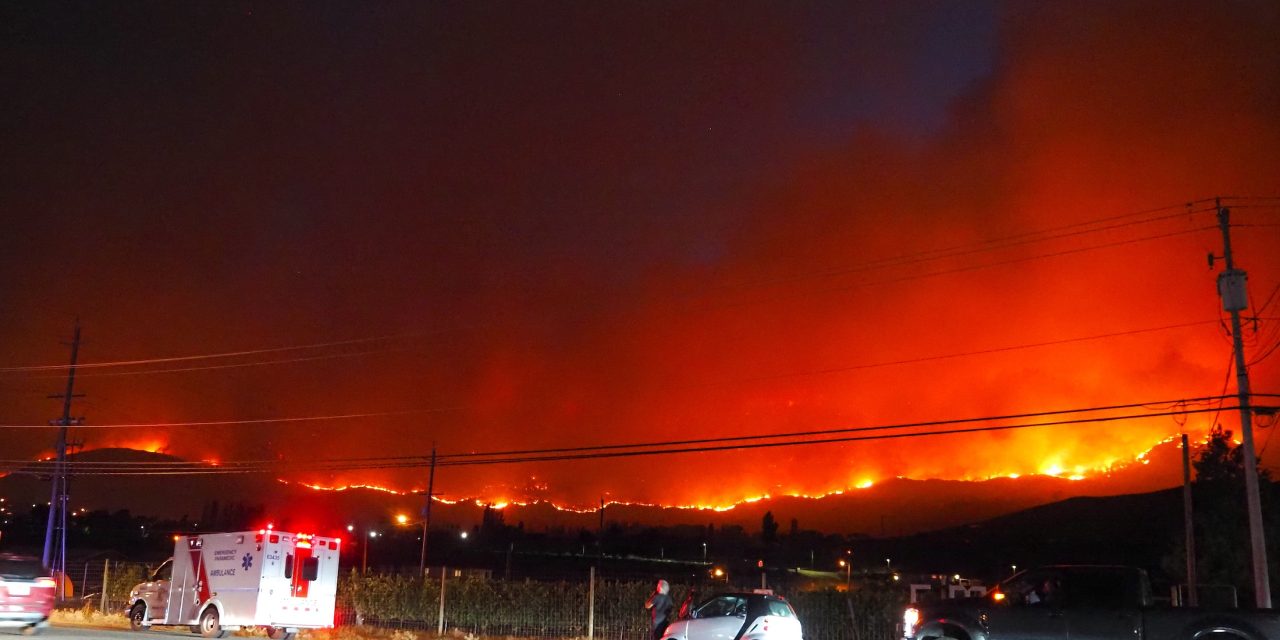
BC Wildfire Service (BCWS) forecasts also indicate that BC may experience an active spring wildfire season due to persistent drought conditions. This activity is expected to worsen unless more precipitation comes over the next several weeks and months. “Until significant and sustained rains occur, the risk of ignition will remain elevated,” the BCWS said.
“Every day, the hard-working members of the BC Wildfire Service are preparing for the 2025 wildfire season,” said Ravi Parmar, Minister of Forests. “We don’t know what it will bring, but we are putting in the work each and every day to protect our communities. With warmer weather just around the corner, I urge British Columbians to do their part to help protect their homes and communities through our provincial FireSmart program.”
The Province, meanwhile, continues its focus on the four phases of emergency management: prevention, preparedness, response and recovery. This includes improving firefighter recruitment and training, step up wildfire-prevention work, expanding BCWS contracts for aerial support and incorporating new technologies to better support firefighting, it said.
How people can prepare
To prepare for seasonal hazards, residents should put together an emergency grab-and-go bag that includes essentials, such as water, non-perishable food, medication and a first-aid kit. The bag should be small and easy to take with you, in case you need to leave right away. Having a home emergency plan with important details, such as contact information and emergency meeting places, is also encouraged.
Should an evacuation order be issued Emergency Support Services (ESS) will be available to support those displaced with their short-term basic needs, such as accommodation, food and clothing. An Emergency Support Services profile can be created in advance making the process easier and quicker to receive support. Visit the provincial ESS webpage at ESS.gov.bc.ca to register.
In 2024, the Province improved how people are supported by ESS, including introducing the option for evacuees to receive $200 per night for accommodation, providing evacuees with a direct deposit payment option to reduce lineups at reception centres during large-scale emergencies, and establishing the BC Evacuation Helpline to help people get connected to supports remotely.
The Province also urges homeowners and tenants to have insurance that includes coverage for fire damage and losses to protect their families, homes and property in the event of an emergency. Both home and tenant insurance policies typically have additional coverage for living expenses if you need to leave your home during an evacuation order.
Residents are also urged to sign up for the Voyent Alert emergency alert system for smart phones which is utilized by the RDOS and the Town of Oliver for sending out emergency alerts. Visit voyent-alert.com for more information or download from the Apple or Android store.
Preparing for emergencies
To learn more about how to prepare for emergencies, including information about emergency kits, household emergency plans and hazard-specific guides, visit: PreparedBC.ca
For information on evacuation alerts and orders, visit: EmergencyInfoBC.ca or follow @EmergencyInfoBC on X.
To learn about flood conditions and advisories, visit: gov.bc.ca/riverforecast
To learn about how to prepare for wildfires, visit: firesmartbc.ca/
To learn more about open burning safety, visit: www2.gov.bc.ca/gov/content/safety/wildfire-status
Real-time wildfire information can be found on the BC Wildfire Service mobile app, which is available for Apple and Android users.
To register with Emergency Support Services, visit: ess.gov.bc.ca/