
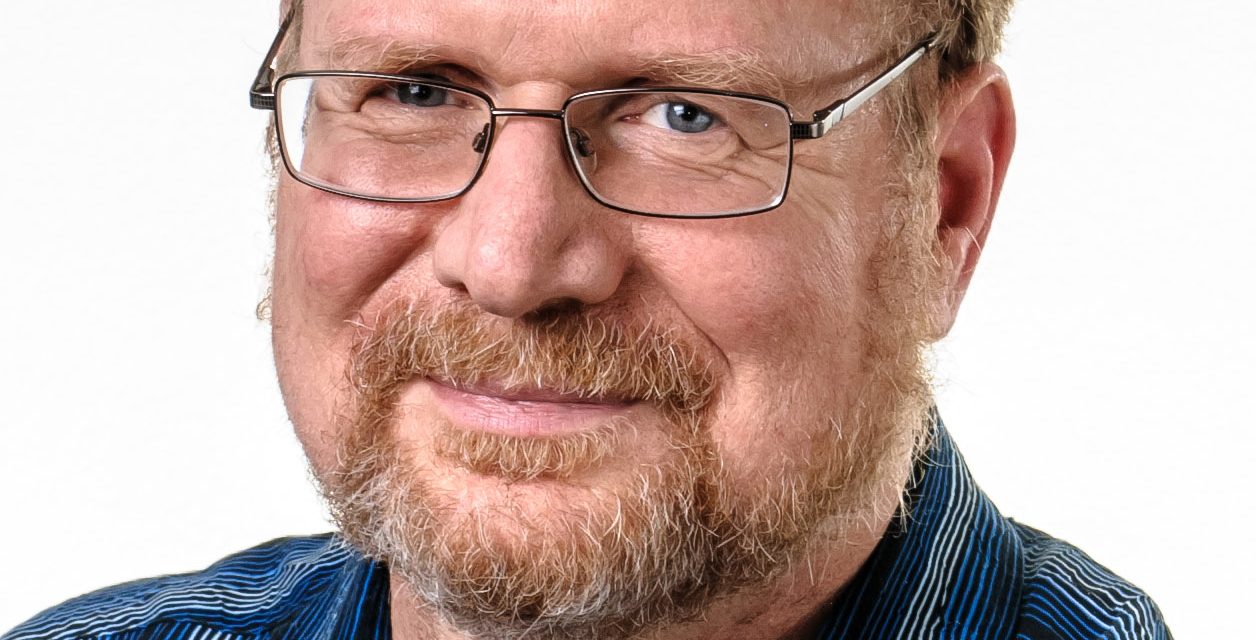

Richard McGuire
Rarely is an election as close as the one B.C. experienced last week and we still won’t know the final outcome for a while yet.
In Boundary-Similkameen, however, B.C. Liberal and incumbent MLA Linda Larson easily won with a sizeable plurality.
Depending on how results play out at the provincial level, Larson may find herself in the unfamiliar role of an opposition MLA.
NDP candidate Colleen Ross failed to make any gains for her party and, in fact, finished behind the result achieved by the NDP in 2013 when Sam Hancheroff was the candidate.
Ross finished with 6,941 votes, which is 32.61 per cent of the popular vote based on Wednesday morning’s preliminary results.
Hancheroff finished with 7,113 votes or 38.99 per cent according to final results in 2013.
It should be noted that the final 2017 results won’t be released until later this month and will include absentee ballots, so Ross’ vote total will likely increase.
But the NDP’s percentage drop is significant, especially when across the province the NDP made gains.
Ross is an intelligent and capable woman and deserves credit for her hard work throughout the nomination and campaign.
But right from the start, her message was aimed more at the NDP supporter base than at growing her party’s support in the diverse riding at large.
Changes in percentage of the vote tell more of the story than actual vote numbers because overall, the total number of voters increased.
Preliminary results show 21,288 votes cast this year compared to a final number in 2013 of 18,244.
That could be partly the result of electoral boundary changes and partly the result of increased voter turnout across the province.
Interestingly, Larson actually increased her number of votes to 9,174 in last week’s preliminary results compared to 8,499 in the 2013 election. But her percentage dropped slightly to 43.09 per cent from 46.59 per cent in 2013.
The wild card in the local election, of course, was Dr. Peter Entwistle, the independent candidate.
Despite claims by Entwistle and some of his supporters that he would win, it was obvious that his role was that of a spoiler – drawing votes from the two main candidates, without any realistic hope of winning.
At best, he was a vehicle for voters to express their concerns about healthcare and to vote “none of the above” when faced with the choice of Larson and Ross.
The question was always whether Entwistle would draw more votes away from Larson or Ross.
Being well known in Oliver, he had the potential to pull votes away from Larson on her home turf. But with a position on healthcare more closely aligned with the NDP, it seemed logical he would draw votes away from Ross.
Without interviewing individual voters, it’s impossible to know for sure, but the numbers suggest Entwistle’s biggest gains were at Ross’ expense.
He took 3,028 votes or 14.22 per cent of the popular vote.
It’s no wonder then that Ross tried to preclude his candidacy by offering him an advisory role with the NDP – a story that broke on the weekend before the election and is covered on the OsoyoosTimes.com website.
Green candidate Vonnie Lavers finished fourth with 2,145 votes and 10.08 per cent. That’s a significant increase over the 2013 Green candidate, John Kwasnica, who took 1,602 votes and 8.78 per cent.
But the biggest gains for the Greens were on Vancouver Island where they picked up two new seats in addition to holding onto the seat of their leader Andrew Weaver.
If the final result gives B.C. a minority government, Weaver and the Greens will wield enormous power, disproportionate to their actual seats. They will be able to determine whether Premier Christy Clark and the B.C. Liberals remain in power, or whether NDP leader John Horgan takes over as premier.
The Greens will no doubt make some major demands as a price for whichever party they choose to put in government.
Their key one – getting rid of political donations by corporations and unions – is long overdue and is an embarrassment to this province.
The B.C. Liberals have long been able to trade favourable policies for certain corporations and even foreign interests in exchange for political cash – a situation unique in Canada and more common in Third World dictatorships.
The Greens are also likely to demand a change to a proportional system of elections and an end to the Trans Mountain (Kinder Morgan) Pipeline expansion.
Those policies are much more contentious and will send shockwaves across Canada.
That depends on there being a minority government after the final votes are counted later this month.
The NDP only won the riding of Courtenay-Comox by nine votes, and my bet is it will swing to the Liberals in the final count, given the result of the absentee vote.
A gain of one seat would give the Liberals 44 seats and on paper a majority government, but it would not be a stable one.
The Legislature must choose a speaker from one of its members. The speaker doesn’t vote except to break a tie, and even then, he or she doesn’t necessarily vote on party lines, but rather according to legislative precedent.
If a government MLA is sick, resigns, switches party or even dies, the government can fall.
When I worked in Ottawa during the minority governments between 2004 and 2011, an MP often couldn’t travel when the House was sitting, even to their own constituency, without a signed agreement with an opposing MP to “pair” and not vote in the other member’s absence.
That will now happen in Victoria, whichever party forms government.
Clark still gets the first shot at forming a government if there is a minority. But unless she continues to have the support of a majority of MLAs, her government falls and Horgan gets a turn to try instead.
Larson has often complained that all the NDP opposition ever did was criticize.
Ironically, if Horgan becomes premier, Larson will find the shoe is on the other foot.
And when it comes time to hand out government cheques in Boundary-Similkameen, Larson may find she’s not invited, with the honours instead going to a neighbouring NDP MLA like Katrine Conroy or Michelle Mungal.
RICHARD McGUIRE
Osoyoos Times
Richard McGuire is a reporter/photographer with the Osoyoos Times. In a previous career, he analyzed electoral outcomes.

