By Roy Wood, Special to the Times Chronicle
Summer drag racing will be a collateral casualty of an ambitious master plan to expand the Osoyoos airport, which was presented to town council this week.
The plan envisions a major expansion, including several hangars, an expanded and paved taxiway, dozens of additional tie-downs, a 14,000-litre aviation fuel station and washrooms.
The document, which was commissioned by the Osoyoos Airport Development Society (OADS), was presented to council by TRUE Engineering’s Steve Underwood. Besides the master plan, it also includes a detailed financial analysis for the project.
Asked by Councillor Johnny Cheong about the impact of the expansion on activities at the airport, like Wine Country Racing Association’s five-event drag racing program, Emmerson said that half-way through the implementation of the plan drag racing would cease.
“The idea there is that people investing this kind of money in a hangar would expect to be able to use them on any given weekend so, it was assumed that they wouldn’t tolerate being shut down for the racing events,” he said.
On Tuesday, council’s committee of the whole approved a recommendation from the administration to “advertise for public input on the Airport Master Plan and Financial Analysis.”
The time frame for the airport expansion is nominally 10 years, but Emmerson said the progress hinges on market demand. It depends on “the number of people in the town who are willing to invest in their own hangar … that’s for the market and for OADS to try to market.”
According to a table included in the report, the first phase, scheduled for next year, would see the addition of a three-bay hangar building, which would include a lounge and a washroom, an expansion of the access road to Empire Street, a seven-stall parking lot and tie-downs to service 20 planes.
In 2027, the plan sees the installation of the aviation fuel station along with an extension of the asphalt taxiway and the fuel station apron.
A two-bay hangar building is envisioned for 2028 as well as extensions to the asphalt and gravel taxiways, expanded gravel tie-down and an asphalt 10-car parking lot.
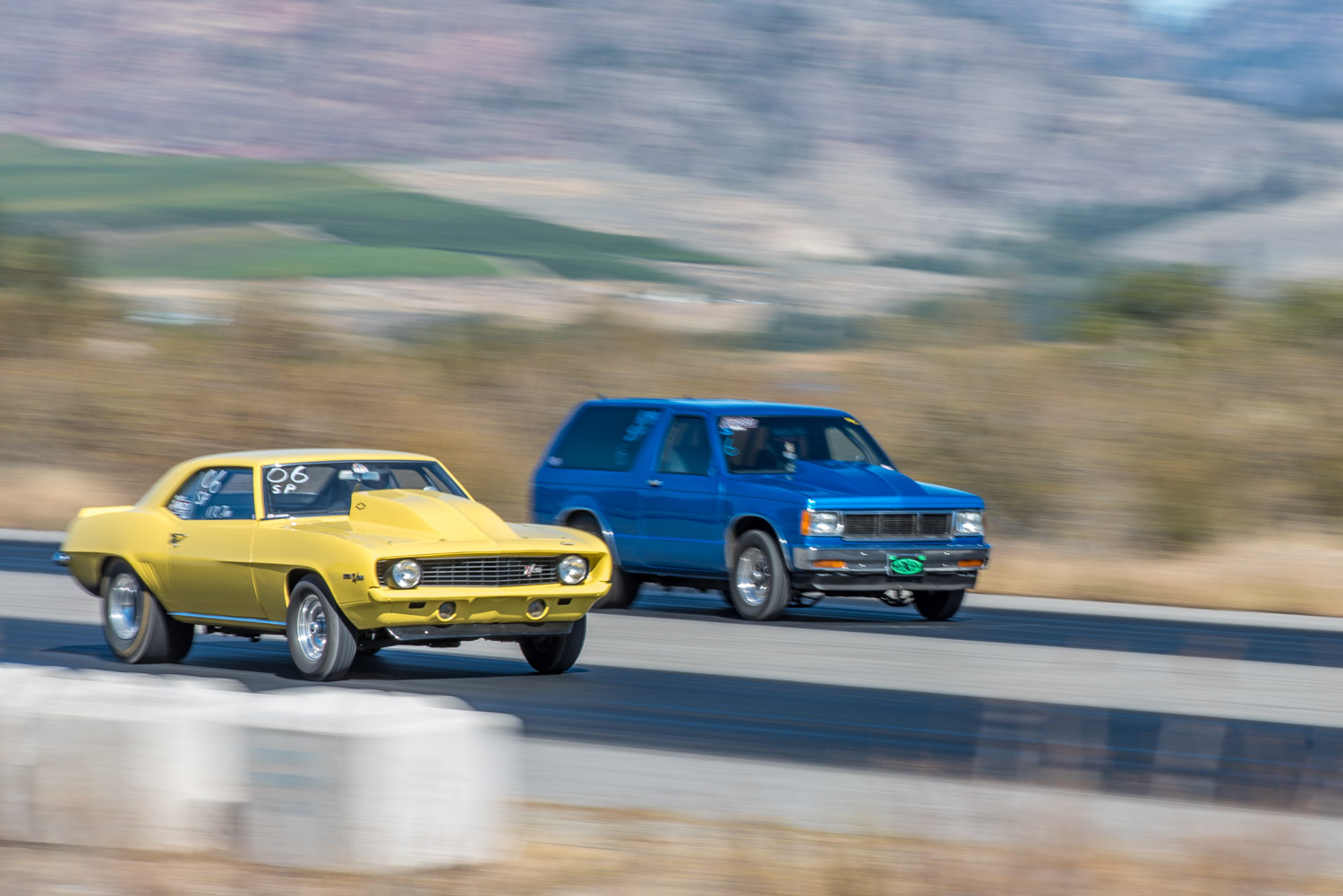
Two cars race down the runway of Osoyoos Airport as part of the Wine Country Racing Association’s drag race events.
File photo
The 2030-2035 timeframe includes the addition of another three-bay hangar building plus continued expansion of the tie-down and parking areas. 2035 would see the addition of a turnaround area and asphalt tie-down pads at the south end of the airstrip to accommodate King Air or Dash-8 aircraft.
The key points of the financial analysis include:
- Finding a small number of individuals prepared to pay 100 per cent of the capital and operating costs of the hangar buildings will be key to the project moving forward;
- Total development costs for the seven phases is estimated at $10,648,000;
- Cost sharing would see the town contribute $10,000 per phase, private plane owners 100 per cent of the hangar building costs, and OADS the rest of the development costs;
- Operating revenues are expected from tie-down leases, land leases, fuel sales, town contributions, events and property taxes;
- The town would realize $10,000 annually from the airport development by 2035 if all goes as planned;
- Net operating revenue for OADS is expected to go from a loss of $2,000 this year to a $5,000 profit in 2035; and
- Successful implementation of the plan depends on OADS’s ability to secure funding of $2,685,000 by the end of 2035.
There is no mention in the master plan summary of a need to expand the current 850-foot runway.
In a report to council regarding the master plan, CAO Rod Risling wrote: “Any additional development on the airport lands would contribute to the overall financial risk to the town.
“However, being strategic in the phased development of the airport property does reduce the risk. It is also important to note that tangible advantages to the community can result from potential businesses locating within the airport lands resulting in jobs for local residents.”