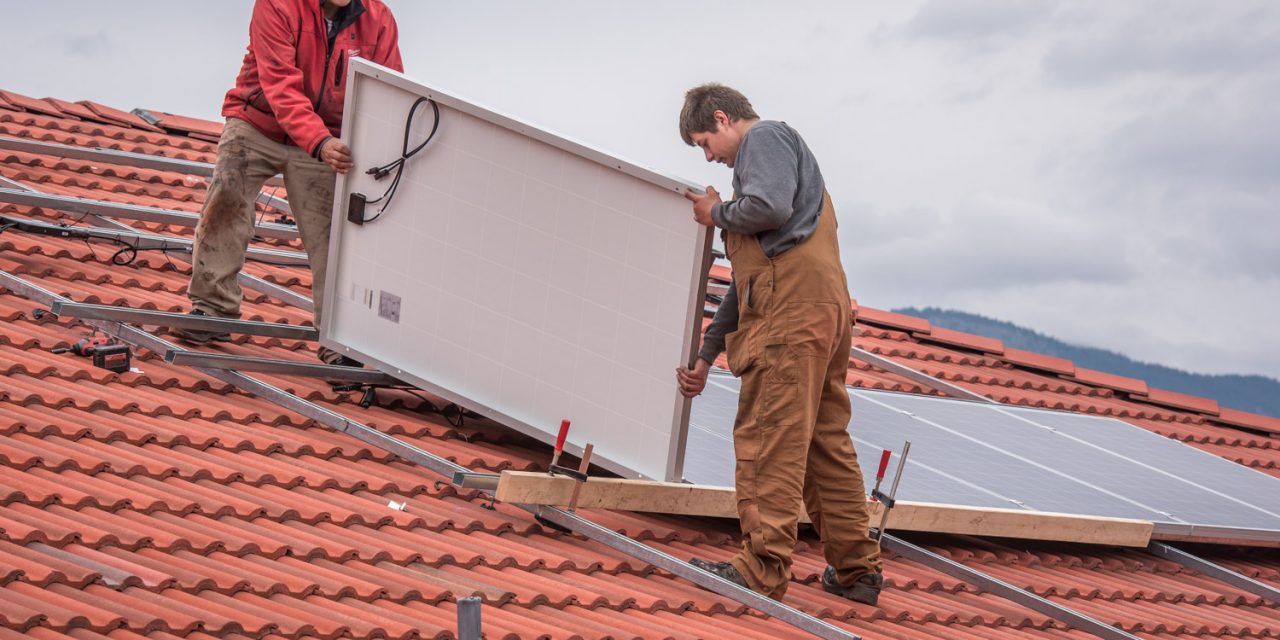
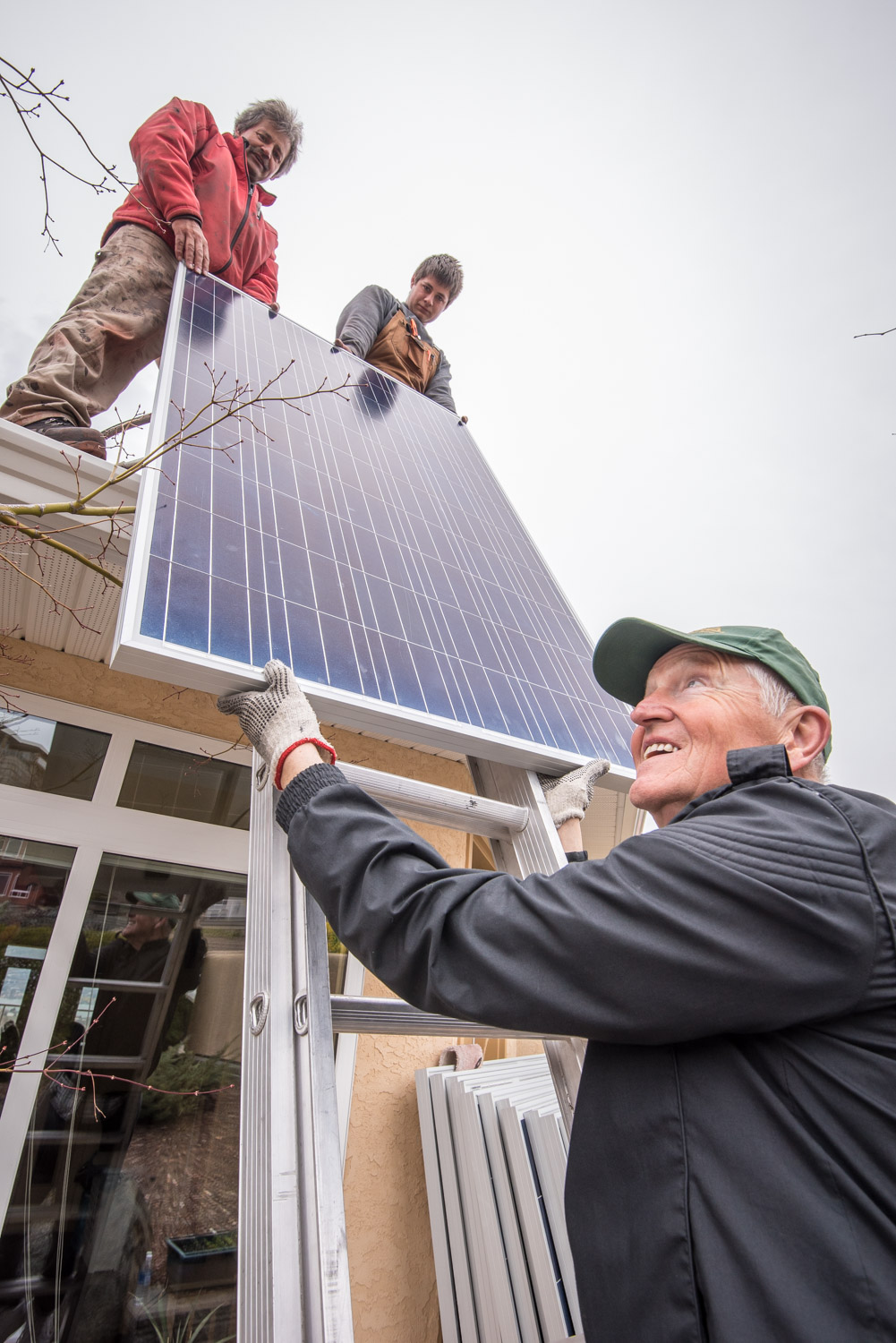
While Greg and Mike Olsen, of Swiss Solar Tech, install one of the remaining solar electricity panels on Burrowing Owl Winery’s carport, Roger Huber and Jim Wyse talk to a reporter in the foreground. (Richard McGuire photo)
As workers fitted one of the last solar panels onto a large structure at Burrowing Owl Estate Winery on Monday, owner Jim Wyse looked on with satisfaction.
Wyse and his winery off Black Sage Road north of Osoyoos have long been involved in environmental projects.
He’s supported re-establishing the endangered burrowing owl, which the winery is named after, through the Burrowing Owl Conservation Society and other initiatives.
Wyse is a strong and active supporter of a national park reserve in the South Okanagan-Lower Similkameen.
And, at the winery, he’s initiated previous projects to produce hot water with solar thermal systems and to keep wine in cool storage underground, all without using electricity.
The current photovoltaic solar electricity project, which is on the verge of completion, when combined with other Burrowing Owl solar electricity initiatives, will be the biggest solar project installed for a business in the Okanagan.
Also looking on with satisfaction is Roger Huber, who owns Summerland-based Swiss Solar Tech Ltd. with his wife Susan. His company handled the installation.
In the latest phase of the project, Burrowing Owl has installed 108 solar panels on a large carport, which also allows visitors to park their cars in the shade under the panels.
Huber says the carport alone provides up to 32,600 kilowatts of electricity.
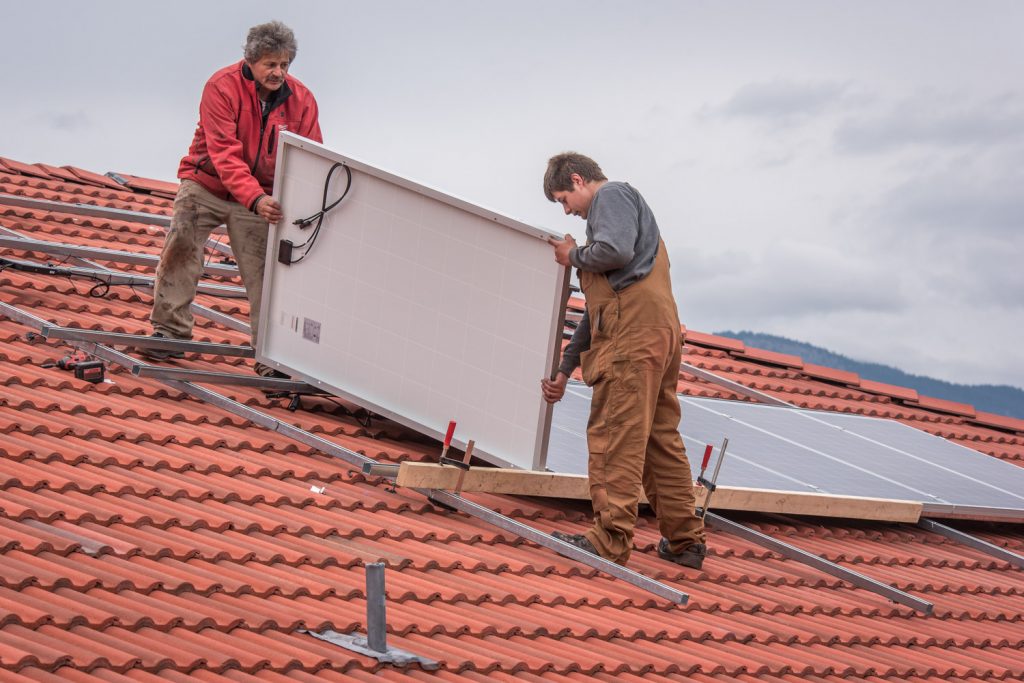
In total, the winery has installed 541 solar photovoltaic panels on rooftops at the winery and at a warehouse in Oliver and staff accommodation in Osoyoos.
Swiss Solar Tech says the total project will produce about 199,560 kilowatt hours of electricity a year and offset about 101 tons of carbon emissions.
“The whole object is to get to net zero,” says Wyse, referring to the point at which the winery produces as much electricity through solar as it consumes.
The winery will produce a surplus of electricity when the summer sun is shining, which it will sell back to FortisBC for the grid.
In winter and at night, the winery will draw back power from the grid when it requires more electricity than it can produce. There’s no battery storage.
“We’re using the grid as storage,” says Wyse. “But in total usage, we target net zero. It’s a good target.”
While the winery has reduced its electricity consumption by changing to LED (light-emitting diode) lighting, Wyse says it’s harder to conserve electricity on some of the winery operations.
The winery uses a lot of power.
“We run all that equipment,” says Wyse. “There are compressors, all kinds of equipment. There are no shortcuts there. You have to turn the pump on or not. So, we use quite a bit of power in the winery itself all this will go to offset that.”
Huber says he likes to talk about payback times on investments in solar. You invest a lot up front to install the panels, but you’ll save that over time by reducing or eliminating electricity bills.
The panels on the roofs, he says, may have a faster payback, covering their cost in as little as five years. But the carport panels, because of the cost of the structure they sit on, will take much longer to pay off – perhaps 15 years.
Wyse said the carport solar structure makes less economic sense.
“Everyone asks if we did this for economic reasons,” says Wyse referring to the carport. “I’d say no, we did this to showcase solar. But the other ones (the roof installations) do make economic sense.”
The goal, he said, is to offset carbon emissions and reduce carbon pollution.
The carport is the most visible.
“It shows we’re really keen on it and we’d like to tell the world we’re keen on it,” says Wyse.
The carport panels are rated at 380 watts each, said Huber, but they are bifacial, meaning they also collect light from the other side, below, increasing their capacity by about 20 to 25 per cent.
“They get light energy from both sides, so they’ll pick up reflected light off the pavement,” says Wyse. “You can see through them and they’re waterproof, so if it’s raining, people get a little cover.”
Wyse says he hopes other wineries will follow his example, but he notes that some wineries, such as Gehringer Brothers Estate Winery, have already launched their own solar projects.
That Oliver-area winery also hired Swiss Solar Tech to install 144 bifacial panels last October.
“The planet is only so big,” says Wyse. “Some people say it’s a drop in the ocean, but if everybody could reduce their carbon pollution to any degree, it’s going to help.”
With this project, Burrowing Owl is showing others what can be done.
RICHARD McGUIRE
Osoyoos Times
Greg Olsen and his brother Mike Olsen, with Swiss Solar Tech, install one of the final panels on Burrowing Owl Winery’s carport solar electricity project. (Richard McGuire photo)
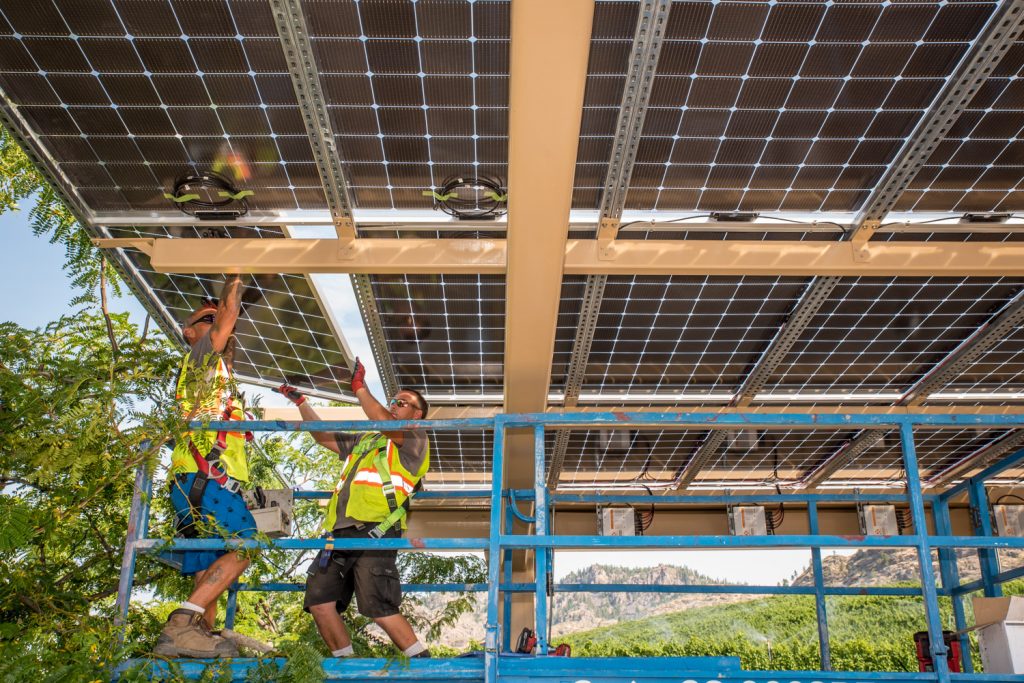
Greg Olsen and his brother Mike Olsen, with Swiss Solar Tech, install one of the final panels on Burrowing Owl Winery’s carport solar electricity project. (Richard McGuire photo)