
Last year Rai Produce was selling their locally grown cherries on the Friday before the May long weekend, the earliest ever in their 20 years of business. This year most Okanagan growers won’t have cherries until late in June, but Sarabjit Rai (left) predicts his will be ready by June 10. Third from left is his brother and co-owner Paramjit Rai. Sarabjit also predicts the quality of this year’s crop will be excellent. (Richard McGuire file photo)
A year ago, on the Friday of the May long weekend, Rai Produce was selling fresh local cherries at its stand just west of Osoyoos on Highway 3.
This year cherry lovers will have longer to wait, but Sarabjit Rai, who owns the business with his brother Paramjit, plans to be first again.
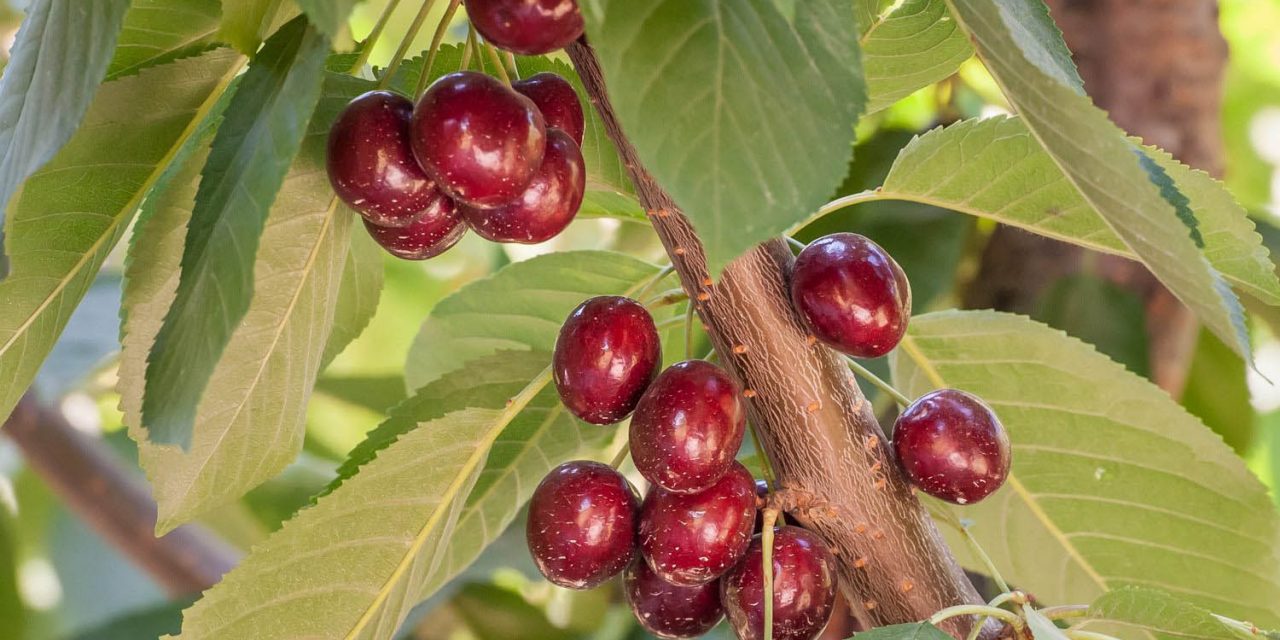
The BC Tree Fruits Cooperative says the cooler spring means consumers will see and taste cherries starting at the end of June. They’re also predicting a record harvest of 12 million pounds.
But Rai says confidently that his cherries will start to be ready around June 10.
Rai’s cherry orchards are on about 30 acres right down at the U.S. border south of Osoyoos. He’s been growing cherries for close to 20 years.
And despite the longer wait than last year’s record early season, Rai says this year’s crop will be worth the wait.
“This year is very nice and better quality,” he said. “Because we have a long season, the cherries are going to grow bigger and more colour. The quality is better this year.”
Last year Rai’s first cherries were Chelans, but other early varieties include Santina, followed by Van, Bing, Lapin and Sweetheart, among others.
Chris Pollock, marketing manager with BC Tree Fruits, says it’s not a case of cherries being late this year – they’ll just be later than last year’s exceptional year. The late June arrival in most of the Okanagan is more consistent with a normal year.
BC Tree Fruits also predicted 12 million pounds of cherries last year, but adverse weather reduced the crop volume to 8 million pounds.
Pollock said the estimates are based on the total of individual growers’ estimates among those in the co-operative.
Particularly with cherries, many growers sell independently and not through the co-operative, so the total volume of all cherry growers would be higher.
“As part of their contract with us, they estimate their crop and what they feel they’re going to get in the upcoming season based on bloom and crop load and what they’re seeing on the trees,” said Pollock. “So we are able to build a best guess case estimate knowing how many growers we have that grow cherries and what they are estimating.”
The weather affects timing, quality and crop volume.
“The weather affects the timing in the sense of when blooms start,” said Pollock. “Which then affects the timing of when harvest is… You need those hot days to really help the fruit mature, from sizing, colour and the sugar levels. So the weather plays a factor through the entire process.”
Rain is not a problem at the beginning as long as it is not too heavy, he said, but growers don’t want it when the fruit matures, because that can cause cherries to split, Pollock said.
And they don’t want hail, which can knock the blooms off.
The arrival of cherries throughout the Okanagan can vary by a few weeks or even a month, Pollock said, depending on weather and the varieties grown.
Rai, who grows other soft fruits such as peaches, nectarines, prunes and plums, says those fruits will also be later this year than last.
He expects apricots around the first week of July, followed by peaches about five to 10 days later.
Pollock said BC Tree Fruits is expecting numbers for other fruits to be similar this year to last year.
Peaches will be about 4 million pounds, nectarines around 550,000 pounds and apricots around 300,000 pounds, he said.
The main market for BC Tree Fruits summer fruits is Western Canada, but increased volumes are being exported to the U.S. and other export markets.
RICHARD McGUIRE
Osoyoos Times