By Don Urquhart & Lyonel Doherty, Times Chronicle
An emotional gathering under the Osoyoos Indian Band’s “hat” on Friday saw joy and sadness as the band looks to a brighter future for a youth reconnecting with its culture while paying homage the tragic past.
Truth and Reconciliation Day in pictures
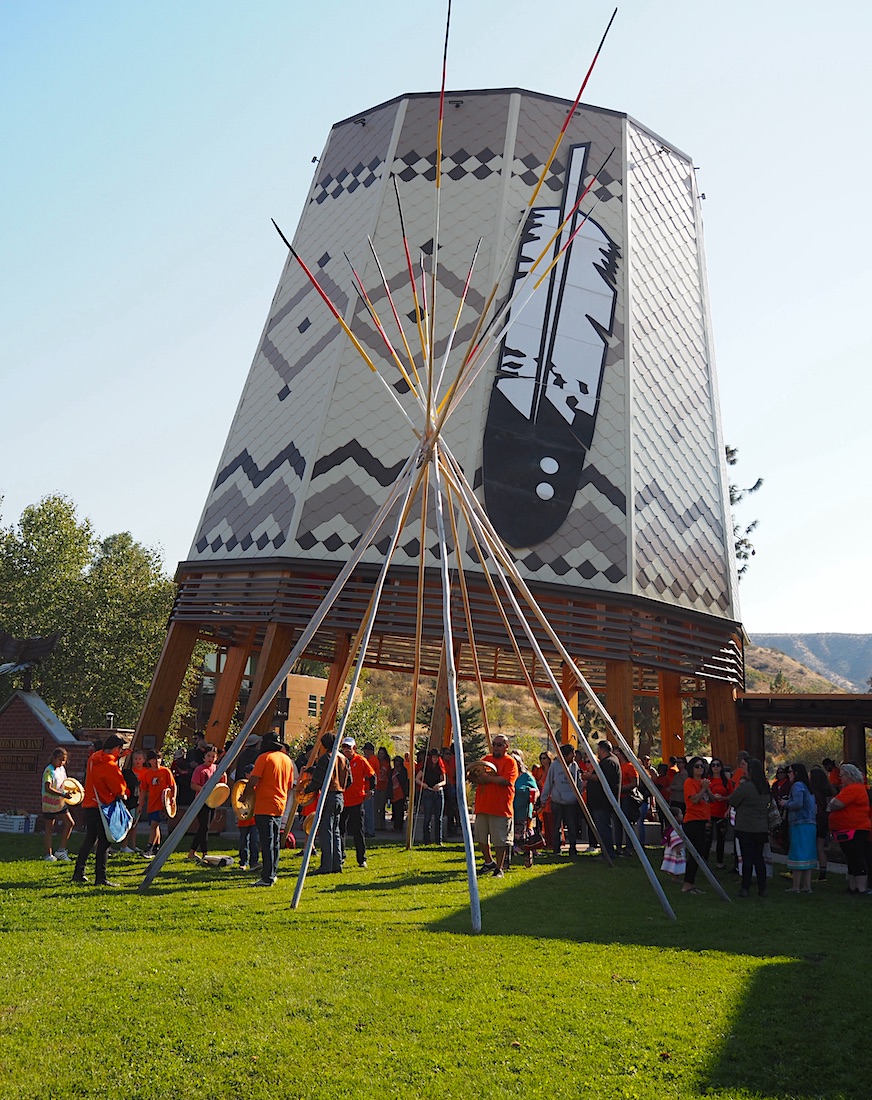
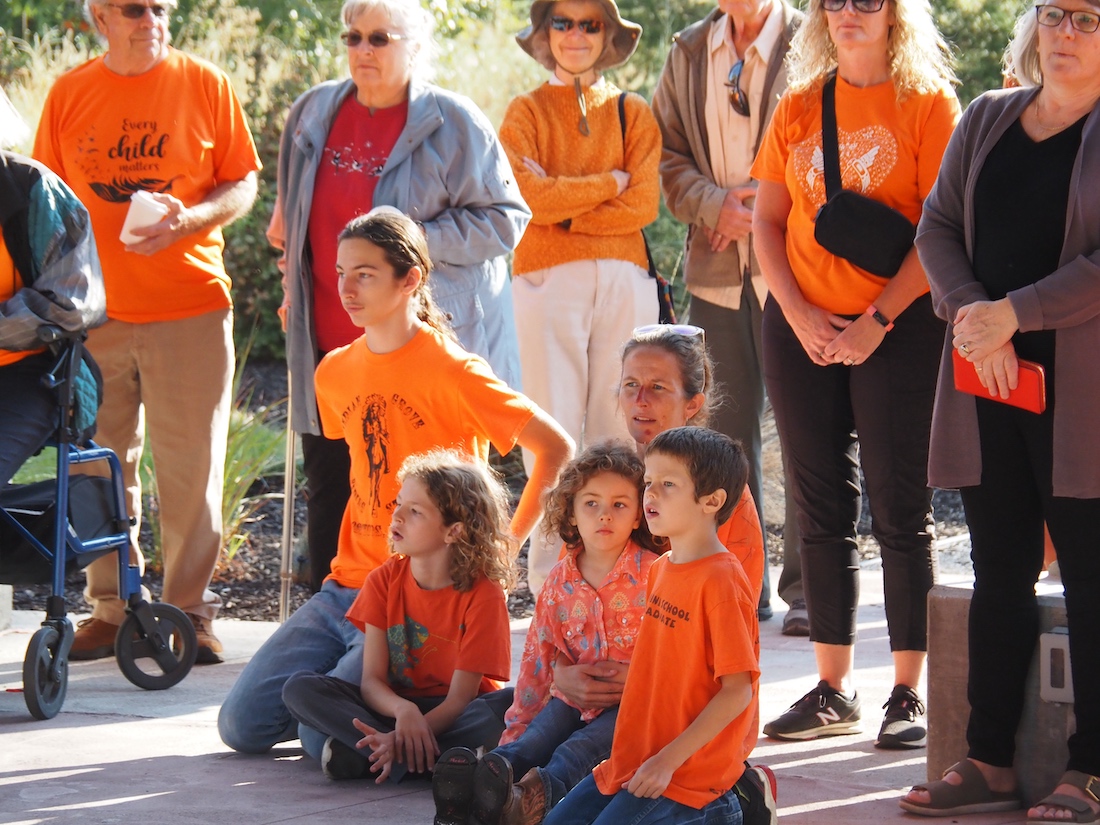
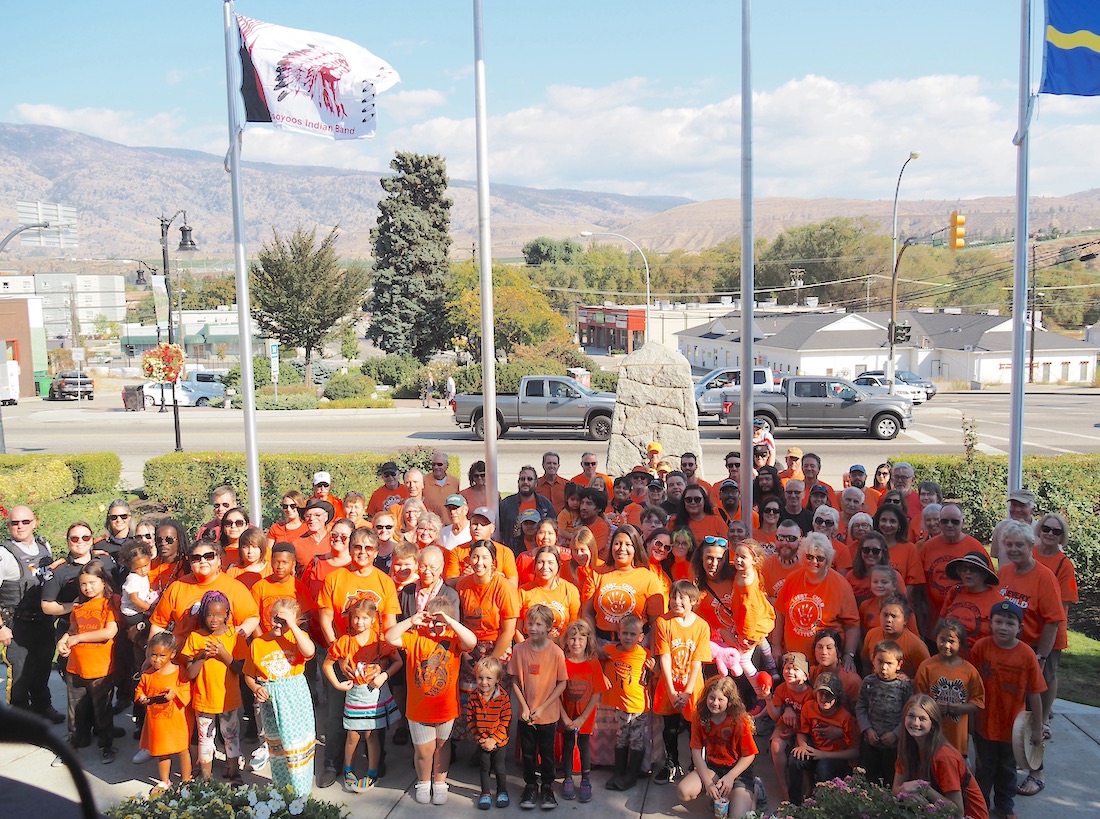
The gathering of Osoyoos Indian Band (OIB) members and non-Indigenous people of the local communities for National Day of Truth and Reconciliation cast a vibrant orange hue under the “hat” on Friday morning.
Don Urquhart photo
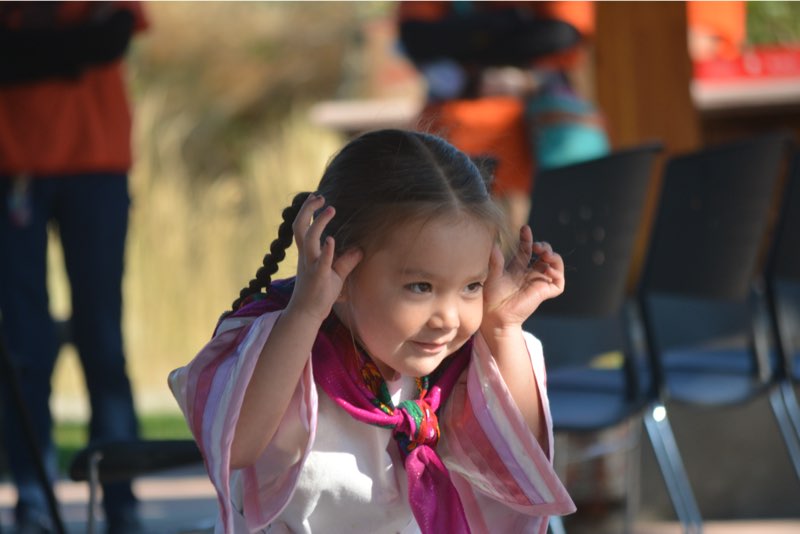
The crowd which included a handful of elders, were treated to drumming by OIB youth drummers and dancers performing traditional dances, some of which are on the verge of cultural extinction, noted Jenna Bower manager of the Nk’Mip Desert Cultural Centre.
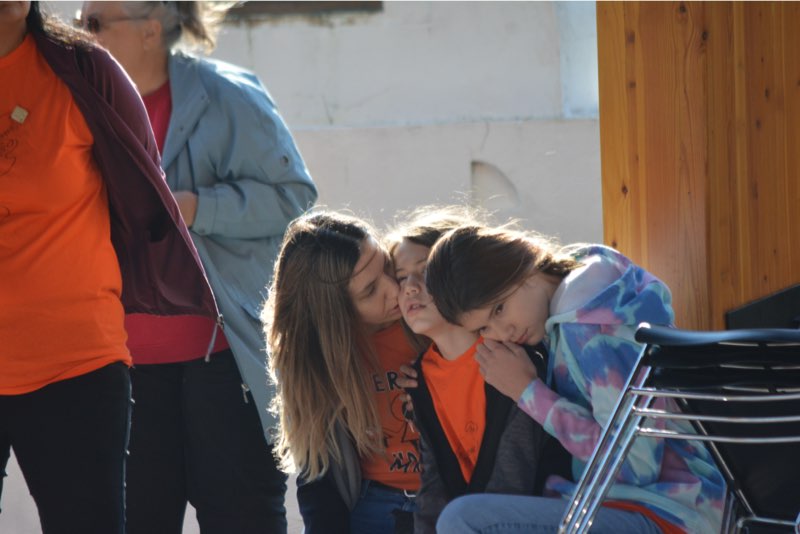
The ceremony also saw a roll call, calling out some of the names of those who were taken from their homes and their families and forced to live in residential schools far from their native Okanagan lands.
From Mission to Kamloops, across to Cranbrook and down into Washington State, the names of the “schools” were also read out, places where physical and emotional abuse was rampant. A moment of silence was observed to honour them and all those who never returned.
“It’s so nice to see the different diversity of people here that come to support all of our people not just from the Osoyoos Indian Band that went to residential schools but all Indians across Canada, it means a lot to all of us,” said band councillor Nathan McGinnis, whose parents were forced to attend residential schools.
Don Urquhart photo
He also relayed the sad news that an OIB elder and residential school survivor – Bernice Falkus – had died on Monday.
“She definitely would’ve been here today but she just passed away on Monday and we’re all really, really upset about it because we knew this day was coming and we knew she was one of the ones that we could honour that was still alive but unfortunately that didn’t come. . .” his voice trailing off.
He explained that the orange shirt he was wearing was conceived by Falkus and created by her daughter Linda Anderson, a renowned Okanagan artist.
In the centre is Falkus’ handprint and within that a small handprint from her five-year-old granddaughter. McGinnis explains that Falkus was five years old when she was taken from her parents and sent to a residential school.
“She thought it was fitting to put her five-year-old granddaughter’s handprint inside of hers to highlight to people that she was just five years old when she was taken,” he said. Around the handprints is a circle of butterflies honour the children that never made it home.
Nathan’s mother Veronica McGinnis, who is also a band councillor, also paid tribute to Falkus. “We lost one of our elders this week and this is a sad day because I’m just here thinking she would be sitting right there in front of us. She was always supporting the community, the missing and murdered indigenous women, residential school survivors, she was always there.”
Veronica McGinnis was taken away to attend residential school for seven years while her now husband spend eight years behind the residential school walls. The couple have three sons and one daughter and a number of grandchildren. “It never really affected me all these years but more and more as I watch my grandchildren who celebrate our culture in a way we were never allowed to,” she said.
A special school program on Thursday focused on OIB culture in the local schools, organised by Helen Gallagher. Veronica McGinnis said it brought tears to her eyes because “I saw all nations of children singing our songs with their whole heart and soul and I couldn’t hold back the tears.”
“And every time I watch my grandchildren dance and drum it makes my heart happy and I just know that the education has to be brought out to all of you people, to our communities about what this dark chapter did to our people.”
But she added that they all moving forward in life and things are changing and evolving and “I’m happy about that, I’m happy to be a part of this. Thank you for showing your support for our people here our band, thank you.”
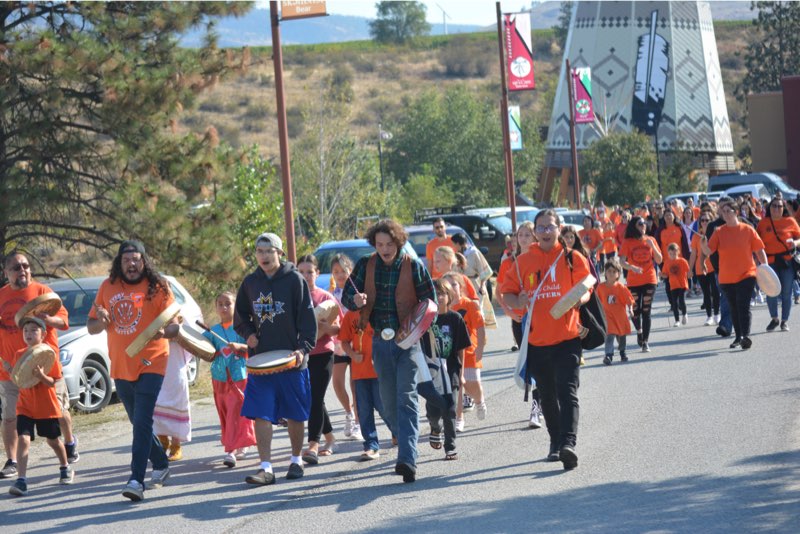
Following that, the orange-shirted crowd gathered for a walk to the Oliver Arena to the beat of the drums where a candlelight vigil was held prior to a “Warriors of Truth” hockey tournament involving OIB youth.
Lyonel Doherty photo
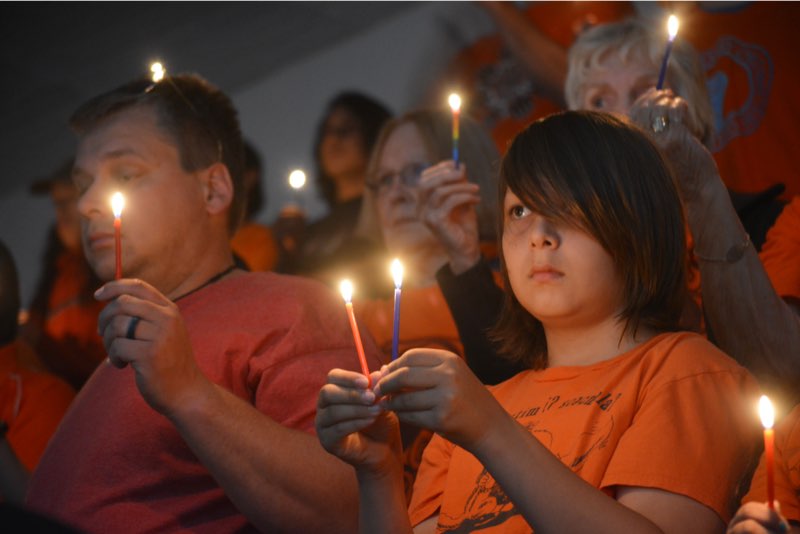
A candle light vigil was also held with idea coming from a Salish Conference on the coast where every year they hold a candle light vigil to honour the “language heroes” that came before them.
“So today instead of doing your language heroes we will honour residential school survivors that aren’t here today and have passed on,” Bower said.
Lyonel Doherty photo
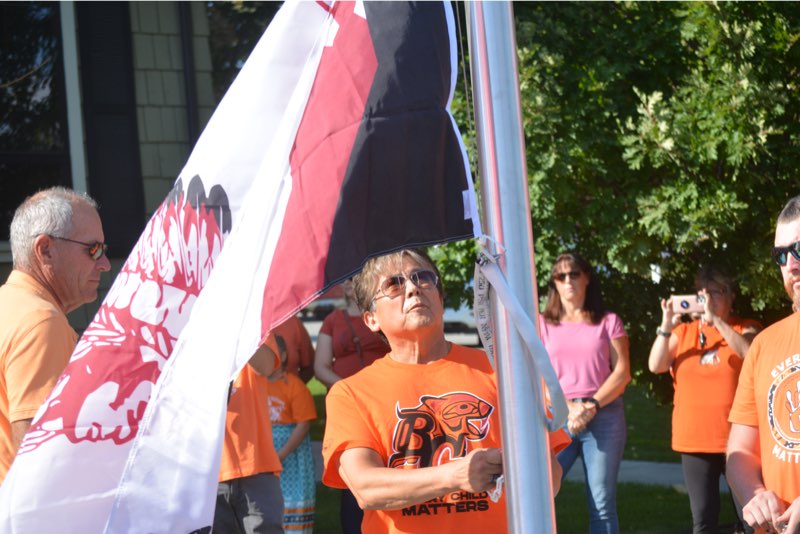
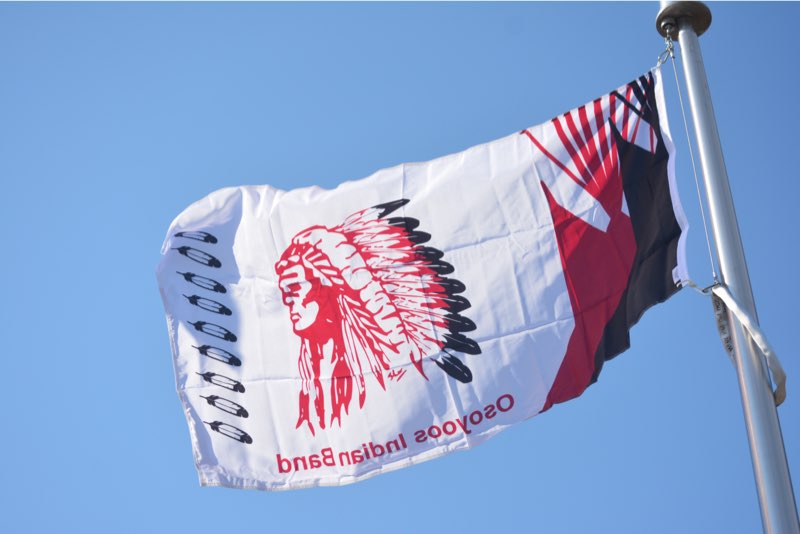
Following the tournament at 2 p.m., OIB members and local dignitaries from Oliver and Osoyoos joined to watch the official raising of the OIB flag at the Town Hall in Oliver.
Mayor Martin Johansen said it was a step towards reconciliation and the positive working relationship between the two local governments.
Chief Clarence Louie said it was great to be off the “Rez” doing something important, something that “should have been done a long time ago.”
Louie said he was looking at old photographs of previous OIB chiefs riding their horses past this building in the 1950 and 60s.
“I’m sure they would be proud of the Osoyoos Indian Band flag to see it flying back in their time.”
Lyonel Doherty photo
Why orange shirts?
Bower explained the rationale behind the orange shirt which came from Phyllis Jack Webstad from Dog Creek B.C. When she was six her grandmother bought her a brand new orange shirt for her first day at residential school even though they had very little money.tr
“I remember going to Robinsons’ store and picking out a shiny orange shirt. It had eyelets and lace and I felt so pretty in that shirt and excited to be going to school,” she is quoted as saying. But once she got to the mission school they stripped her and took her clothes including the orange shirt which was never returned.
As Bower notes, this Orange shirt taken from one child “is a symbol of the many losses experienced by thousands of students and their families and communities over several generations.”
This includes loss of family, language, culture, freedom, parenting, self-esteem and worth and painful experiences of abuse and neglect.
“Wearing orange shirts are symbols of defiance against those things that undermine children’s self-esteem and of our commitment to anti-racism and anti-bullying in general,” Bower said.
The day was chosen because of the time of year the children were taken from their homes to residential schools and because it is an opportunity to set the stage for anti-racism and anti-bullying policies for the coming school year.
“Orange Shirt Day is also an opportunity for First Nations, local governments, schools and community to come together in the spirit of reconciliation and hope for generations of children to come,” she added.
Don Urquhart photo
Lyonel Doherty photo
Lyonel Doherty photo
Lyonel Doherty photo
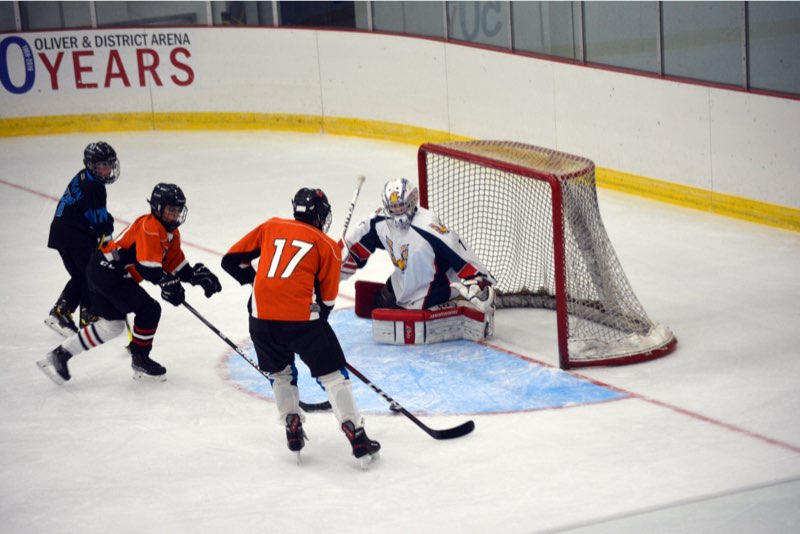
Lyonel Doherty photo
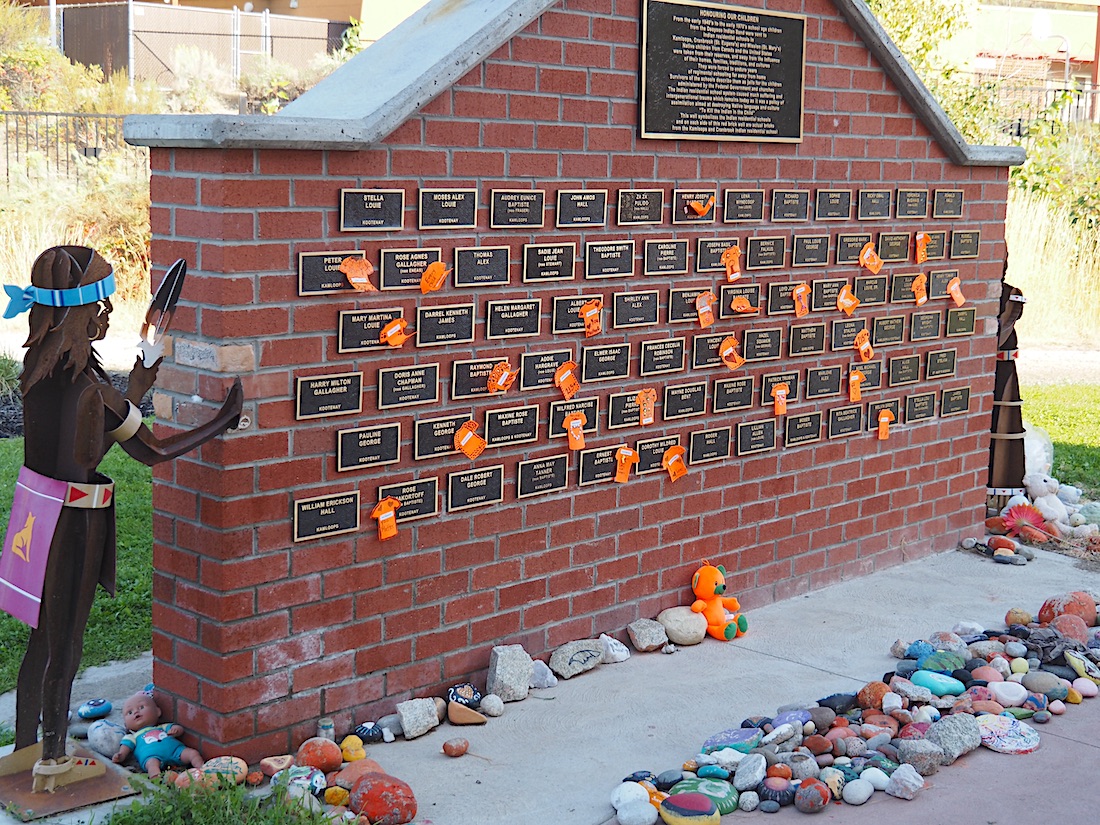
Don Urquhart photo