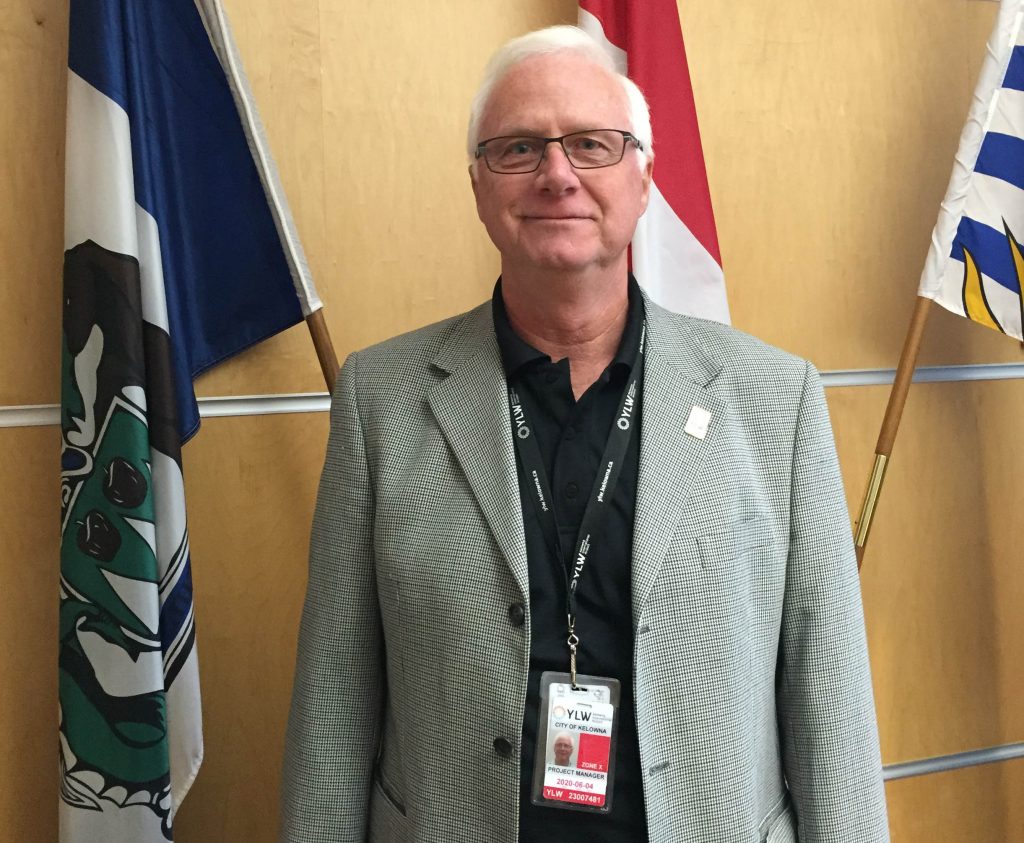
Ed Stephens, the senior development manager with Kelowna International Airport, made a presentation to Town of Osoyoos council on Monday. (Contributed photo)
Frequent flyers from Osoyoos – and the rest of the Southern Interior of British Columbia – are going to be noticing some dramatic improvements over the next several years when they visit Kelowna International Airport.
Ed Stephens, the senior development manager with Kelowna International Airport, made a presentation to Town of Osoyoos council on Monday detailing a long-term vision for one of Canada’s fastest-growing and busiest mid-size airports that stretches all the way to 2045.
The airport is currently at the beginning of a $92 million expansion over the next four years that will make Kelowna International Airport one of the best in this size of market anywhere in the country, said Stephens.
“We have a vision to become the best mid-size airports in North America,” said Stephens.
The airport’s Master Plan that was developed in 2015 is well underway and the original goal to have 1.6 million passengers use the airport by the end of 2016 was already achieved by the end of last year, said Stephens.
Management has taken a conservative forecast that airport passenger traffic will continue to grow at three per cent annually, which would result in more than 3.6 million passengers using the facility by the year 2045, he said.
In order to accommodate the long-term plan, the airport is undergoing significant upgrades and improvements that will continue over the next several years, he said.
“We are scheduled to have our final report (on long-term expansion plans) by November of this year, he said.
Even though it is an international airport with regular flights around the world, 80 per cent of passenger traffic remains on regional flights to destinations in Canada and the United States, he said.
A large portion of airport business is flying passengers to remote areas of northern B.C. and northern Alberta and management expects this sector of the business will continue to grow, he said.
“Our focus will always be as a regional airport,” he said.
Because the airport is located close to numerous residential neighbourhoods in the City of Kelowna, there have been numerous complaints about noise over the past several years, but steps are being taken to address those concerns, he said.
The plan is to narrow the flying zones where airplanes land and take off substantially over the next few years and work with Transport Canada to rearrange flying patterns that allow newer planes to glide into runways while making far less noise, he said.
The current runway capacity allows for 56 fights an hour during winter conditions when there is regular fog and cloud cover and 107 flights per hour during the long warm weather months and this is sufficient to handle current airplane traffic for the foreseeable future, he said.
“We don’t really need a second or longer runway,” he said. “The runway is not an issue right now.”
Transport Canada is committed to implementing new safety regulations to limit any potential damage at Canadian airports by extending runway landing areas and Kelowna will be adding a gravel landing zone should a plane experience trouble on landing, he said.
“In the off chance that a plane overruns the runway, they would land in a gravel area that would be able to handle the weight of the plane and stop the plane safely,” he said.
There is also a plan in place to build one or two new terminal gates by 2035 and five new remote parking stands for airplanes by 2045, he said.
A $30 million expansion of the airport terminal building is a key piece of the overall expansion and will result in more offices, much larger bag claim areas for domestic and international passengers and more customs and immigration space, he said.
When completed, the south portion of the terminal will be designated for domestic flights only, while the north end will be for international passengers only, he said.
“There will be a much more logical split of regional and international areas,” he said.
Planning for the south end expansion will take another three years and it will likely take up to five years of construction to complete all terminal upgrades and renovations, he said.
There are also plans to expand the current long-term parking area and eventually a large parkade will be built, but that likely won’t happen for several more years, he said.
To generate additional revenue and provide opportunities for passengers, airport management is also developing up to seven large commercial lots on airport property, with the first phase including a gas station and convenience store and the second phase to include a car wash and other commercial businesses, he said.
Developing commercial opportunities will allow the airport to generate additional revenue, while keeping airport fees at a reasonable rate, he said.
Traffic congestion during peak rush hours remains a major issue, especially for those leaving the airport and going south towards Kelowna, he said.
“The ultimate solution is a major intersection and we will continue working with the Ministry of Transportation … but that is still a few years away,” he said.
Stephens said public input on airport expansion is always welcome and those wishing to make suggestions can do so by filling out an online survey at www.surveymonkey.com/r/masterplan2045ylw-1.
KEITH LACEY
Osoyoos Times