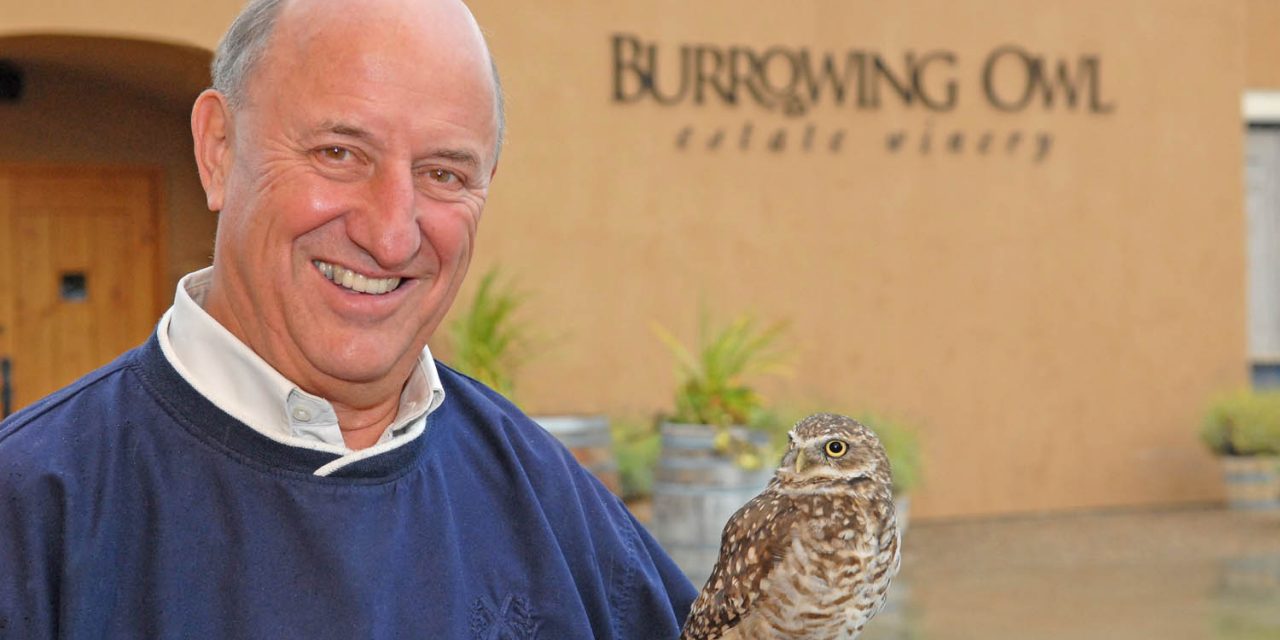
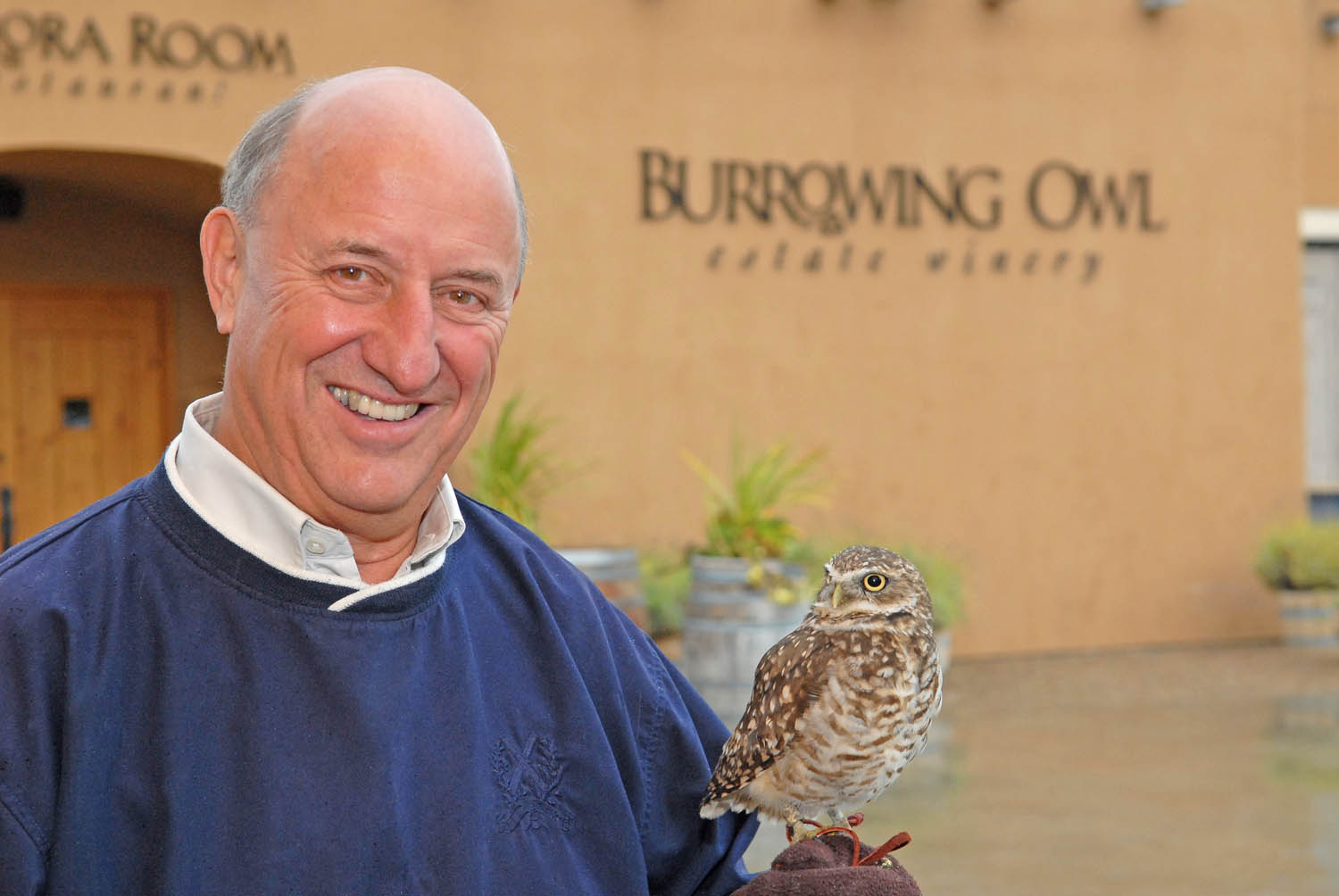
Winery owner and conservationist Jim Wyse wants to link a national park with a network of local heritage sites. (Photo supplied)
Jim Wyse wants to see the proposed national park reserve “enhanced” with a network of federal heritage sites throughout the South Okanagan, Similkameen and Boundary regions.
The owner of Burrowing Owl Estate Winery said he took his idea to provincial MLA Linda Larson in December, but she didn’t share his enthusiasm.
At the time, Larson was more interested in pursuing her ideas of having the Osoyoos Desert Centre made into Canada’s smallest national park and designated as a UNESCO World Heritage Site – instead of a national park reserve, he said.
On Aug. 13, the provincial government released a discussion paper proposing a national park reserve in two areas of the South Okanagan – the grasslands south of Highway 3 and a northern area between Okanagan Falls, Vaseux Lake, McIntryre Bluff and White Lake.
Another area north of Highway 3 and between Cawston and Oliver would become a provincial conservancy under the government’s proposal.
Wyse, who is a B.C. Liberal supporter and also a member of the South Okanagan-Similkameen National Park Network (SOSNPN), said he hoped his idea of heritage satellite sites linked to the park would help Larson find a face-saving way to support the national park.
He also believes that coupling a list of heritage sites with the national park would substantially enhance tourism potential, while ensuring federal funding for sites the province is unable or unwilling to fund. Some of these are crumbling or falling apart.
Acknowledging that several of the heritage sites may be long shots, Wyse points to such attractions as the Osoyoos Desert Centre, the Haynes Ranch, Spotted Lake, the Haynes Eco-Reserve, Tinhorn Creek Stamp Mill, a reconstruction of the old Fairview Townsite Hotel west of Oliver and the sockeye salmon run and river enhancement to the north of Oliver.
Two of those locations – the Osoyoos Desert Centre and Spotted Lake – are included in the Area 1 of the recent provincial proposal, which would include them in the national park reserve.
Farther afield, Wyse suggests sites such as Greenwood Courthouse, the Grist Mill in Keremeos and the mine at Hedley could be included.
Wyse said he tried to convince Larson that her ideas for the Osoyoos Desert Centre alone wouldn’t fly.
“I have discussed your concept with some of my connections who are familiar with Parks Canada and their objectives and their methods,” Wyse wrote to Larson in a letter dated Dec. 17, 2014, which he gave to her when she met him at Burrowing Owl.
“I don’t like to disappoint, but their forecast for the success of your [Larson’s] idea was ‘slim to none.’ But, I think you could save the Desert Centre and help a number of additional local ‘treasures’ by linking them all to the proposed new national park,” he continued.
Wyse suggested that by linking these heritage sites with a national park reserve, they could benefit in terms of management, staffing and maintenance programs.
“When the province returns to the negotiating table with Parks Canada, it would make sense to request the inclusion of selected ‘treasures’ in a new form of ‘connected’ or ‘enhanced’ national park,” Wyse told the MLA.
Parks Canada administers both national parks and national heritage sites, but they are designated through different processes.
In several cases there are national heritage sites within national parks.
These include a site commemorating Rogers Pass in Glacier National Park, several heritage sites in Gwaii Haanas National Park and numerous heritage sites in Jasper and Banff national parks.
There are about 100 national heritage sites in B.C., but none in the South Okanagan and few in Similkameen or Boundary.
Wyse said he and other members of SOSNPN discussed the idea with senior officials at Parks Canada, who were non-committal, but didn’t reject it.
He hopes that by putting the idea out in the community he will stimulate a discussion.
Wyse points out that there is already a committee looking into building a replica of the old hotel at the Fairview town site, which for a time in its mining heyday was one of the province’s largest communities.
This could be a gateway to the park, he said.
The Osoyoos Desert Centre, he said, is struggling without provincial funding.
The Keremeos Grist Mill was endangered when Wyse met with Larson in December, but since then operator Chris Mathieson has been given a 10-year operating agreement with the province allowing him to generate revenue as the province weans the site off provincial funds.
Spotted Lake is a sacred site to local First Nations and is owned by the Okanagan Nation Alliance. Wyse believes its geological and mystical values give it heritage importance and make it attractive to visitors.
The Haynes Ranch buildings and barn on Road 22 are a legacy of the ranching history of the area dating back to the 1800s, but they are in danger of collapse without help, Wyse said.
The buildings are photogenic and are popular with tourists and photographers, but an ad hoc group is currently discussing what should be done about them, he said.
“I can see the thing being reconstructed to the point that it would stand up safely and just leave it,” Wyse suggested.
“Maybe other people have other ideas about things that should be included, but to me it makes the park better,” said Wyse. “It enhances the park proposal. It’s not just the park – it is the park with some other things to do. It doesn’t have to be a lot of money. Here we have some opportunities perhaps in the negotiations that have not been re-entered.”
Wyse said he is pleased to see that a national park “is now on the vocabulary of the provincial government,” but he’s concerned about the large Area 2 around Mount Kobau, which would remain under provincial control.
Wyse doesn’t believe the province has the staffing or capacity to adequately protect that area. The provincial conservancy designation offers less protection even than a provincial park, he said.
RICHARD McGUIRE
Osoyoos Times