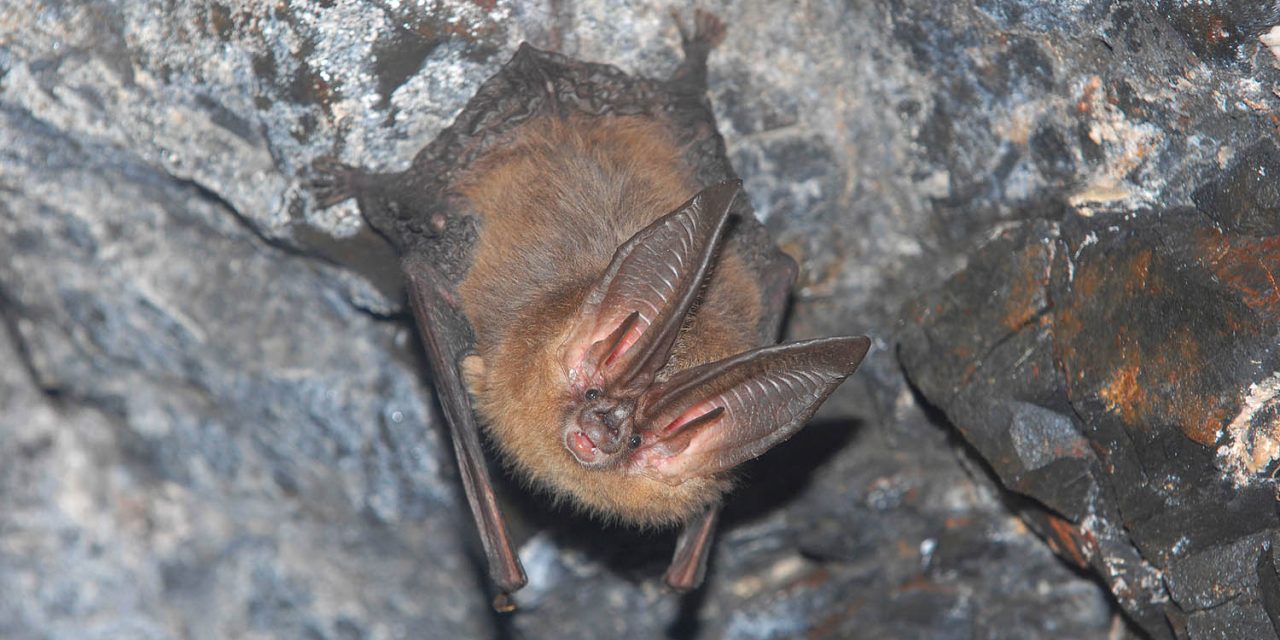
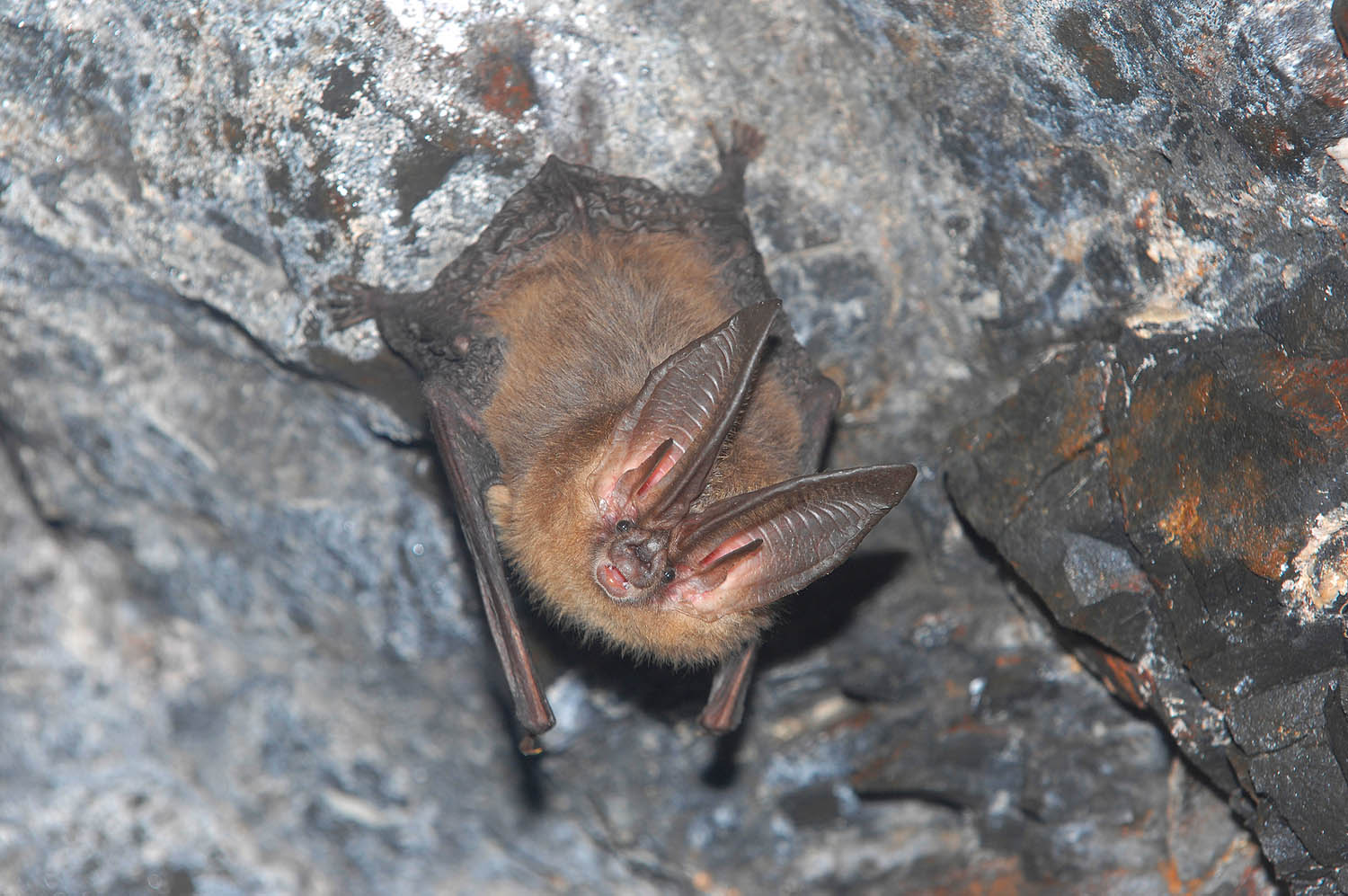
The Townsend’s big-eared bat is one species found in B.C. It survives by eating small insects. The Okanagan Community Bat Program provides advice to people wanting to get rid of bats in their living area and also to people who want to attract bats for reasons such as controlling insects. The program is also looking to local people to help document the presence of bat colonies in this area. (Photo supplied)
For the second year in a row, the Okanagan Community Bat Program will handle inquiries from people who want to get rid of bats – and others who want to attract them.
“Last year there were calls from people who had established bat colonies in their homes and summer cabins and were happy to see the bats each year,” said Okanagan regional co-ordinator Margaret Holm. “Others wanted information on excluding bats. We offer information on both topics.”
Through a toll-free phone line and a website, people can obtain information about bats and connect with Holm.
Similar programs are offered throughout the province, but Holm said the Okanagan was the second busiest after the Kootenays.
“The Okanagan is definitely a hot spot for bats,” she said.
Surprisingly, however, very few of those Okanagan calls last year came from Osoyoos.
Bats often like to locate near lakes, but it could be that houses in Osoyoos are in better condition than in some other areas of the Okanagan, she speculates.
Although the program is busiest in the summer when people are opening up their vacation properties, it will continue through the winter months, Holm said.
“If people are for instance considering renovations during the winter months, we can help with that, so they can call really anytime,” she added.
Holm said she was surprised last year by the number of people who called because their cat or dog had picked up a bat. She emphasizes that pets should have rabies shots.
“There’s not a lot of bats that have rabies,” she said. “It’s a very low incidence, but as we know, it’s a very serious disease.”
Rabies is no more prevalent in bats than in other wild animals, but a bat that is caught by a cat will fight back by biting.
Some people who have purchased a new home or cabin are uneasy when they find bats there, she said, because they’re not familiar with them. Some are reassured when she speaks to them about bats.
Bats help to control insect pests by eating massive amounts of mosquitoes, as well as other insects like moths, beetles and spruce bud worm that are harmful to the fruit and forestry industries when in their larval stages.
“All those mayflies that come off the lake, that’s a main food of bats. We’d be knee-deep in mayflies if we didn’t have bats scooping them up,” she said with a touch of hyperbole.
While people often like bats around to control insects, people don’t want them in their living areas, she said.
“It can be pretty tough to block a bat out of the home because the bat can squeeze through a hole the height of a quarter,” she said.
They can fit through cracks and slits in older houses.
“Those can be very difficult areas to renovate, so we have some tricks,” said Holm.
These include use of screening and expanding foam.
“We really want to help people with some renovation tips that can keep bats out,” she said.
For those wanting to encourage bats, Holm said she can give them information about how to put up a bat box on their property.
Another part of the program is encouraging people to help gather information about the locations of bat colonies and approximate numbers.
Of the 16 bat species in B.C., only six of them live in buildings. The others live in trees, caverns or rock faces.
Those that live in buildings are the types that are most in danger of white nose syndrome, a disease that has killed an estimated six million bats in eastern North America, but has not yet reached B.C.
Biologists are anxious to gather baseline data so they can monitor the impact of this disease when and if it arrives. They’ll also use this data to help restore bat populations.
“We are encouraging people to report their bat colonies to the BC Bats program and to help by doing bat counts,” said Holm.
People can relax in a comfortable law chair and count bats exiting a building just before it is fully dark. The bat program will provide count sheets and instructions.
Half of the 16 bat species in the province are a conservation concern. There are 14 species in the Okanagan.
The Okanagan program serves the entire Okanagan from Osoyoos to north of Vernon. Holm said she also handles calls from areas such as the Similkameen and Merritt, which aren’t covered by other programs.
For more information visit www.bcbats.ca or call 1-855-9BC-BATS (922-2787) extension 13.
RICHARD McGUIRE
Osoyoos Times