Teachers and educational assistants from the social/emotional group discuss children’s books during a “spirals of inquiry” session at the sixth and final early dismissal last Wednesday at Osoyoos Elementary School. These teachers hope to raise children’s “Heart-Mind Index.” (Richard McGuire photo)
Dave Foster, the principal at Osoyoos Elementary School, wants parents to know that when children are dismissed early, the teachers are still hard at work.
Last week he invited the Osoyoos Times to come by on Wednesday afternoon for the sixth and final early dismissal of the school year.
Foster showed the library and two classrooms where groups of teachers and educational assistants were busily engaged in discussions about improving schooling in several key areas the teachers have identified for attention.
“It’s important that people understand the usefulness of the time and what we’ve done with it,” said Foster. “It’s not just kids getting out early so the teachers can do professional development. We actually have a process we’re going through – the spirals of inquiry – and our goal is very specific.”
The names used in the process may sound like educational bafflegab, but when they are explained, you see that it is targeting real-world challenges to improve learning and student wellbeing.
“Spirals of inquiry” is central to the work of the groups. This method of inquiry was developed by Judy Halbert and Linda Kaser, two educators who have been policy advisors with the Ministry of Education in areas of innovative leadership, district change, rural education, literacy and Aboriginal education.
The method involves a sequence of steps of inquiry beginning with “scanning” or evidence-seeking inquiry, and continuing through “focusing” or using information from the scan for concentrated team learning. The final stage is “checking,” or assessing the outcomes.
In the library, a group devoted to “school climate” has been looking into ways to get children to be more connected to school.
“We know that if kids are connected and are contributing, they are having a better time at school,” explains Foster. “If we can connect them to be excited to come to school every day … they’re going to have a better feeling about school and a sense of belonging and therefore we know from the research this is about student achievement as well.”
As teacher Richard Bayliss said when he summed up the group’s work to the larger group, the teachers have been focusing on developing a “house team” system.
This doesn’t necessarily mean participation in sports, because some children do well in other areas. Essentially it’s encouraging children to be involved in extracurricular activities suited to their interests and talents, whether it’s athletics, dance or the arts.
The different teams will be named after animals. The teachers were discussing the different Okanagan language names for animals such as coyotes, salamanders and spiders.
Eventually all teachers, educational assistants and students of all ages will belong to these “house teams.”
Down the hall, other groups of teachers and educational assistants are focused on “social/emotional” and “academic intervention.”
The social/emotional group is looking at children’s social skills and emotional learning.
“If we look at areas of social and emotional learning, the research says that kids will get approximately an 11 per cent increase in academic achievement based on being able to self-regulate and being able to work on resiliency in the classroom,” said Foster. “So that was one of the areas that we wanted to focus on based on the research.”
The teachers in this group were busy discussing children’s books that help to develop social skills and kindness. There are many picture books for younger children, but it’s harder to find appropriate books for the older students, they decide.
Part of their work involves looking at the “Heart-Mind Index,” a measure developed by the Dalai Lama Center for Peace and Education and the University of British Columbia’s Human Early Learning Partnership.
This index provides a snapshot of children’s wellbeing. It looks at such “domains” as how children get along with others, how compassionate and kind they are, whether they solve problems peacefully, if they are secure and calm and how they are at being alert and engaged.
The index looks at the population of children as a whole.
The academic group in another room has been looking into specific skill areas such as reading, writing and numeracy. They’ve decided to focus much of their effort on numeracy as an area where they can make the biggest difference.
Vice Principal Jason McAllister described it as “developing a strong culture in math.”
They’ve looked at a range of ways to promote numeracy, a skill needed for jobs in technology, engineering and other sciences.
Ideas range from project-based learning, where children work on projects that include the use of math, to bringing in guest speakers to talk about how they use math in their work.
Foster said it took a couple of sessions before the groups took shape, but that teachers and educational assistants gravitated to the groups where their interests lay.
“I feel lucky because it was based on what were their passions and where they felt they could have the greatest impact,” he said. “It almost worked out that there were equal numbers in every group.”
From the work done in the six sessions this year, a school plan is being developed that will guide the school in coming years.
Parents will provide feedback on it, Foster said.
Where is this all leading?
Foster said the goal is to improve student achievement.
“We want them to do better in school,” he said. “We want them to love school, to love coming here every day. And we want them to be well-rounded citizens at our school.”
RICHARD McGUIRE
Osoyoos Times
Teachers and educational assistants from the social/emotional group discuss children’s books during a “spirals of inquiry” session at the sixth and final early dismissal last Wednesday at Osoyoos Elementary School. These teachers hope to raise children’s “Heart-Mind Index.” (Richard McGuire photo)
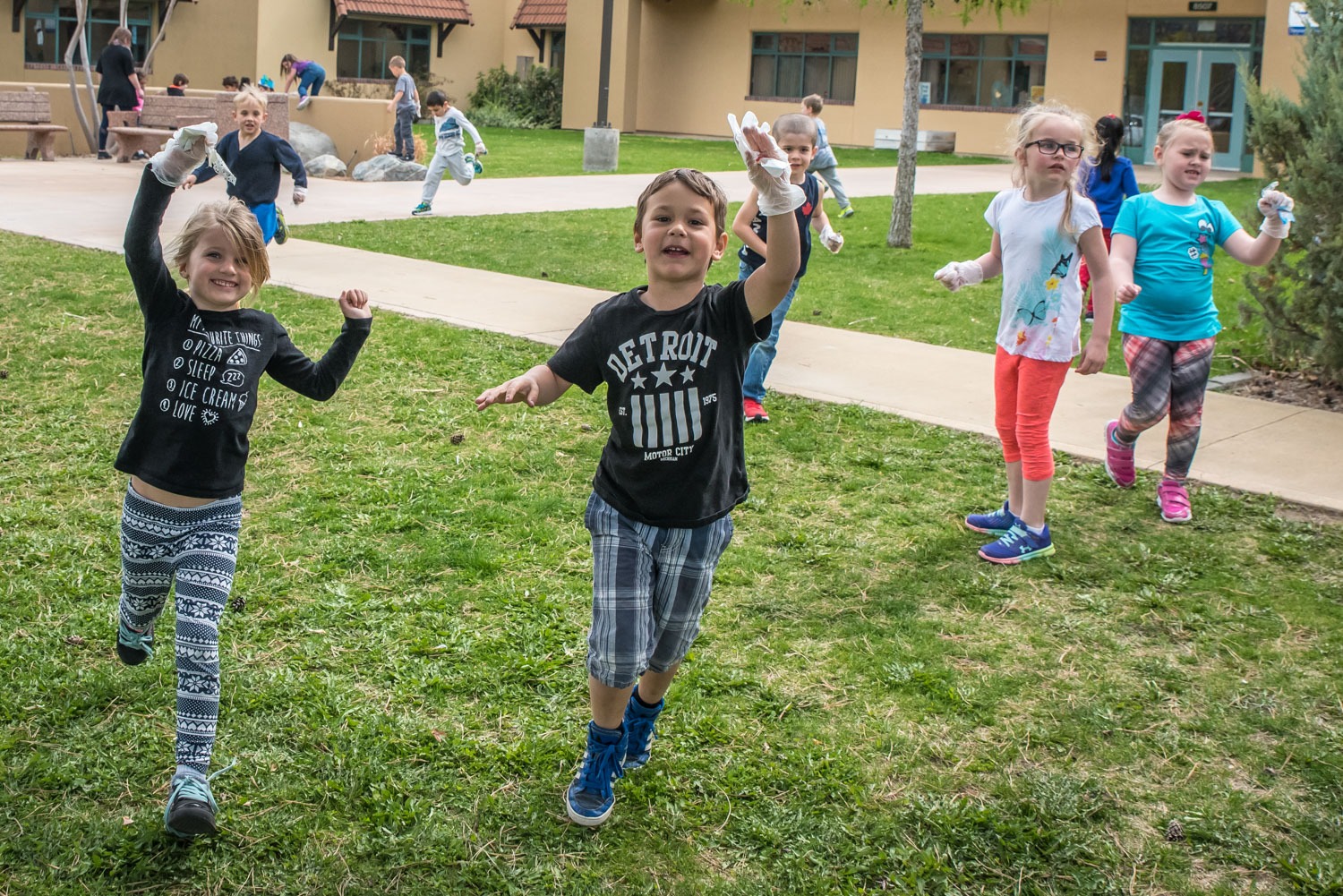
Teachers and educational assistants from the academic intervention group discuss numeracy during a “spirals of inquiry” session at the sixth and final early dismissal last Wednesday at Osoyoos Elementary School. While the group also looked at students’ reading and writing skills, they decided that they could make the biggest gains by developing a strong culture in math. (Richard McGuire photo)