Flash back two years to when Osoyoos was engaged in the fight of its life to stop the threatened closure of Osoyoos Secondary School.
One of the reasons cited by school district officials was declining enrolments, combined with a provincial funding formula for schools that was based on enrolments.
The Town of Osoyoos successfully fought for funding that took into account the vital role that a rural community’s only high school plays in a town’s wellbeing.
The response was the former B.C. Liberal government’s Rural Education Enhancement Fund, which helped to persuade reluctant trustees to save our school.
But there was another side to the equation and that was that we needed to increase Osoyoos school enrolments by encouraging more young families to live in this community.
On these pages two years ago, we argued that the town needed to get serious about encouraging the construction of affordable housing if we wanted to bring more young families to Osoyoos.
The town had been looking at affordable housing for a number of years, and council members and town staff also reached the conclusion that more affordable housing was necessary.
The problems were attracting developers – who found it more profitable to build expensive retirement properties – and the shortage of available land.
The town had long been eyeing the Southeast Meadowlark Subdivision, and they did some preliminary plans for roads and services.
The problem is that most of that land remains in the Agricultural Land Reserve and this entails a negotiated process to remove it for housing development.
An initial solution was found in a piece of land left over from the construction of the new fire hall – sometimes referred to as the Richter Remainder.
The town was able to obtain approval from the Agricultural Land Commission to establish a housing development, but the stipulation was that 15 per cent had to be set aside as “near-market” housing. (The word “affordable” having been banished).
They also had to develop the land at medium density, of at least 30 units per hectare.
The sword of school closure still hung over Osoyoos when the town reached an agreement with Hart Buckendahl, president of Ellcar Construction of Osoyoos to develop housing.
Ellcar was given the option to purchase 20 residential lots in the Richter Remainder, with first right of refusal on an additional six.
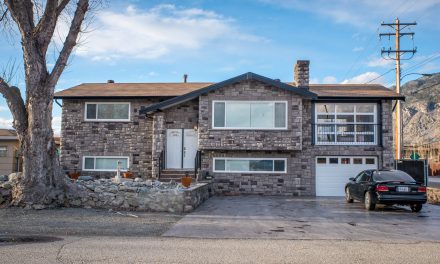
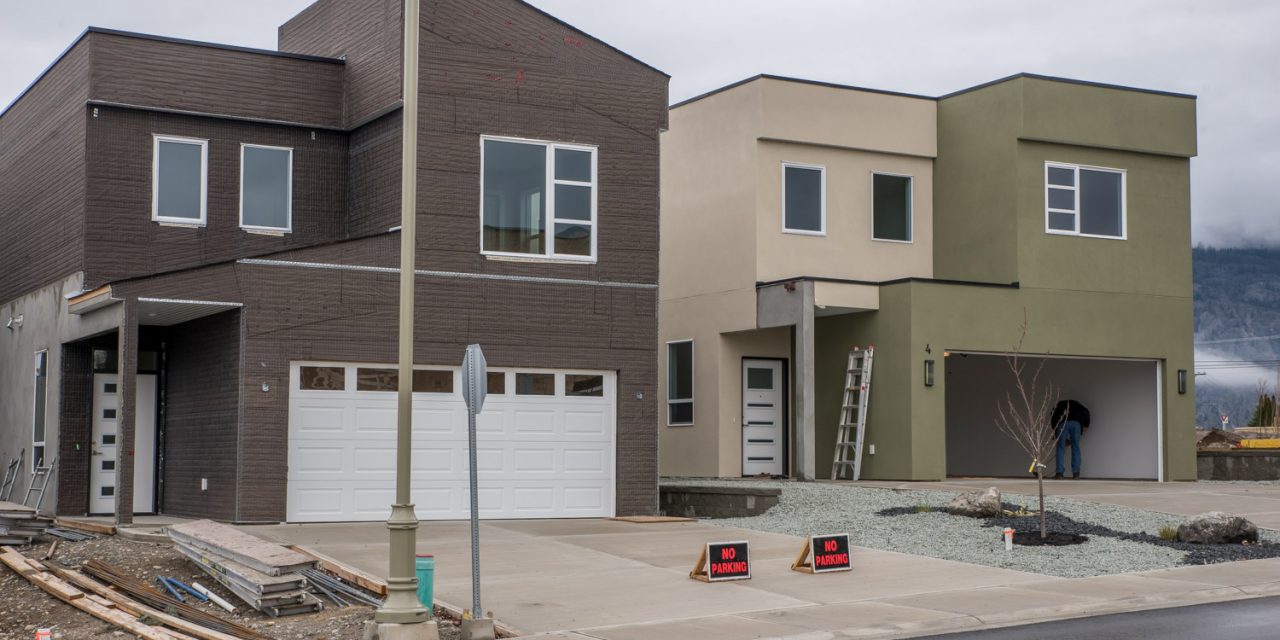
Last week the Sandhu family, with two young children, took possession of the first home in that subdivision.
Others are expected to take possession of two more homes this month, and Buckendahl’s people are busy working on more.
This is indeed a positive development as Osoyoos tries to attract younger families to the community.
But nothing is perfect, and the goal of affordable housing remains elusive.
Originally, Buckendahl hoped to be able to offer houses for less than $350,000 each.
The homes on sale now start around $400,000 and as some larger ones are built, they could climb to over $500,000.
It’s true that builders will build what they can sell, but if the goal is to provide affordable housing to young working families, especially those in the hospitality industry, then this probably isn’t the answer.
The town was under pressure in 2016 with the threatened school closure, so the program to allocate the four “near-market” units was rushed.
Clearly too, safeguards had to be built in to stop these houses from being bought with a subsidy and then flipped at a profit.
But it’s now evident that the program is too restrictive and buyers have been unwilling to take up the subsidies, opting instead to pay full price without the restrictions on resale.
Town administration is reviewing the program to see how it can be tweaked, and hopefully the necessary improvements can be made.
But this may be a good time to take a look at the larger problem of affordable housing in Osoyoos, not ruling out some even denser developments or creative ways to encourage them.
Hopefully this time we can carefully consider the various options for affordable housing without the threat of school closure hanging over our heads.