A proposed supportive recovery facility for recovering drug addicts in a residential neighbourhood near Goodman Park has triggered an outpouring of strong feelings on all sides.
To be clear, no formal proposal has been made yet to the town, but there’s no doubt the company planning this facility is moving forward.
Unfortunately some people are basing their views on their preconceived ideas about whether such a facility is needed without looking at some of the broader issues about how the clients themselves and the neighbours would be affected.
No one can dispute that opiate addiction has become a serious problem, not just in major cities, but also here in the Okanagan.
While drugs such as heroin, morphine and other derivatives have always been a serious problem, the recent spread of fentanyl and its use to contaminate other drugs is especially deadly.
The solution can’t simply be one of law enforcement, although cracking down on the illicit market is one piece of the puzzle.
Rather, it must be dealt with as a health issue, helping those who don’t have the strength or will to overcome their addictions to at least use the drugs in a safe setting, ideally knowing the strength and content of what they’re using.
Better though, is to provide the supports necessary to those wanting to try to become drug free. That’s where supportive recovery fits in.
Such supports, unfortunately, are usually beyond what the public healthcare system is able to provide. As a result, for-profit operations like the Brandon Jansen Memorial Recovery Centre (BJMRC) have sprung up to meet that need.
Some Osoyoos residents argue that such facilities should never be located in any single-family residential neighbourhood (R1 zoning).
They bought into their homes on the understanding that the zoning is R1. To add a very different use into their neighbourhoods is like changing the rules after the fact.
Gina MacKay, the Town of Osoyoos director of planning and development services, says this is a decision for council to make. But she points out that such facilities are operating in single-family neighbourhoods in a number of other communities, largely without problems.
Others point out that those overcoming addiction need to be integrated into a community.
We support this concept in general, but serious concerns about this specific proposal have been raised. These need to be looked at separately from the general issue of integrating supportive recovery facilities into the community.
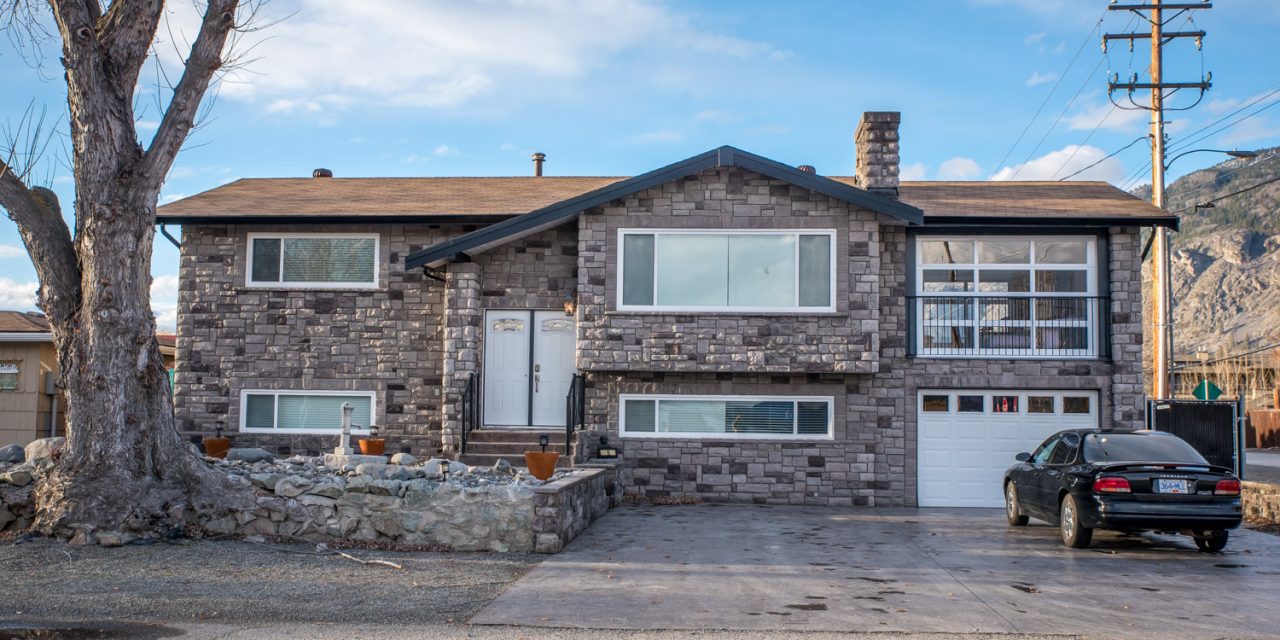
The proposed location is a house at 5 Bayview Crescent opposite Goodman Park. BJMRC hasn’t publicly acknowledged this is the location – but they’ve been actively working at this property ahead of any approvals from the town.
This property borders on busy Lakeshore Drive, which can be jammed with tourist traffic in the summer. It’s on a very small lot for the size of the building, leaving neighbours wondering where the clients will spend their time.
Also a concern is that neighbours point to drug dealing activity within just a couple blocks of the location. Hardly a suitable spot for someone trying to get off of drugs.
What’s most disturbing, however, is the secretive and insensitive approach by BJMRC to the neighbouring community.
As one neighbour pointed out, if BJMRC had approached the neighbours first, explained what they were planning to do and answered questions, they might be better received.
Our only conversation with Michelle Jansen, BJMRC president and chief executive officer, left us with the impression she is contemptuous towards the neighbours and has no apparent desire to work with the community.
Without community support, the environment will be toxic for clients and neighbours alike. Hardly ideal for those trying to quit drugs.
Council will be dealing separately with its general policy on supportive recovery centres and on this specific proposal.
It’s very possible for Osoyoos residents to support the one without the other.