By Lexi McFarlane, Times Chronicle
Oliver Council was presented this week with a proposed 2026 Utility Rate bylaw that would see one-time significant increases to fixed and variable rates, in preparation for substantial work needing to be completed next year.
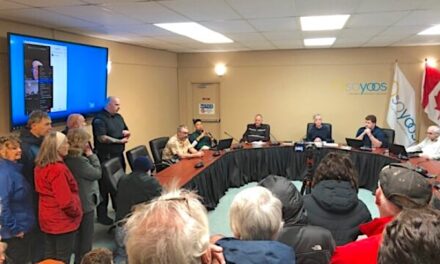
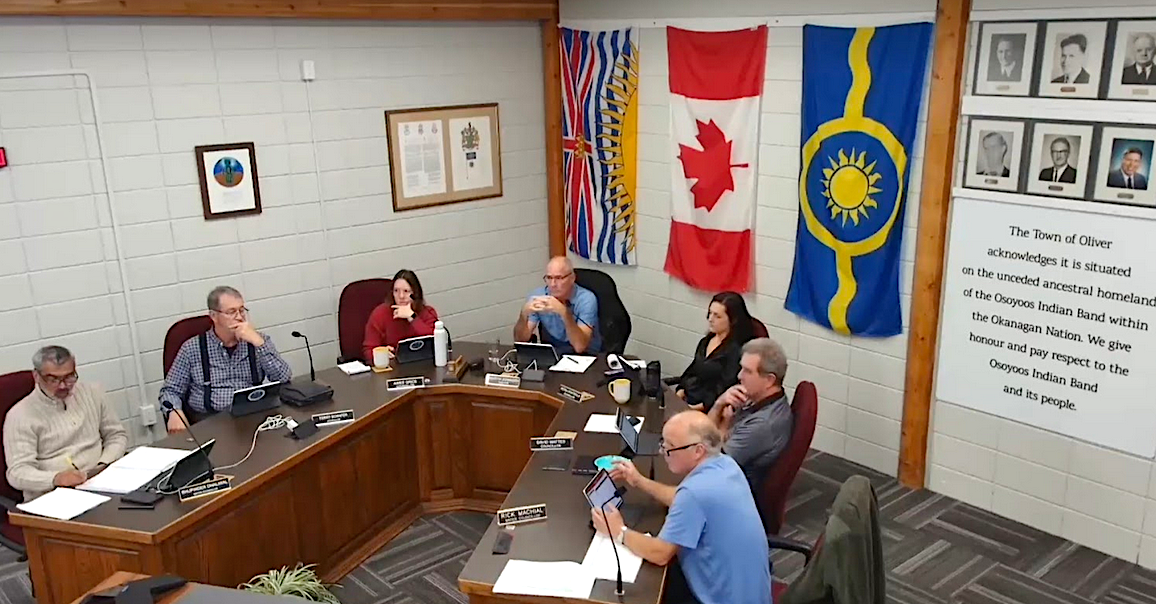
At a special Open Council meeting held on Monday afternoon, Oliver’s Chief Financial Officer, John Kurvink presented the utility rate details, as part of the overall 2026-2030 Capital and Operating budgets.
The central part of the proposal is a five per cent increase to domestic and irrigation water rates, and a seven per cent increase to sewer rates, both increases applying to fixed and variable rates.
The Capital Budget for the Town of Oliver’s Public Works department takes into account several projects requiring work to be done in 2026, with varying degrees of urgency.
Some projects, like the Hester Creek piping and Flow Meter, are designated as “critical” on account of the infrastructure exceeding its designed life span. Others, such as the Park Drive water main looping, are designated as “essential” and have more flexible timelines to be worked with.
Forecast Operating budgets for both Water and Sewer were included as part of the report. The Water Operating budget shows a marginal decrease of about $70,000, down to $5.104 million from $5.174 million. Both figures, however, are significantly higher than the actual spending figure in 2024, of $4.515 million.
Meanwhile, the Sewer Operating budget shows an increase of over $160,000 going from a budgeted $2.097 million in 2025 to $2.158 million for 2026. The Sewer Capital Reserve stands at just over $11,000 as of 2026, but is forecast to rise dramatically by 2029 and 2030, partly due to the necessity of safeguarding against a heavier reliance on grant funding in those years.
Sewer projects in 2026 will account for $1.7 million of the budgeted figure, nearly double the $938,000 that projects required in 2025.
The current proposed sewer rate increases would raise the average annual cost to homeowners from the current $587 to $629, a roughly $3.50 per month price hike. Kurvink noted this remains lower than the rates in some other South Okanagan municipalities, such as Osoyoos and Summerland, although Osoyoos is questionable for comparison purposes due to its very large tax hikes last year.
Annual Water rate increases would raise the average annual cost to homeowners from $723 to $759, a $3 monthly bump, and also lower than Osoyoos and Summerland rates. Irrigation costs for farmers for an average 7.52-hectare (10-acre) plot of land would go up to $3,334 annually, from $3,175. This would keep Oliver’s rates lower than Penticton, used as the irrigation reference.
Following the current suggested 2026 and 2027 hikes, future sewer rate increases would go down to three per cent annually from 2028 to 2030. On the Water side, the five per cent figure is projected to hold steady, save for a one-time bump in 2028, which Kurvink explained will allow the reserves to be replenished, and for any short-term debt incurred to be addressed.
The two big-ticket items that are noted as having “monstrous impact” on 2026 are the Similkameen Avenue and Main Street projects, which will see both streets requiring full reconstruction. In both cases, the water and sewer infrastructure dates back to the 1960’s and needs to be replaced.
On the Water side, the Rockcliffe Well project remains to be completed.
Kurvink noted the projects labelled “critical” are the ones that cause the most headaches, given the reliance on grants.
“We’re doing them subject to grant (funding) right now, so if we don’t get the grant, then we can’t do the project,” Kurvink said. “And then I worry because it’s rated ‘critical’.”
“Wouldn’t that trigger debt?” Councillor Terry Schafer clarified. “Exactly, and then we have to find another source (of funding),” Kurvink replied. “We do have a few options; it’s just that those are difficult trade-offs.”
Councillor Aimee Grice asked for verification on what happens if the projects have to be funded via alternate sources.
“These are slated for 2026, so obviously if we approve the budget, we want these to go ahead,” Grice said. “If we don’t get the grants, (will) you come back to us to look at alternatives right away, and see how we move forward?”
“We do have that option,” Kurvink replied. “We can come back and say ‘grant didn’t come in’, and we can do the project… through borrowing for debt, or taking it out of the funds mentioned.”
Grice suggested crafting a fallback option right away. “I think that if these are priority one, we should have a backup plan in place of the grants don’t come through, if we do feel like these need to happen in 2026.”
The full list of projects requiring funding that are designated as “critical” include the Similkameen Ave. and Main St. projects, funded through grants; the Compactor Room and Highlift sewer upgrades, funded through the Capital Fund; Rockcliffe irrigation upgrades, funded either through grants or debt; and the Hester Creek, Water Meter Replacements and CPR Well decommissioning projects, all funded through the Water Capital Fund.
Referring back to the one-time 2028 water rate increase, Councillor David Mattes inquired about either moving the extra amount up or spreading it out evenly.
“When we hit 2028, we’re going to be short of cash once again, as we are every other year,” Mattes stressed. “And there will be a fight (against) raising them ten per cent. The question I ask of Council is there an appetite to change the numbers in 2026 and 2027?”
Water Councillor Rick Machial rebutted against the characterization used by Mattes.
“This Council, the last number of years, has not (altered) it from what staff has proposed,” Machial said. “It’s what staff has proposed. We don’t sit here and fight over it.”
A more direct explanation for rates usually staying as they are proposed was offered by Water Councillor Bhupinder Dhaliwal.
“If we high-rate now… Staff is always talking about possible grants that come through; then we’re over-collecting in the present, rather than the future,” Dhaliwal said. “Right now, the economic climate doesn’t line up with higher rate increases, but perhaps in the future, it does.”
Following the meeting’s adjournment, Town staff will now draft the bylaw for 2026 Water and Sewer rate increases, which would factor in debts and all increases. The draft will be considered during a separate Special Open Council meeting in November.