By Don Urquhart, Times Chronicle
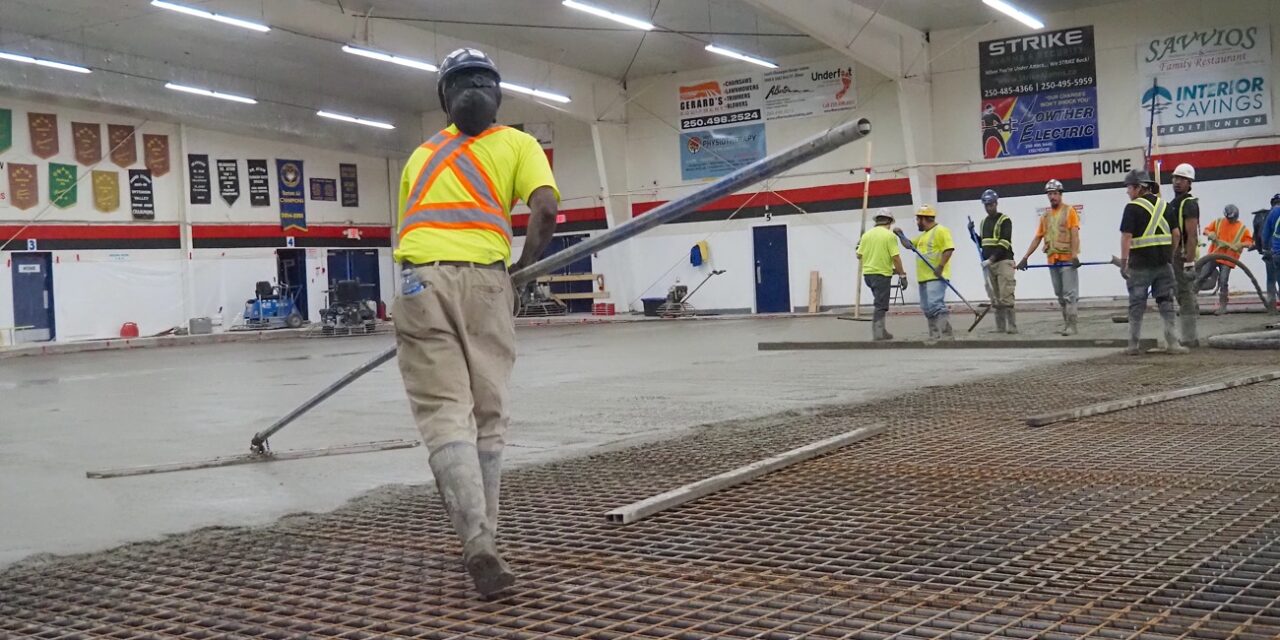
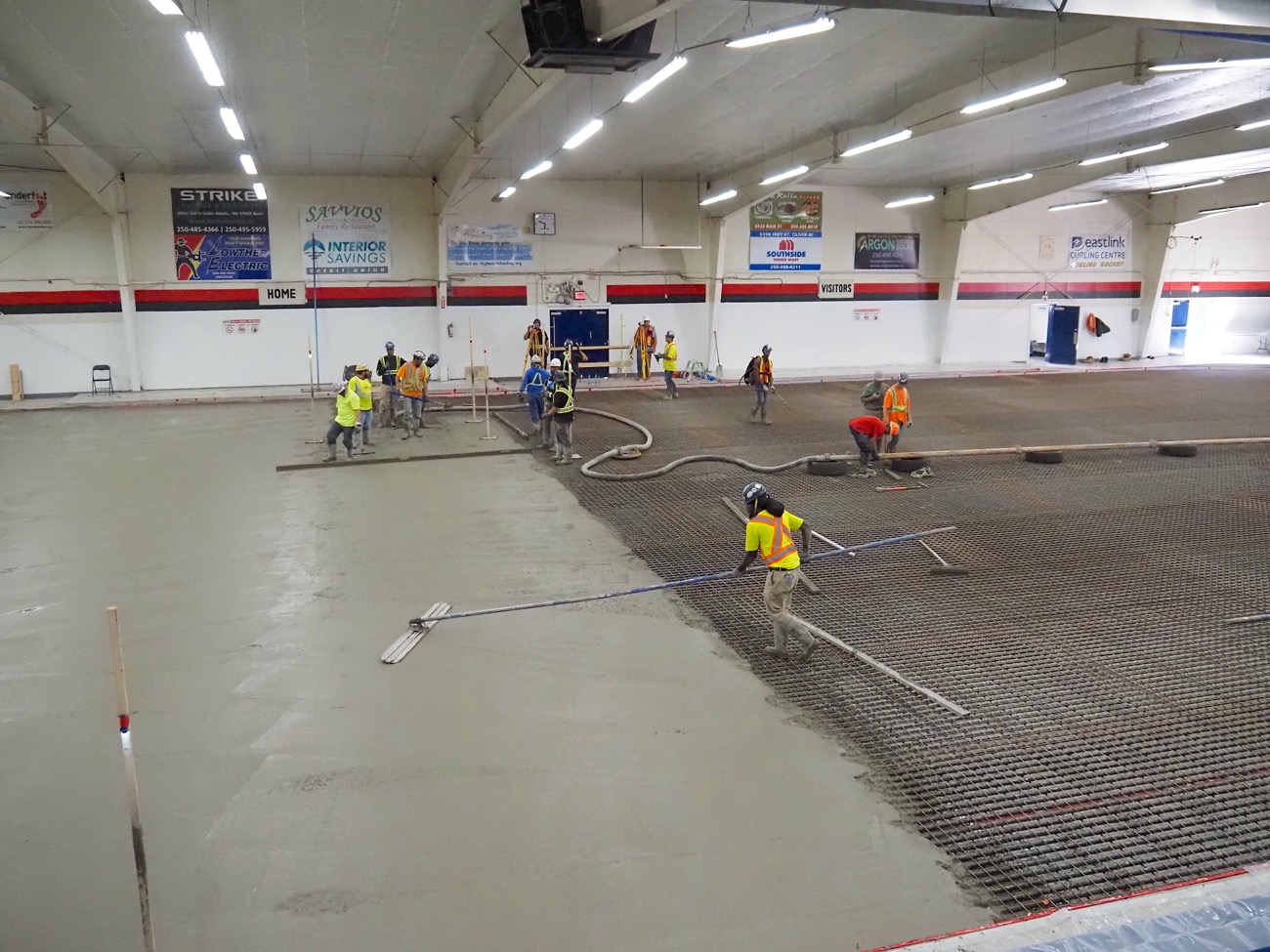
The $3.8 million Oliver Arena rehabilitation has recently crossed an important milestone with the installation of the refrigerated flooring system and pouring of the concrete slab.
While comprising only one part of the overall $3.8 million project, the replacement of the refrigerated floor system and concrete slab are a key part of the arena infrastructure.
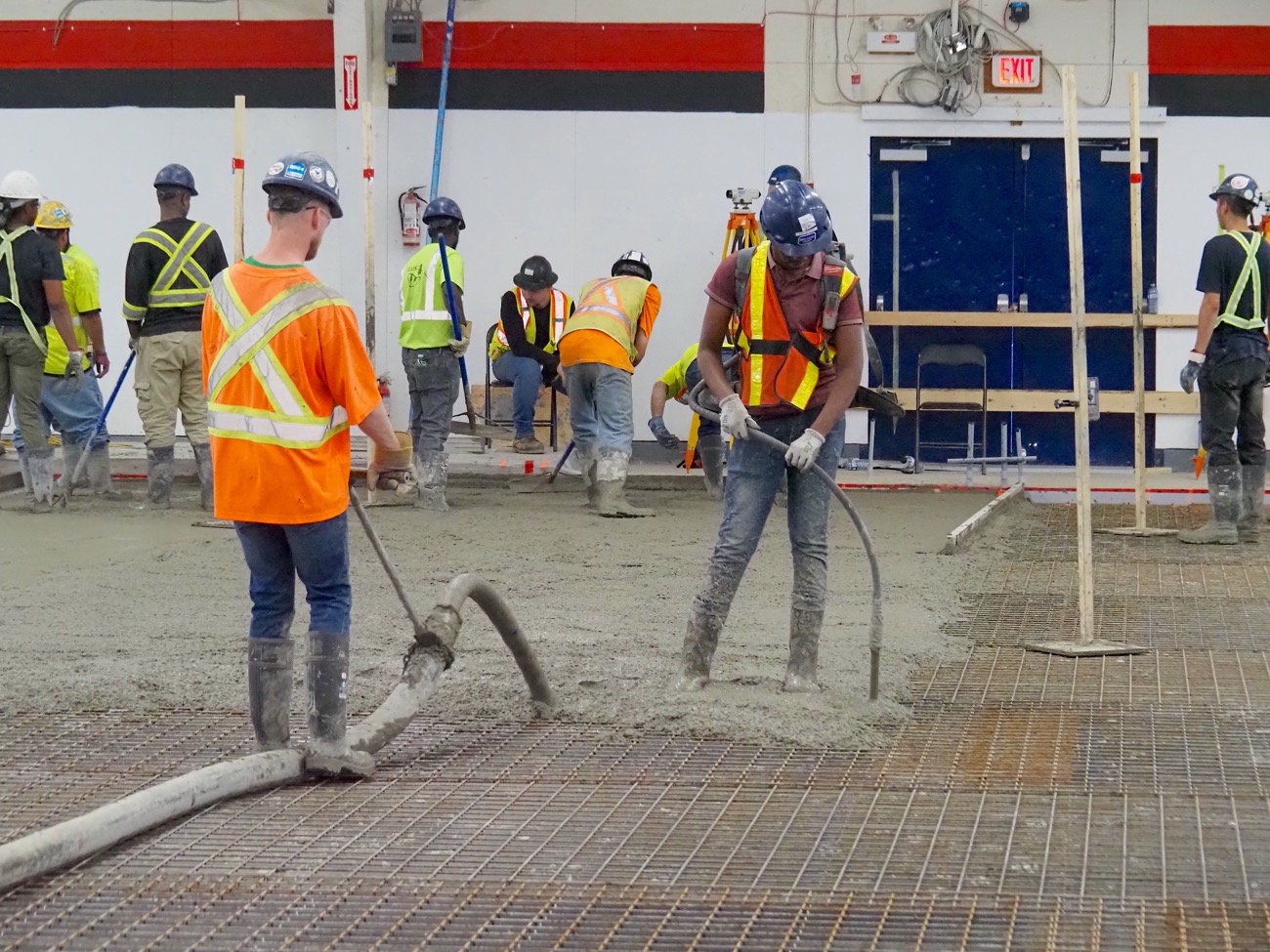
The company responsible for this portion of the work is Bry Sand Ice Arena Ltd. and it recently hosted a sneak preview on the day it was pouring concrete for the slab floor.
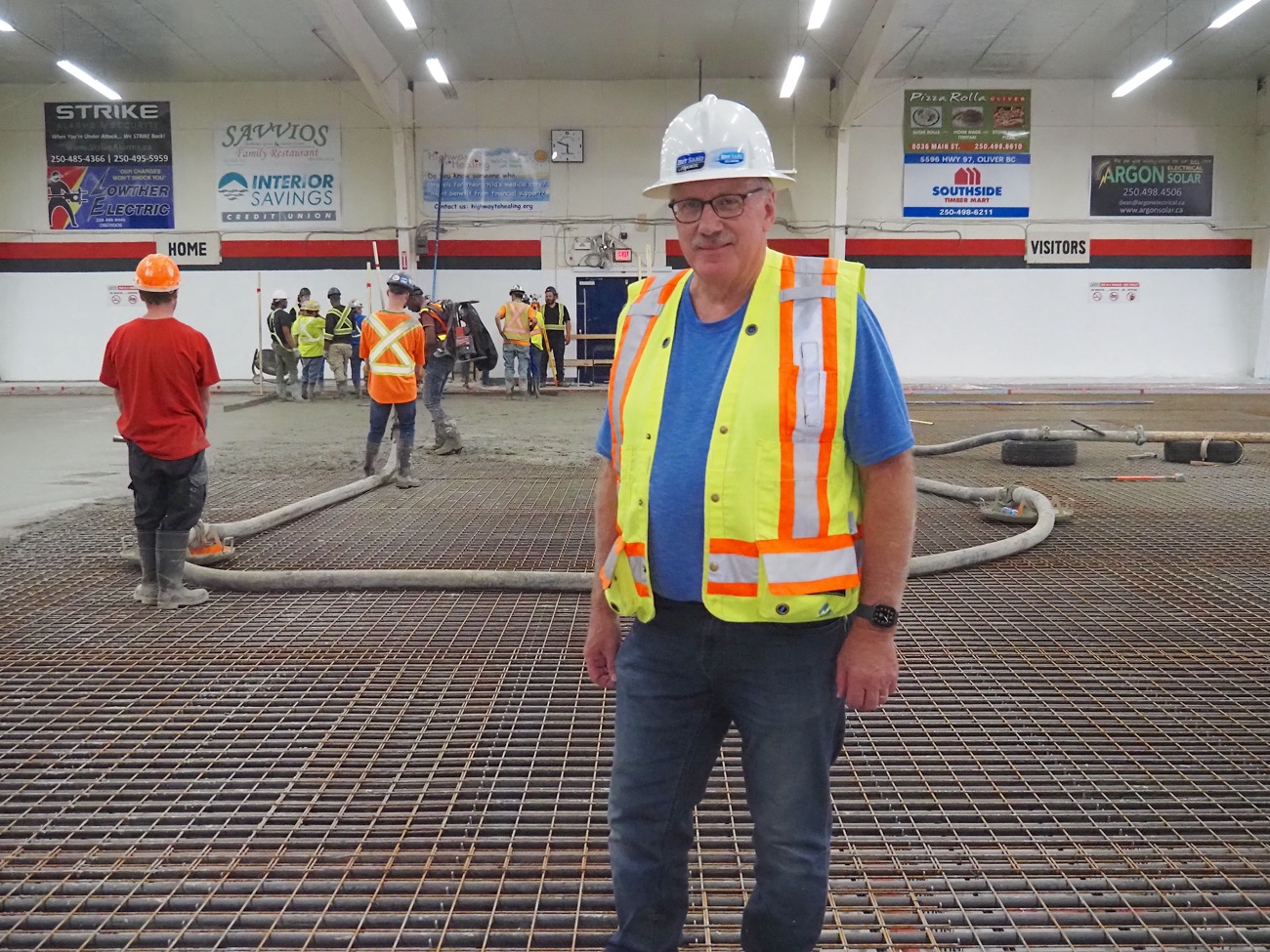
Bryan Trusty, President of Bry Sand Ice Arena Ltd.
Bryan Trusty, President of Bry Sand Ice Arena noted the company has been installing refrigerated floors since 1988, having built just a little over 400 ice rink systems all over Western Canada and about a dozen in the US.
The company also did some work in South Korea during the 2018 Winter Olympics where they helped rebuild the curling rink and they also lent their expertise with the Beijing 2022 Winter Olympics.
In Oliver the company’s job involves a retrofit Trusty says, explaining that the existing floor has been taken apart and everything put back together with state of the art technology. And specifically he’s talking about “polyfusion welded piping system” in which the pipes are basically melted together.
He says the older ice rink systems that most people are familiar with were based on open trenches with clamps on low-density plastic pipes etc. “They caused a lot of trouble for people with leaks and what have you, and there were risk factors for men working around them,” he said.
These are totally encapsulated; there’s no piping exposed anywhere the public will never even know where the piping is, which he highlights reduces liability risk.
The company started building this system, which it developed itself, nearly a decade ago and he says there are very few clients that now want to build the old system. “The marketplace is using it almost exclusively now,” he adds.
The system will see efficiency gains resulting from a new floor with “levelness” which is key Trusty says because the concrete floor is of uniform thickness which means the ice can be kept thinner resulting in higher refrigeration efficiency and resultant cost savings.
He notes that with old rinks there could be anywhere from four, five or six inches of ice in some areas to bring the ice level up to a playable level. This is mostly caused by frost heaving over a period of years he notes.
“Just dated, age-old facilities,” he says. “Yeah, they’re functional, they’re operational, but they’re not efficient. Okay, so by taking out what they had [at the Oliver rink], their levels of efficiency have gone way high,” he said.
As for how long the system will last Trusty chuckles replying, “The retrofit we’re doing now, by definition of how long it will last, we’ll outdo the building.”
He explains that the piping systems have a life expectancy of 70-90 years and the concrete product with today’s technology will last 50-60 years, “easy”. As for the construction there’s nothing particularly unique about the concrete, it uses the same “rebar” as in other applications, but does have a layer of mesh on top.
While this does give some structural value, Trusty says the mesh on top is primarily there to “tighten up the refrigeration pipe to the matrix so everything comes together like a sandwich at a nice, consistent elevation so that when the refrigerant goes through, it is within about 38 millimeters of the surface.” That gives it optimal operating efficiency, he adds.
Interestingly enough one thing that helps extend the life of the rink, in technical terms a “cold floor system”, is actually a heating system underneath the whole concrete slab.
“The heat system underneath prevents any frost from going into it, and it keeps the base at a constant temperature . . . so that base stays stabilized, everything above it stays stabilized, and it’s just going to last a lot longer.”
This is clearly less of a problem in the South Okanagan as compared to somewhere further north with more extreme winter temperatures. But he notes it’s useful for rinks that operate longer seasons, or even throughout the entire year.
Trusty says there were no surprises with the retrofit other than the discovery that the subgrade material that was used was of “exceptional quality” and could be reclaimed. He notes that often subgrade material in arenas is donated and nobody knows exactly what it is.
But in the case of the Oliver Arena “whoever built here knew what they were doing, it’s just a native product from the area but it’s just perfect for putting underneath.” That not only helped keep it out of the landfill, it also helped keep costs down for the town.
He adds that most of the concrete slab that was taken out was repurposed. “When we take slabs apart like this, we cut them up into dimensional pieces that are manageable by small pieces of equipment to lift and haul out, and put in the back of trucks and haul away.”
The majority of the concrete here was cut into about a four foot by six foot dimension, loaded on flatbed trucks destined for different parts of the central interior, he says. Most of this was destined for the ranching industry to be used as a base for cattle to stand on in front of feed bunks.