By Don Urquhart, Times Chronicle
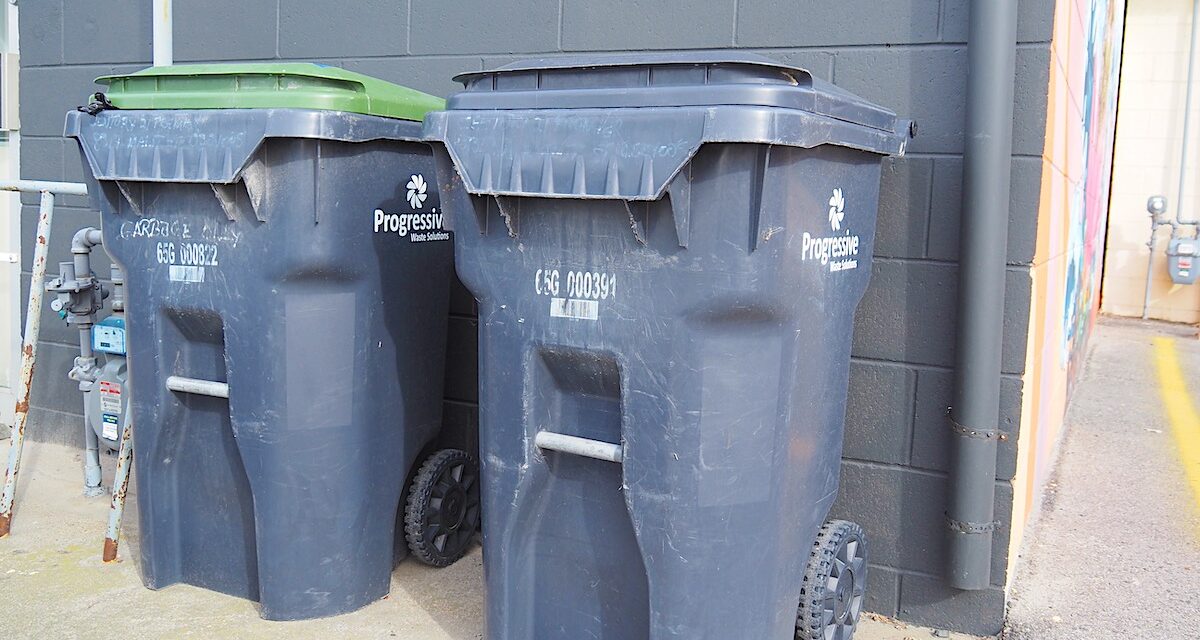
Osoyoos Council was asked to consider whether they want to stay the course with semi-automatic curbside garbage collection or embark on a path to full automation which will require investment around new carts.
The issue has come to the fore for a number of reasons, primarily due to the fact that waste collection service contracts will soon be expiring in a number of South Okanagan communities.
The Town of Osoyoos collaborated with the Regional District of the Okanagan Similkameen (RDOS), Summerland, Oliver, Penticton, and Keremeos to complete a regional RFP for waste collection services.
The aim is to leverage economies of scale, said Jared Brounstein, Director of Operational Services, noting there are efficiencies with vehicle procurement and route design for instance.
With assistance and input from the region, City of Penticton staff led the RFP process, including the development and administration of the RFP and the resulting draft contract
The top ranked submission has now been selected, and each municipal partner will discuss at council level and negotiate and authorize their own contract. These will reflect their unique service levels and needs.
The top ranked proposal provided a fully automated solution to curbside collection with no options for semi-automated. As a result, Brounstein noted this may require the Town to change its service levels to incorporate a new cart system.
The current service level provided by Osoyoos’ curbside collection contractor is semi-automated, as recycling carts were initiated in 2021. Currently, only Keremeos, Osoyoos and the RDOS are not operating fully automated waste collection.
“A fully automated curbside collection program is the next step in providing efficient curbside collection but does require a service level change to move forward,” Brounstein noted.
This comes with a cost with an initial investment of $350,000 in 2025 and an ongoing operating cost of $45,000 per year starting in 2026 for cart repair/replacement and renewal. Brountein noted that a fully automated collection service can be achieved with current operating budget allocations.
He also said that while he has not run the numbers and would have to put out an RFP to be certain it is his gut feeling that “yes” it will be more expensive to maintain the semi-automated system, largely because the town would be the outlier if it chose that path.
Brounstein noted that the $45,000.00 per year or $21.54 per user a year was necessary for replacement and maintenance as the carts become damaged or misplaced.
He added that with each cart equipped with an RFID tag the problem of carts going missing would be minimized, but at the end of the day some of the carts “just seem to grow legs and walk away,” he noted.
Councillor Zach Porturica asked if Osoyoos stayed with a semi-automated service level “Would that remove the town from the regional contract.”
“Yes we would pull out of the regional contract and we will be on our own,” with a semi-automated collection service, Brounstein said.
Osoyoos’ current waste collection contract expires in 2026 and a typical contract would be for 5 to 10 years with Brounstein recommending “at least a five year contract if we do it on our own.”
Osoyoos Mayor Sue McKortoff, who is a member of the RDOS Board of Directors noted that after listening to the various reports and the comments from the Regional District, “I do feel that it’s important to really look at collaborating with everybody in the Regional District. “
She pointed to the economies of scale as the key factor and “I know that there’s a cost to it, but to me it makes the most sense. So I would certainly be in favour of going with the Regional District in terms of coordinating a contract.”
McKortoff also brought up the issue of WorkSafe BC but Brounstein said he was not aware of any waste collection related regulations but noted the town’s current contractor said they do struggle with trying to find staff who are willing to do physical labour.
“They’re seeing high turnover rates and truck driver burn out very quickly. This is why the move to automated systems,” he added.
In the end, council voted 3 to 2 in favour of moving to a fully automated waste collection system along with other municipalities in the valley. Councillors Johnny Cheong and Jim King opposed the move.