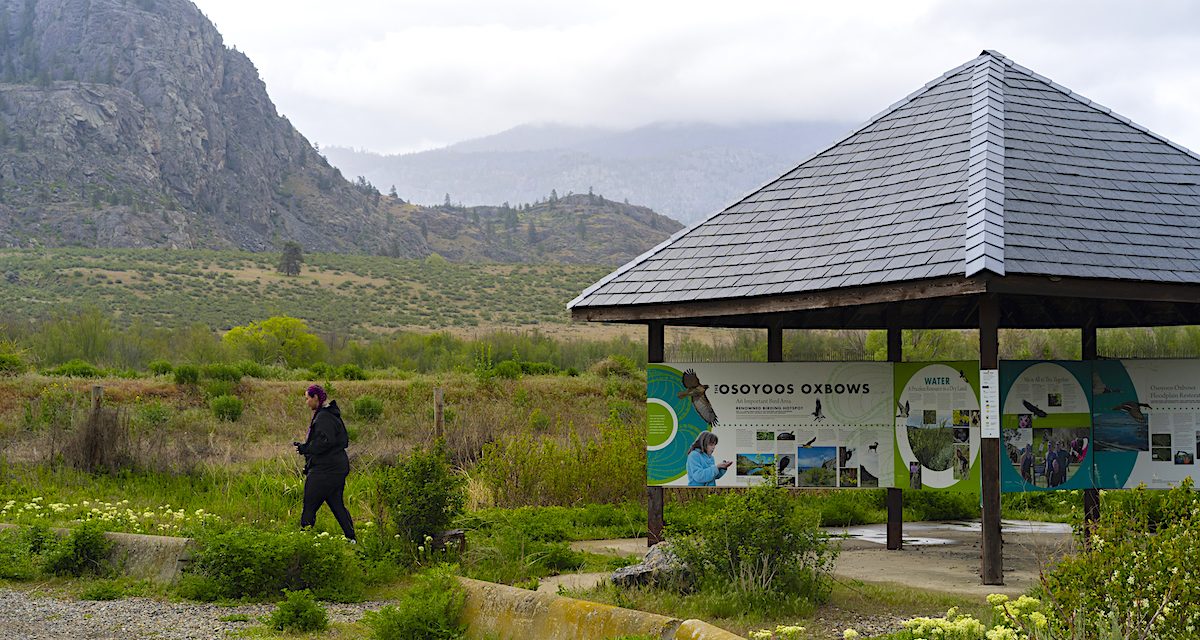
By Don Urquhart, Times Chronicle
The BC Bird Trail continues to grow, with the addition last September of the Osoyoos Bird Trail expanding the number of trails across the province to seven with more expected to be announced this spring.
The Bird Trails are a unique offering that, while created as a tourism marketing strategy, have some real substance at their core in the form of bird watching, or “birding” as its known, alongside the related foundations of conservation and sustainability.
“We want to support drive-tourism to our region and support our local stakeholders. So we’re saying through this program you can help people experience your community through the lens of birding, conservation and community,” said Jordan Stout, BC Bird Trail Project Director.
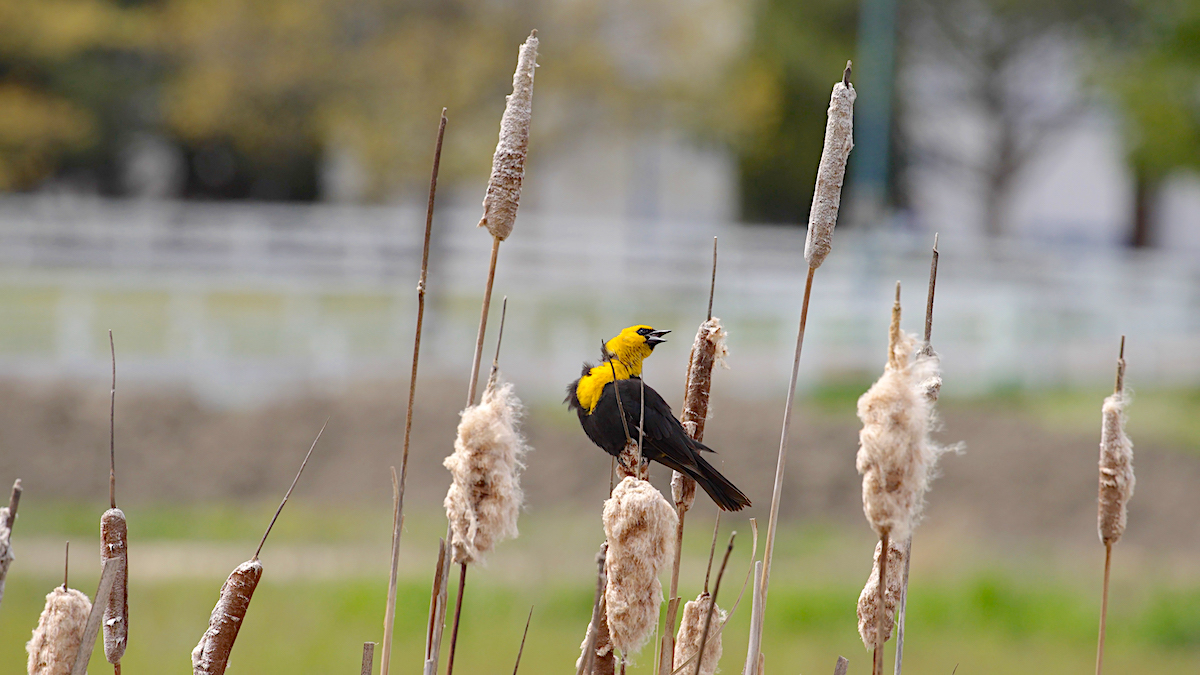
A Yellow-winged blackbird photographed at the Osoyoos Oxbows Trail.
A well-designed website shows the types of birds that can be seen in the current season and indicates the best birding locations to see these birds. For instance, the Osoyoos Bird Trail lists 10 different bird species that can be currently seen in the area along with wintering waterfowl and certain raptor species that are more common in the colder months.
Overall more than 250 species of birds have been recorded in the prime area for birding around Road 22, known as the Osoyoos Oxbows Trail, where the original river oxbows and surrounding dykes and grasslands provide ideal habitat for birds.
Among the other locations for birding listed on the website are sẁiẁs Provincial Park (formerly known as Haynes Point), Osoyoos Desert Centre, Anarchist Mountain Viewpoint, and the Nk’Mip Desert Cultural Centre. Educational information and tips for birding are also featured.
And also included is a selection of local businesses including food and beverage, accommodation, and shopping which are selected by local tourism organizations, in this case, Destination Osoyoos.
“Right now we’re in our third campaign year for the BC Bird Trail,” Stout noted, adding that the fourth campaign will kick off this coming April and will be the biggest addition yet.
The project is largely funded by Destination British Columbia, whose goal is to promote tourism in the province, as well as other partners including Birds Canada, Indigenous Tourism BC and locally Destination Osoyoos.

The BC Bird Trail also has a mobile app available.
Things kicked off in the fall of 2018 with a discussion around ways to promote British Columbia in terms of the goals of the provincial tourism body, Destination BC, Stout said. These include prerogatives such as promoting shoulder season travel, travelling to a wider range of communities around the province and sustainability.
Birding took off on an unexpected trajectory in 2020 as pandemic lockdowns led people to seek safe, outdoor hobbies and activities. Called the “big birding boom,” birding continues to attract more enthusiasts each year, along with a younger, more diverse group of people than ever before, according to the BC Bird Trail.
New trails are developed with the participation of local tourism organizations and communities with BC Bird Trail familiarizing them with the goals in the values of the project. The birding sites are then determined in cooperation with the tourism organization, local conservation groups and Birds Canada.
Locally-owned businesses such as organic grocery stores, local bakeries, bookstores, and sporting and outdoor stores for instance are then also included. Photography and video is then undertaken before the new trail is added to the BC Bird Trail website.
There is a keen focus on sustainability and conservation, Stout said, and by working with local conservation groups they are careful not to shepherd hordes of eager birders to areas that are sensitive or undergoing rehabilitation.
As for First Nations involvement, Stout said: “We leave space to work with these Indigenous communities around what the priority is for them versus telling them what we’re going to do.”
Stout also noted that the Bird Trails are really aimed at novice birders who are new to the activity, rather than experienced birders who already have this base knowledge. “It’s been fun to see how different people engage, not just with the project but with birding in general,” he added.
Going forward Stout says that over the next few years, the hope is to spread the project further across the province. “We’re really excited to see full representation from the province and see more partners coming on board to help promote it and promote conservation and sustainability in the birding world.”
He says the trails may inspire people to do other things like going on an Indigenous tour or a more focused birding expedition with a local guide, “and it might help you make decisions about how you’d like to see that land used and protected going forward.”