By Don Urquhart, Times-Chronicle
The province is dropping a wide range of pandemic restrictions with mask requirements to end as early as tomorrow (March 11), on the back of high vaccination rates, lower transmission and fewer hospitalizations.
Starting from 12:01 a.m. on March 11 the order mandating the wearing of masks in indoor settings will be removed as well the order restricting overnight and youth camps, and so too for capacity limits on faith gatherings.
Masks are still required in school settings until students return from spring break at which point they will no longer be required.
B.C.’s vaccination card will also no longer be required at various businesses and facilities like restaurants, gyms and theatres as of April 8.
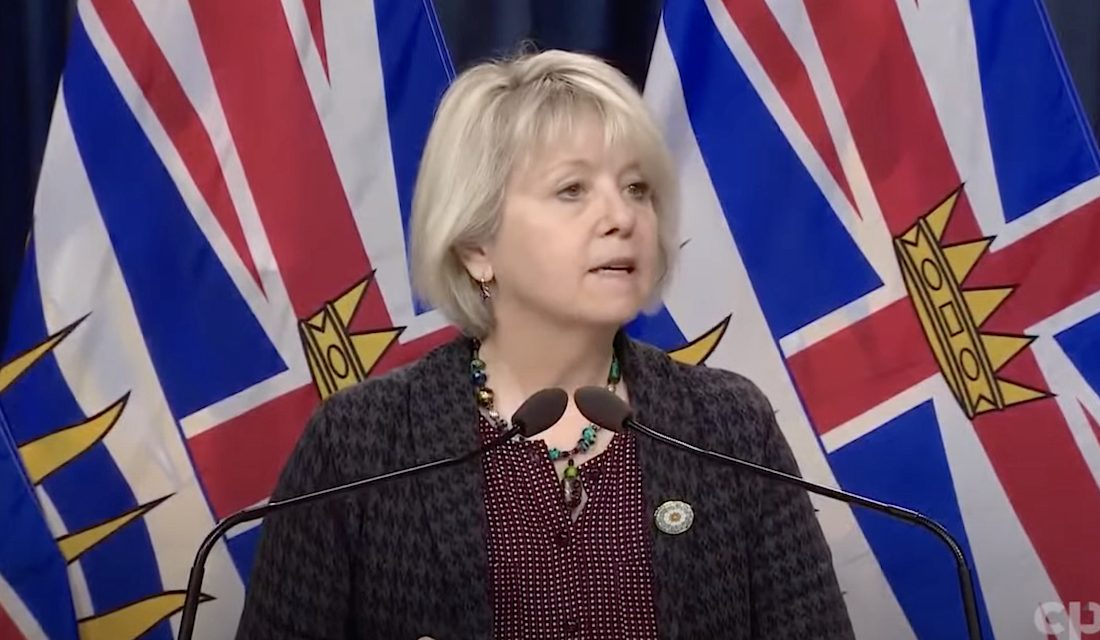
Provincial health officer, Dr. Bonnie Henry and Health Minister Adrian Dix announced the rollbacks in an update on Thursday afternoon.
“Together we have done what is right at the right time and now we are in a place where we can once again adjust our approach,” Henry said.
The easing of many of the everyday restrictions is possible Henry said, because B.C. is in a “good place,” due partly to the province’s high vaccination rate, alongside decreased transmission and fewer hospitalizations.
“The level of immunity we have in B.C. right now means we can take some of the tools we have been using consistently and repeatedly and relax some of these measures,” said Henry.
“With the science and our data top of mind, it clearly shows the risks now are much lower. It’s not zero and we are not fully out of this now, but I am confident we can safely make some further changes.”
Long-term care visitation will also be restored, and facilities are expected to have their new rules in place by March 18.
The vaccination requirement for those living in post-secondary residences will also be lifted next month.
Businesses will be expected to shift from a COVID-19 safety plan to a communicable disease plan.
Henry clarified at the press briefing that rescinding the mask mandate did not mean masks would completely disappear. They will still be required in some high-risk settings like doctors’ offices and long-term care facilities.
“But in most low risk locations, it will now be an option and no longer a necessity,” said Henry.
“Some people in some locations will continue to use masks personally or in their business, and that’s okay. We need to support that, we need to recognize that, we all have our own risks and our own vulnerabilities,” she said, adding it’s “critical” that everyone transitions at their own pace. She also reminded people to be respectful of other people’s comfort level.
Henry also encouraged the use of masks in places where it’s difficult to distance from others, like on public transit. A key factor she said in deciding when to wear a mask is the amount of time spent in close proximity to others.
“I’ll continue to wear my mask if I’m on public transit and I would encourage others to do so too,” Henry added. “We know it protects us, but it’s also a sign of respect and protection for others.”
Airports, however, fall under different guidelines. Transport Canada regulations still require everyone to wear masks while in Canadian airports and during their flight.
“I’m incredibly grateful to the millions of people throughout our province for your willingness and support in adopting our COVID-19 safety measures,” Henry said. “Your efforts combined with these high vaccination rates have saved countless lives.”
With one of the highest rates of vaccination in the world, the province says 90.8 per cent of British Columbians aged 12 and up have received a second dose of COVID-19 vaccine, and 56.3 per cent have had a booster or third dose.
Henry also highlighted that COVID-19 will be with us for years to come which means health officials will continue to monitor the situation. This includes virus mutations, transmission and healthcare impacts. The BC Centre for Disease Control will be leading the monitoring she said, through lab-based genetic sequencing, wastewater testing and facility-based monitoring.