By Don Urquhart, Times-Chronicle
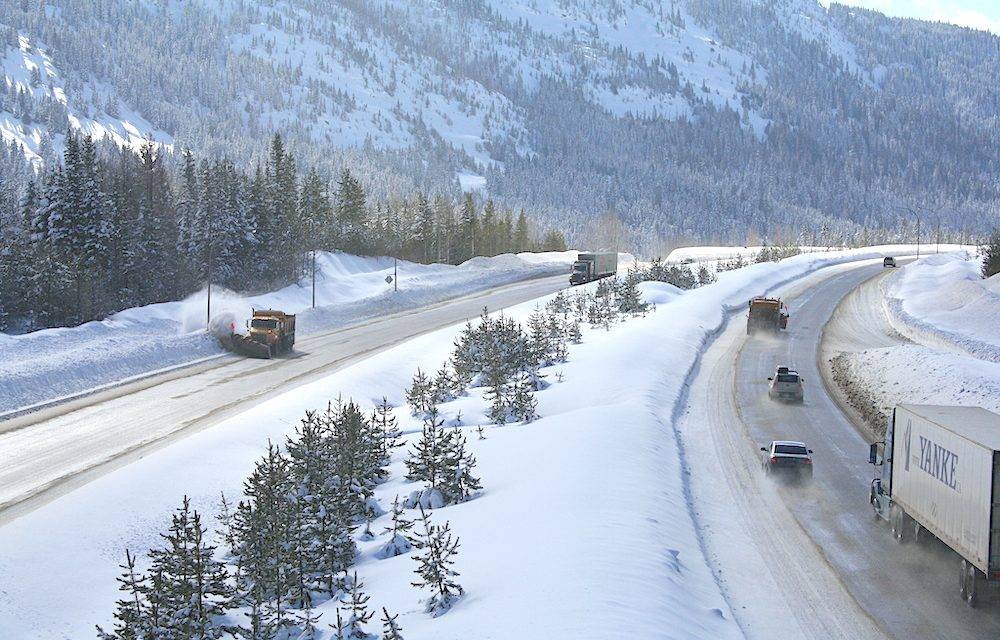
Driving the highways and byways of British Columbia has always carried a certain air of adventure with it, but the very real danger was made clear when the historic extreme weather event hit the province at the end of November.
In the flooding and landslides that ensued numerous motorists were stranded, in some cases for days at a time on various remote stretches of highway.
Many of these people were ill-prepared for the extended time they were trapped on isolated bits of highway, highlighting the need for simple but thoughtful planning.
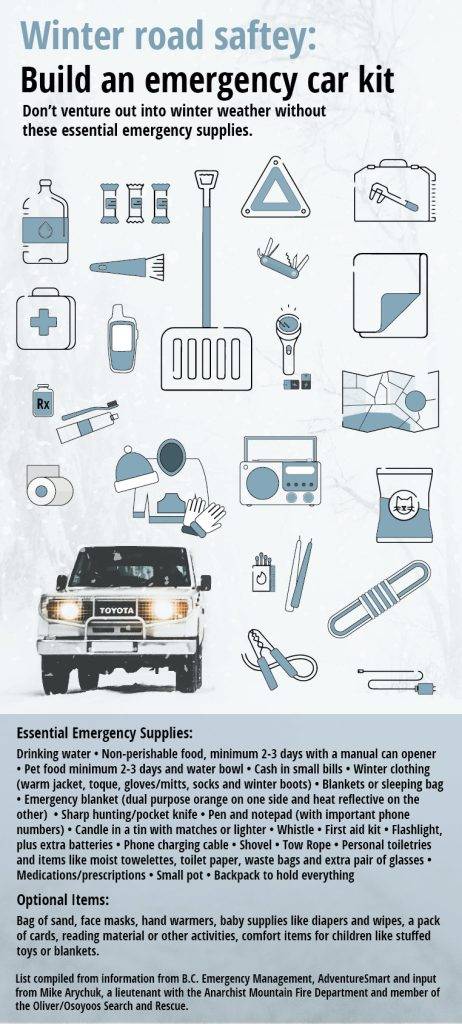
One aspect many people don’t think of is travelling with pets. It’s important to carry enough pet food for two to three days as well.
For Mike Arychuk, a lieutenant with the Anarchist Mountain Fire Department and member of Oliver/Osoyoos Search and Rescue, preparation is everything when it comes to winter drives. “You have to treat the drive as if you’re going for a hike – you have to be prepared to be outside,” he says.
And when it comes to water some mistakenly think they don’t need to carry it because there is snow everywhere. But in actual fact eating snow causes dehydration and can lead to hypothermia as well. A simple trick that Arychuk recommends is to carry a small pan or pot in the vehicle that can be filled up with snow, placed on the running or still warm engine to melt it for drinking water.
One of the most fundamental aspects when travelling is to pay attention to the weather, he says. For those stranded in the aftermath of the atmospheric river storm, had they “really looked at the weather forecast and believed it, they might have chosen not to travel,” Arychuk observes.
Another thing to remember he says is that when driving in the backcountry it’s easy to lose direction when it gets dark, and what may have started out as a +5C day could turn into a -15C night. So you’re going out dressed for a +5C day but you need to be prepared for a -15C night, not counting the windchill factor.
The next critical step is “you’ve got to have enough in your vehicle to survive until first responders get there.” And thirdly it’s important to tell somebody where you’re going and when you expect to get there.
“Can you stay the night in your vehicle if you go off the road into a snowbank because the vehicle becomes your shelter?” he says, emphasizing that this should be the sort of thought process in preparing for winter drives.
Arychuk recommends taking a look at the AdventureSmart.ca website which covers a whole range of expert advice on properly preparing for outdoor adventure. In particular, he urges drivers to pay special attention to the ‘Three Ts’ – trip planning, training, and taking the essentials.
And again this returns to the idea of trip planning, with Arychuk giving the example of someone travelling from Osoyoos to Vancouver. “When you get to Princeton give me a call and let me know, and when you get through Manning Park and get cell service again, text me.”
Trip planning focuses on the route, the weather and informing someone of where and when you will depart and expect to arrive.
“As a firefighter and search and rescue guy I look at the weather forecast every morning and every night because it gauges for me if I have to go out on a call what I will need,” he says.
Training is more pertinent to outdoor activities but for drivers, it also means knowing and staying within limits, such as experience in driving in snow and icy conditions.
Taking essential items is vitally important and includes things such as water, food, clothing, etc. Arychuk says that in his experience the biggest mistake people make is not preparing for a vehicle breakdown.
For individuals who do a lot of winter driving in remote areas where there are significant gaps in cellular coverage such as Hwy. 3, it might be worth considering getting an emergency satellite communication device. These include devices like Spot, inReach and Zoleo that provide precise emergency location information anywhere there is open sky overhead.
Who should consider such a device? “If you’re the kind of person who’s not going to tell someone where you’re going and don’t do your checkpoints, definitely consider getting one!” he laughs.