UPDATE: Osoyoos supermarkets re-stocking from Alberta
Panic buying and disrupted supply chains have emptied shelves in local supermarkets as B.C. Premier John Horgan urges calm.
“What you need, your neighbours need as well,” said Horgan in a Nov. 17 update on the ongoing provincial calamity resulting from the atmospheric river event that hit the province.
That message appears to have been lost on shoppers that cleared some shelves in local supermarkets.
“We need to remain calm,” said Horgan, adding there are many areas where there are no disruptions and goods are able to flow. “Getting our roadways and rail back up and in operation is our number one priority.”
The Times-Chronicle spoke to one supermarket manager who said the number of ‘out-of-town’ grocery shoppers has ballooned over the last couple of days as stores in the central Okanagan were cleaned out of many essential items forcing shoppers south.
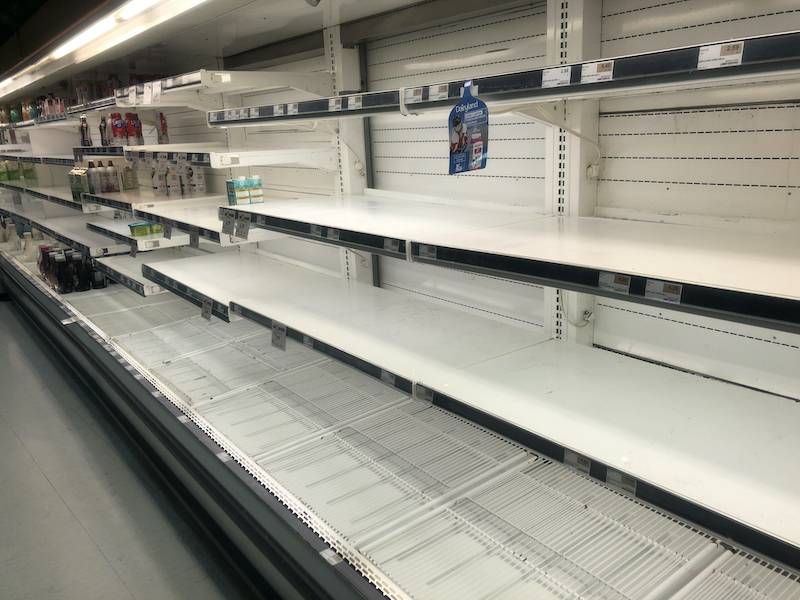
The scene of empty shelves, including the toilet paper section, is shockingly reminiscent of the beginning of the COVID-19 pandemic in the spring of 2020.
A survey of Osoyoos’ two supermarkets showed nearly empty bread shelves, sections of freezer cabinets bare, almost no meat products, half-empty vegetable sections and no milk whatsoever. The toilet paper section was also cleared out.
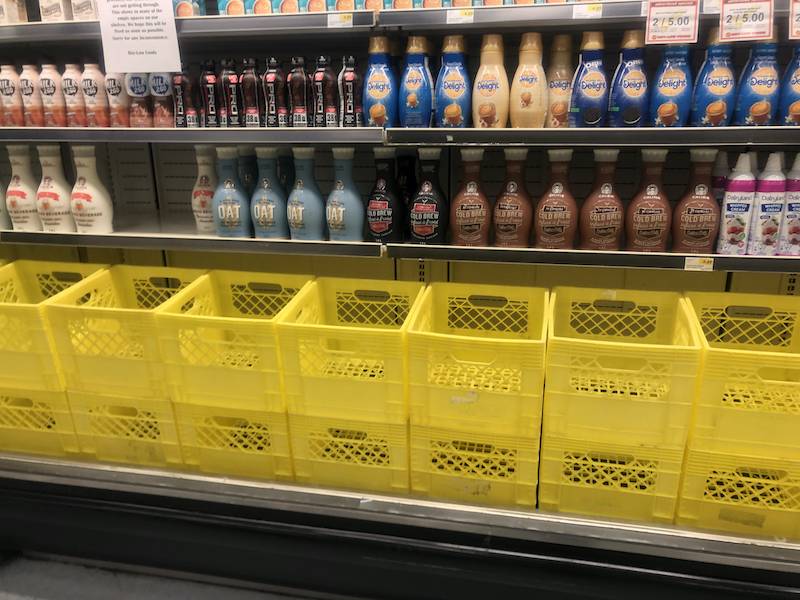
Milk is a scarce commodity.
Times-Chronicle understands that Osoyoos’ AG Foods is supplied from Calgary except for certain bread and dairy products.
Other supermarkets in the South Okanagan including Save-On-Foods, Quality Foods and Buy-Low Foods are more reliant on Vancouver warehouses, but likely have the ability to pivot to alternative suppliers in Calgary.
Meanwhile, the B.C. government has declared a state of emergency, the second time this year after wildfires triggered the same declaration earlier this year.
“This declaration will allow us to implement any provincial emergency measures and allow us access to all assets that may be necessary to prevent, respond or to alleviate the effects of an emergency,” Horgan said.
This includes measures to prohibit non-essential travel, to prevent hoarding and price gouging similar to what was enacted during the early stages of the COVID-19 emergency.
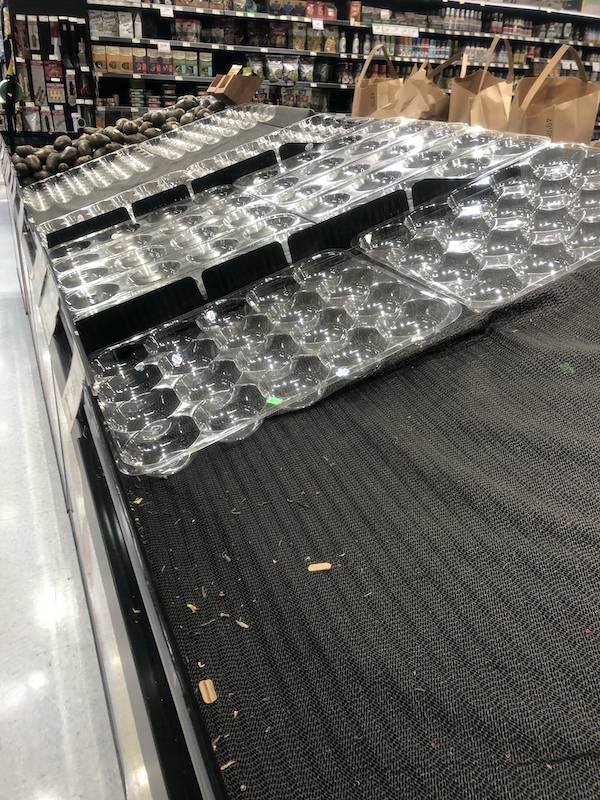
Perishable vegetable products were quick to go.
“The order will preserve basic services and supplies for communities across the province,” he said. This includes travel restrictions to ensure commercial goods and emergency services reach the communities that need them.
“Please do not hoard items,” Horgan urged British Columbians.
“We are confident we can restore our supply chains in a quick and orderly manner provided we all act as we have been acting over the past two years.”
Horgan said that what the province learned from the early days of the COVID-19 pandemic was that when there were concerns about the supply chains “we can take actions to protect and preserve the civility that we expect from our neighbours and our colleagues.”
The province has also formally requested the deployment of federal resources including the Canadian Armed Forces to assist with evacuations, managing supply chains and re-supply chains, security in inundated areas as well as restoration of safe drinking water and other logistics assistance.
Horgan also thanked Alberta, Saskatoon and Ontario for their immediate offers of assistance.
Deputy Premier and Minister of Public Safety, Mike Farnworth encouraged British Columbians not to travel unless it is essential. “This is not the time for travel for leisure purposes,” he said.
“Our transportation infrastructure is crippled and we need to ensure it gets back online as soon as possible.”
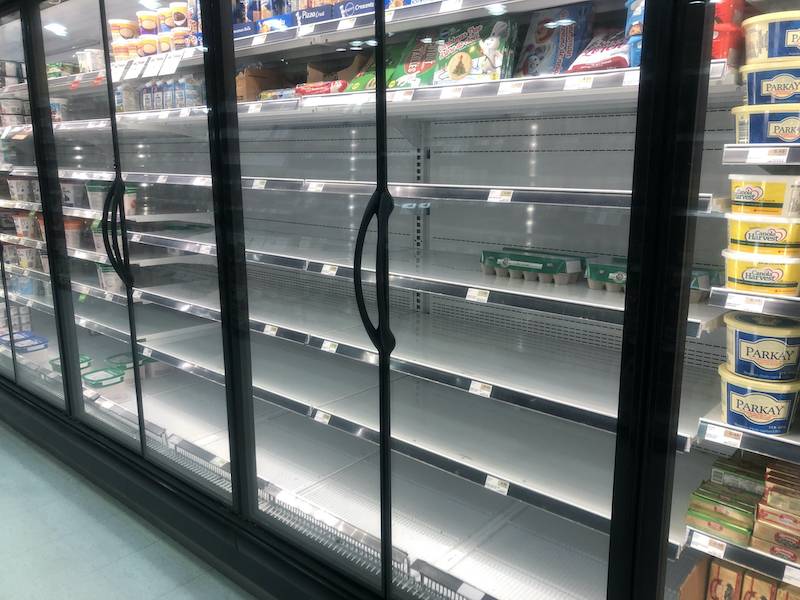
Certain freezer items were in hot demand.
He added that “Hwy 3 is our focus right now, we will make it clear that it will likely be restricted traffic. We will want to get trucks queued up to where they want to be and we’ll want emergency vehicles to have access,” he said
“Quite frankly it’s about getting heavy equipment in their first because we can punch a hole through and get the highway open to a much higher state of functionality so that we can open more than just one lane.
“That’s the approach we took on Hwy 1 on Vancouver Island and that’s the approach we will take on Hwy 3,” he said.
Everything, of course, depends on getting Hwy 1 out of the Fraser Valley operational again and on that point there was no timeframe given.