Lyonel Doherty
Times-Chronicle
What better way to promote truth and reconciliation in Oliver than a good old hockey tournament?
That was the case on Thursday during National Day for Truth and Reconciliation, a day when many people wore orange shirts to remember residential school survivors and those who did not come home.
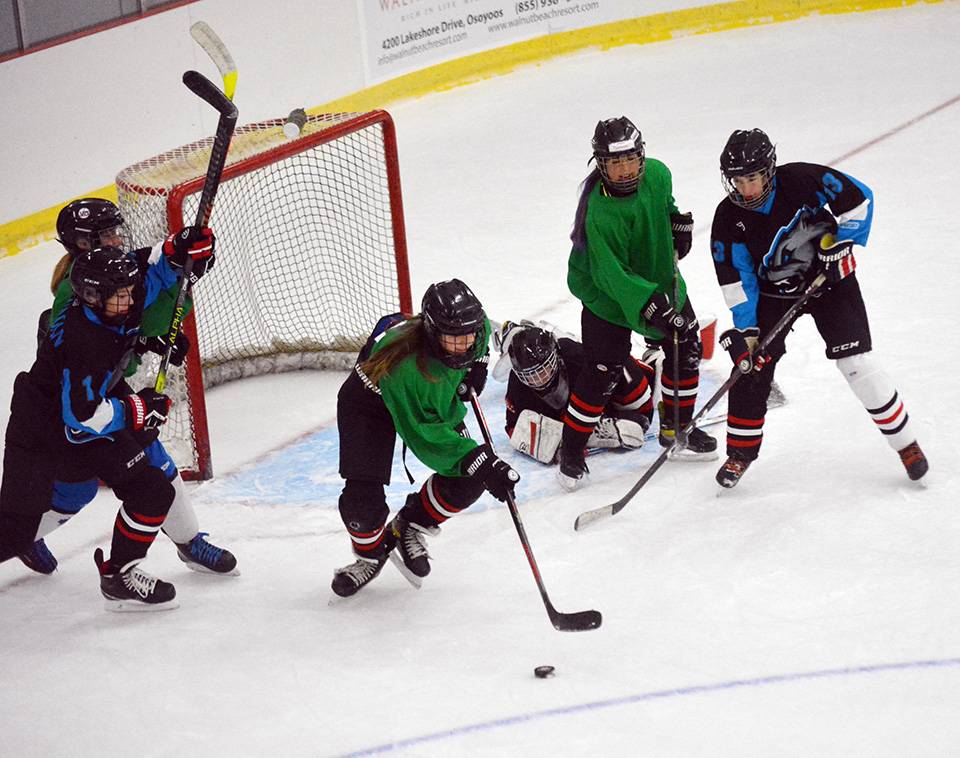
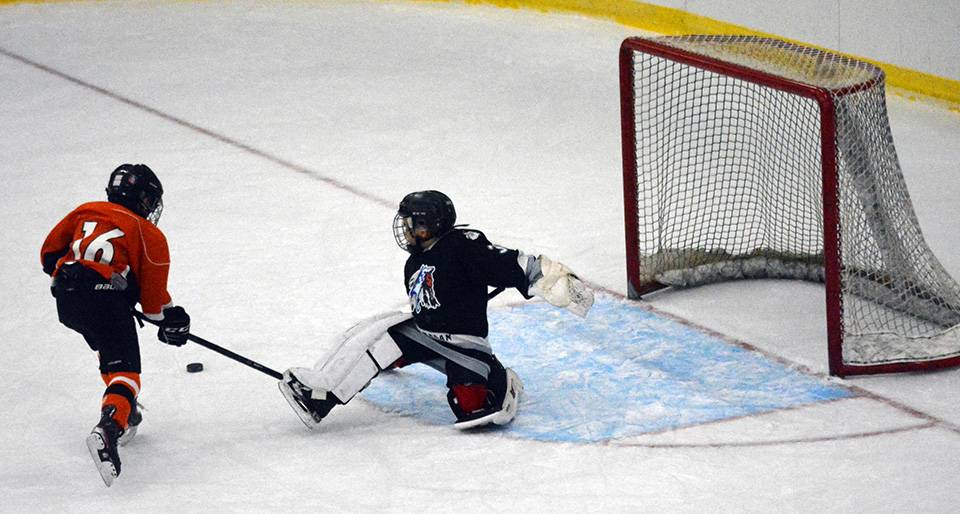
There were plenty of shouts and cheers as boys and girls scored goals in the Oliver Arena during the “Warriors of Truth” hockey tournament.
Parks and Recreation manager Carol Sheridan said the event was an effort to promote the Truth and Reconciliation Commission’s “calls to action” and a tribute to honour the survivors of residential schools and the ones who didn’t return to their families.
Nathan McGinnis, an Osoyoos Indian Band councillor, said if you ask anyone from the OIB or Okanagan Nation if their parents went to residential schools, the answer would be yes . . . 99 per cent of them did.
“This (event) means a lot to me and to our families.”
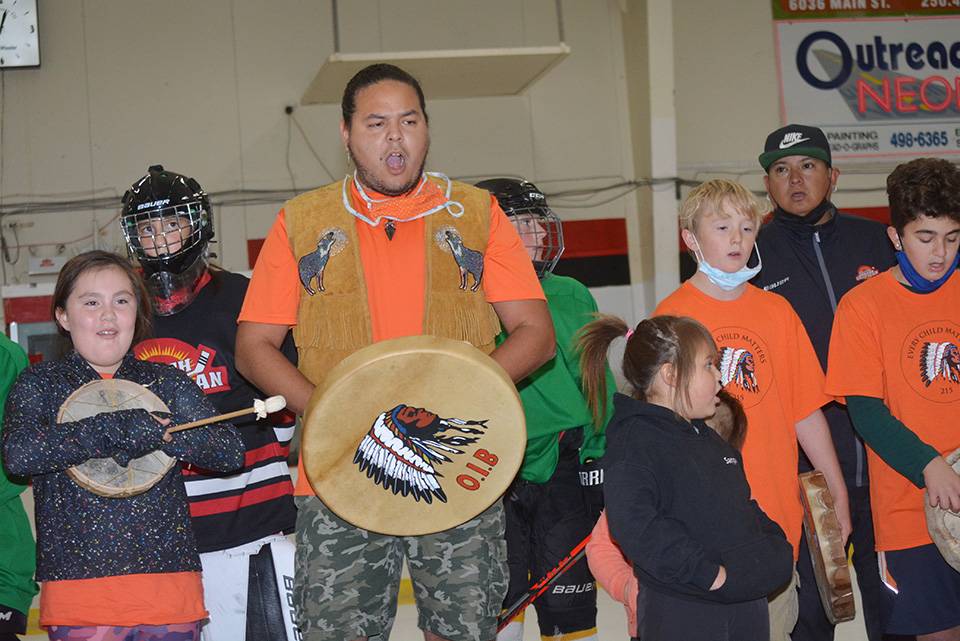
Osoyoos Indian Band Chief Clarence Louie said Indigenous people suffered a lot through loss of language, song, heritage and culture. But he noted that people like Trenton Manossa-Gabriel are bringing it back. Manossa-Gabriel led a group of Senpaq’cin students in a couple of drumming songs.
The educator said he woke up Thursday morning and wrote something that he wanted to share with everyone.
“I feel blessed to share cultural knowledge and language with the students every day.”
He said they are bringing back teaching knowledge that wasn’t allowed to be taught for generations.
“We weren’t allowed to do these things in the era of residential schools.”
Manossa-Gabriel said a good start on reconciliation is to educate yourself and others on the facts surrounding residential schools and the trauma that was inflicted.
“These atrocities happened to many of our parents and grandparents which has a direct impact on us whether we like it or not.”
Manossa-Gabriel said many of their parents were raised by abusive priests and nuns who were essentially their “parental figures.”
He noted there were generations of people who were physically, mentally and sexually abused in these schools.
“So, do you think these people would make ideal parents? Generally, not. It’s a vicious cycle . . . but you know they sure as hell are doing the best they can.”
(Photo by Lyonel Doherty)
Manossa-Gabriel said work needs to be done on breaking these vicious cycles one family at a time, one community at a time.
“We can work towards making change. Breaking the cycles of abuse, addiction and poverty is no easy task, but it’s paramount to reconciliation.”
The educator said some individuals think that Indigenous people need to “get over it and move on.” This is something they should think deeply about and ask themselves why they hold that belief.
Manossa-Gabrial said he woke up on Thursday to people calling his relatives a fraud for their stories on residential schools.
“How deranged are you to say something like that? Do you think anyone wants to admit that publicly? Do you think they feel good talking about those moments and facing these terrible demons?”
The teacher said he is appalled and extremely disappointed to see more nonsense like this.
“I’m angry and I’m in pain, as are most of our people. We never asked for any of this from the beginning, and then to belittle us even more by calling us liars.”
Manossa-Gabriel said it’s not just a matter of getting over it and moving on because there needs to be substantive action and emotion from everyone towards real change.
Marvin Louie, youth coordinator for the OIB, said you have to heal first before you can move on.
“You have to kind of honour everything from the past, to the present, to the future.”
Louie said the hockey tournament was a great start, and he hopes to see more teams next year and possibly a basketball tournament as well.
He pointed out that the youth are learning a lot from their parents’ and grandparents’ stories.
“And also to set their own path. I think it’s a forum for them to get the stories themselves and have their own opinions as they get older.”
On Thursday, Stewart Phillip, grand chief and president of the Union of BC Indian Chiefs, said in a statement that it has been a harrowing and empowering year of reckoning and challenge.
“The discovery of the unmarked graves and burial sites of children places a sombre pallor over this first National Day for Truth and Reconciliation, and nothing short of truth and justice will rectify the harmful, intergenerational and continuing impacts of residential schools.”
In a statement released by the Town of Osoyoos, Mayor Sue McKortoff said the rich cultural heritage of Indigenous peoples in the South Okanagan has an important impact on local residents.
She encouraged individuals to read the stories of First Nations, Inuit and Metis people in order to truly understand reconciliation and the tragic legacy of residential schools.
“Every resident of Osoyoos has a role to play in the reconciliation process,” McKortoff said.
In the Peach City, however, the Penticton Indian Band refused to recognize the National Day for Truth and Reconciliation.
In a statement to media, Chief Greg Gabriel said it was too premature to celebrate this day because of a real lack of commitment shown towards reconciliation.
Gabriel expressed a desire to ensure that the people responsible for the atrocities of the past are held accountable.
(Photo by Lyonel Doherty)