Lyonel Doherty, Times Chronicle
The Southern Interior Land Trust (SILT) describes the state of developed shorelines on local lakes as “deplorable.”
“Local and provincial governments need to step up to stricter lakeshore land development protective regulations and then visibly be seen to enforce them,” said SILT executive director Al Peatt.
“Overall, the state of our lakes’ shorelines is deplorable — everywhere that is developed,” he wrote in his report on a three-year “Love Your Lake” project spanning more than 900 waterfront properties on Okanagan Lake, Skaha Lake, Vaseux Lake, Twin Lakes, Trout Lake and Tucelnuit Lake in Oliver.
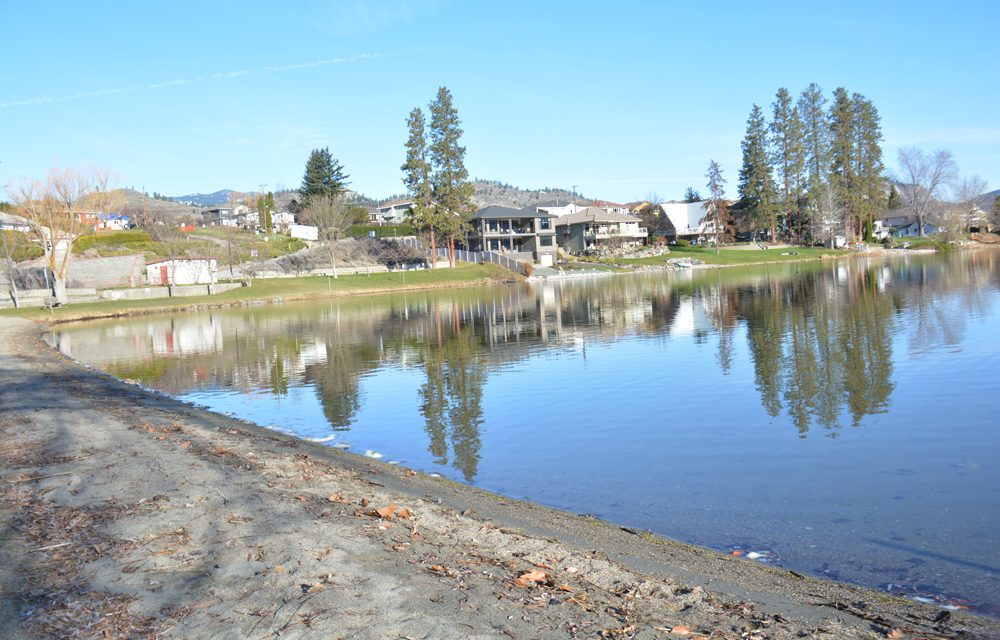
Last year water technicians cruised Tucelnuit Lake analyzing shorelines and making suggestions on how property owners can improve the health of their lake.
In 2021, 74 properties around Tuclenuit Lake (about three kilometres) were assessed.
Peatt said the most frequently identified issue facing the lake (provided by the 18 respondents) was water quality, followed by fish populations and water levels. The top concerns expressed about water quality were algae/aquatic vegetation, bacteria, and clarity.
Peatt said if water quality is a top issue, residents could implement a water quality monitoring program and distribute information on the importance of having eaves trough, vegetative buffers, and proper shoreline access to reduce runoff into the lake.
If algae/aquatic vegetation is the top concern, the lake association could host public meetings on reducing fertilizer applications on yards, discouraging bathing in the lake, and creating a shoreline buffer using native plants.
Peatt said there is not one standard message that will work for all shoreline property owners.
“Let your shoreline property owners know why the stewardship action or activity is important. Let them know that it does not have to be time consuming or costly.”
He even suggested having a contest. What property has the best shoreline buffer, or who planted the most native plants one summer.
Peatt encourages property owners to take action by restoring riparian and shoreline areas to a more natural state.
“One important way to improve water quality in lakes and rivers is to ensure that there is a natural buffer of native vegetation along the shoreline.”
He noted that vegetated areas are important for filtering contaminants and sediments before they enter the lake.
It is recommended that 75 per cent of the shoreline property remains natural, leaving 25 per cent for development.
The report states that buildings too close to shore (less than 30 metres) can disrupt the habitat corridor that many animals use.
On Tucelnuit Lake, 54 per cent of the properties assessed were observed to be closer than 30 metres to the shoreline.
The report states that septic systems close to shore need to be regularly inspected to prevent nutrients from entering the lake, causing algae blooms and low oxygen levels.
Runoff from precipitation is another problem when there is no vegetation to absorb it. This causes erosion and algae blooms.
The report offers a number of steps that can be taken to protect Tucelnuit Lake. These include: Planting or maintaining native vegetation and leaving in place stones, boulders, snags and dead branches found along the shoreline. If some of these features are in the water, approvals or permits may be required to move them.
Further reduce runoff by having rain barrels or natural or stone catch basins to collect runoff from roofs.
In areas close to shore, a lawn is generally not a good choice of ground cover, according to SILT. Up to 35 per cent of precipitation can run off a mowed lawn directly into the lake, instead of returning to a natural groundwater source.
When precipitation travels across driveways and lawns to a lake, it carries with it pesticides, fertilizers, sediment, and other materials. If shoreline property owners wish to mitigate this runoff, they could consider allowing vegetation to regenerate on its own by creating a “no-mow” zone.
When aquatic vegetation is removed, the integrity of the shoreline is lost. This negatively impacts the health of the waterbody by decreasing the quality of the water and reducing biodiversity, the report says.
It is also critical to understand how invasive species can affect the overall health of a lake by threatening native fish, plants, and animals.
In conclusion, the top three actions identified by shoreline property owners on Tucelnuit Lake are: Undertake a lake management plan, undertake more water quality testing, and create or enforce stricter rules for new development.