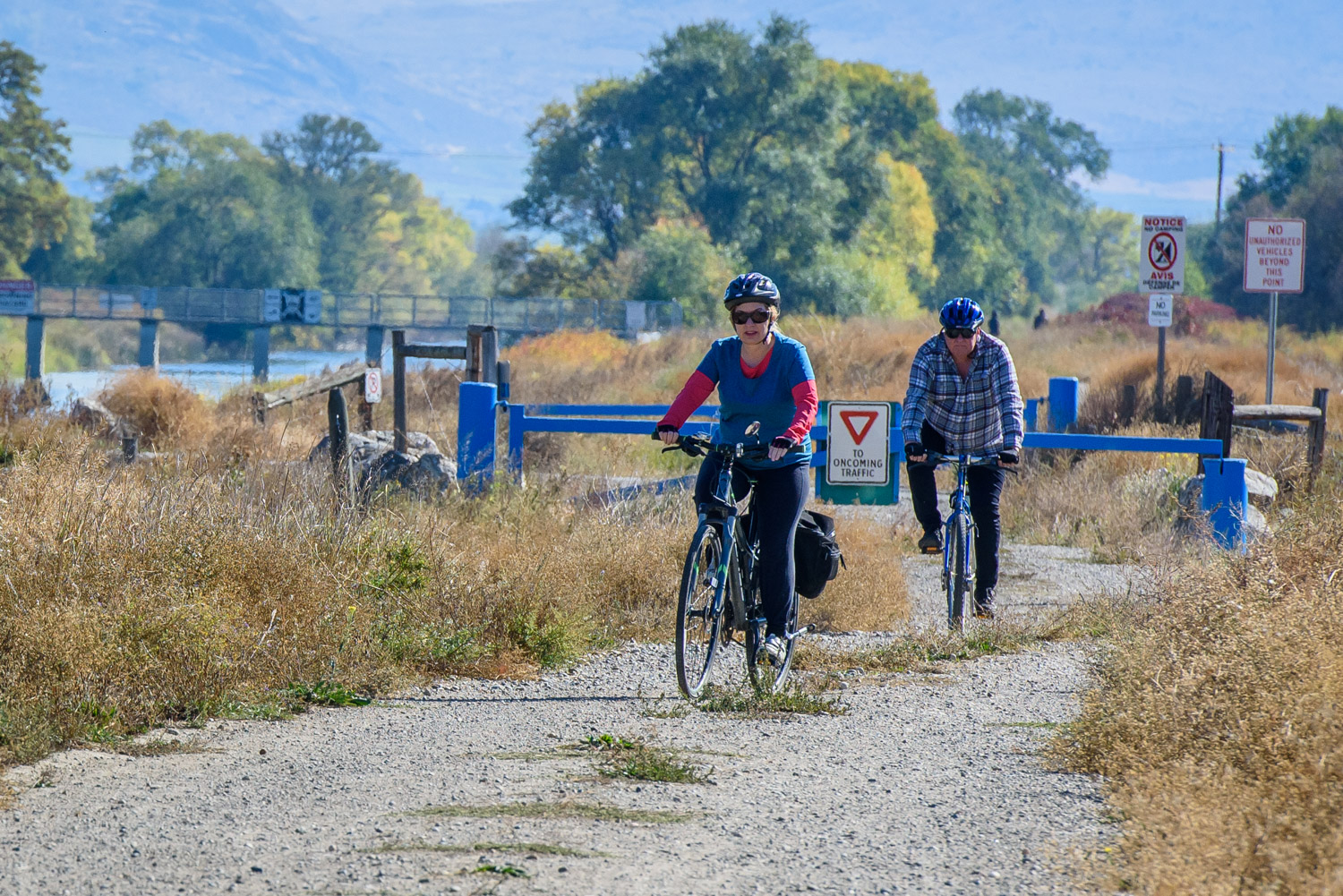
(File photo)
Dale Boyd
Osoyoos Times
One trail, two ways to spell Okanagan.
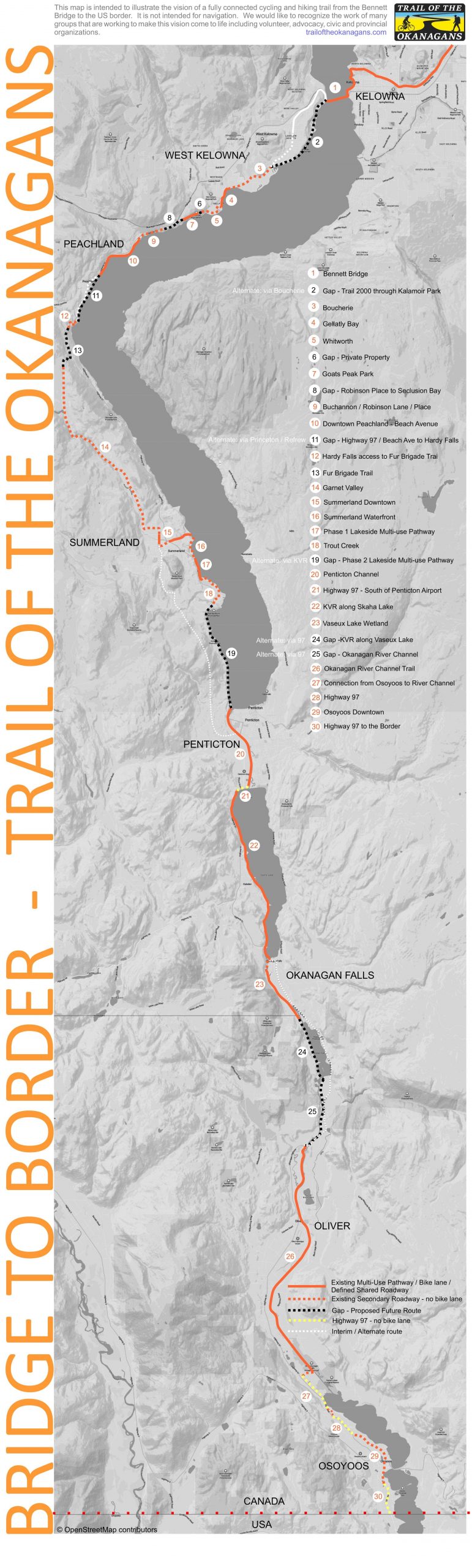
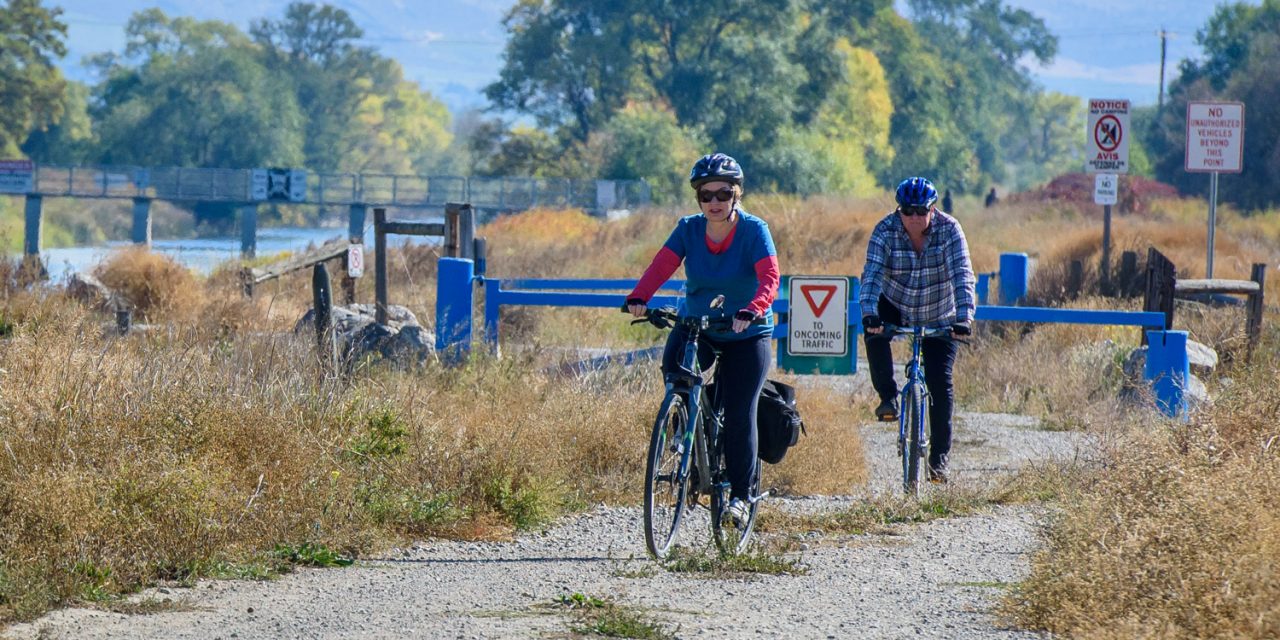
That’s the idea behind a coalition of local and international trail groups and other organizations coming together under the banner of Trail of the Okanagan to promote a cross-border hiking and cycling trail network.
“(Trail of the Okanagans) are a society in Canada, but this is more of a joint venture,” said Don Gemmell, president of Trail of the Okanagans. “The ‘a’ will become an ‘o’ or we’ll put a neat little logo there so it shows both.”
The a/o represents the different spelling of Okanagan/Okanogan on either side of the Canada-U.S. border. Representatives from the U.S. and Canada met for the second time this year in Osoyoos on Feb. 24 at the Sonora Centre.
Arnie Marchand, a member of the Confederated Tribes of the Colville Reservation in the U.S., said the idea for the cross-border cycling trail came out of conversations at a Thompson Okanagan Tourism Association (TOTA) Indigenous tourism conference in Kelowna earlier in 2019.
He said groups in Canada and the U.S. had similar goals, so he aimed to unite them.
“A week later I called and said let’s get some people together. You realize you’re doing the same thing on both sides of the damn border? You’re both doing exactly the same thing, suffering the same problems and you don’t even know each other,” Marchand said.
Marchand’s personal history passes over the border lines.
His dad was born in Vernon, his mother in Penticton and he was born in Omak, WA. He has been working with Indigenous groups for nearly 40 years on either side of the border.
He sports a pin with a feather crossing over Canadian and American flags, symbolic of not only his heritage, but the cross-border collaboration he is currently helping achieve.
•Read more: Cross-border trail network discussed in Osoyoos could be economic boon
“The border is what you drew, not me. We don’t have a border,” Marchand said. “We have to come up with something, our little coalition, to show that this is the corridor. The Okanagan is the corridor. It’s not them-and-us. It’s a place to go to. It’s a destination.”
He hopes that soon he won’t be needed to lead the coalition.
“I want real trails people to be doing this. I’m going to be a helper,” Marchand said.
Representatives from tourism organizations, local communities and non-profit organizations met in Osoyoos in January to feel out the idea of a cross-border trail network organized between groups on either side of the border.
“Now we’re getting down to that core need of what we call a cycle tourism route along Highway 97,” Gemmell said.
The joint initiative will fly under the existing banner of Trail of the Okanagans, but will play with the varied spellings (Okanogan in the U.S.)
“Even though we’re a society, that doesn’t matter because we’re only one contributor to this whole thing. We’re just a catalyst,” Gemmell said.
The next steps, Gemmell said, are to continue to building the concept and developing the mapping of the proposed trail further to help market the idea to each area or landowner.
Osoyoos town councillor Myers Bennett has been advocating for the idea since the beginning. He met last week with MP for South Okanagan-West Kootenay who Bennett said was supportive of the idea. He and the rest of the group will be looking to sell the idea to landowners and municipalities, who will need to buy in to the project to make it work.
“The Town of Oliver, I’ve talked to them, the mayor the council, they’re supportive of it,” Bennett said, adding he has met with the Ministry of Forests, Lands and Natural Resources as well.
“Part of the problem is the funding the regional district gets, do they spend it on the Keremeos trail or over here?” Bennett said.
The discussions, whether with the federal government or the Osoyoos Indian Band, are ongoing as meetings continue to drive the idea forward.
“We need more like Myers in Oliver and OK Falls and Penticton to join with the others in the valley who are actively building this common route,” Gemmell said. “We’re looking for buy-in because every community will benefit more by working together.”
The trail could be an economic boon for communities along the route, bringing in tourism dollars and overnight stays for those who tour the proposed trail, Gemmell said.