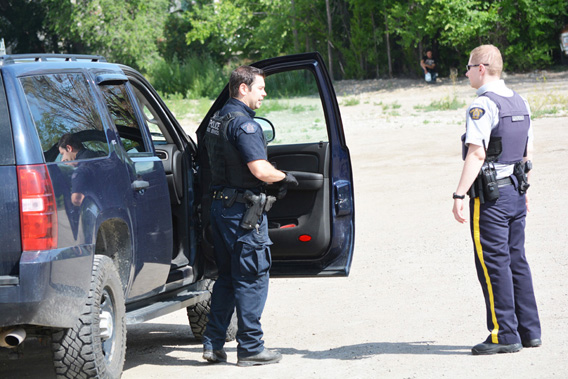

The Town of Oliver wants to plan for future policing costs when the community’s population exceeds 5,000.
The Town of Oliver is starting to brace itself for a huge increase in policing costs when its population exceeds 5,000.
That was the topic of discussion at a recent council meeting, where Chief Administrative Officer Heidi Frank outlined the issue.
The 2011 census put Oliver’s population at 4,829. When the population reaches more than 5,000, the Town will be responsible for paying 70 per cent of RCMP service costs. The federal government pays the remaining 30 per cent.
Costs for accommodations, such as the detachment building, and civilian support staff are paid entirely by the municipality.
Frank said the lessons learned from other communities are as follows: Establish an RCMP reserve fund (Peachland started reserve well before it exceeded 5,000 population); major crime can take 100 per cent of the budget (one murder costs no less than $250,000); operating costs are $150,000 per officer; one vehicle costs $48,000; won’t receive traffic fine revenue for two years; Town will need to hire a clerk for RCMP.
Town staff recommended that council be pro-active in planning for future policing costs by establishing an RCMP operational reserve. The annual contribution to this reserve, starting in 2016, would be set at $60,000. In future years this amount would be increased depending on the municipal tax rate established by council.
Councillor Jack Bennest preferred not to make a decision yet.
“Anticipating going over 5,000 is not automatic or a given.”
Mayor Ron Hovanes said they need to look at the statistics in BC, such as housing starts and real estate information.
Councillor Larry Schwartzenberger said they need to ask residents what they want to do. For example, do they want the Town to build a fund that will “soften the blow?”
Hovanes said a reserve fund will do that, but warned that taxes would increase significantly (50 to 60 per cent). He said council could increase taxes in increments, for example, five per cent per year – “to build up a comfort level so it’s not as big of a hit.”