
Town council is progressing on its update of the Official Community Plan.
The Town of Oliver has moved another big step towards updating its Official Community Plan (OCP) for the first time in more than a dozen years.
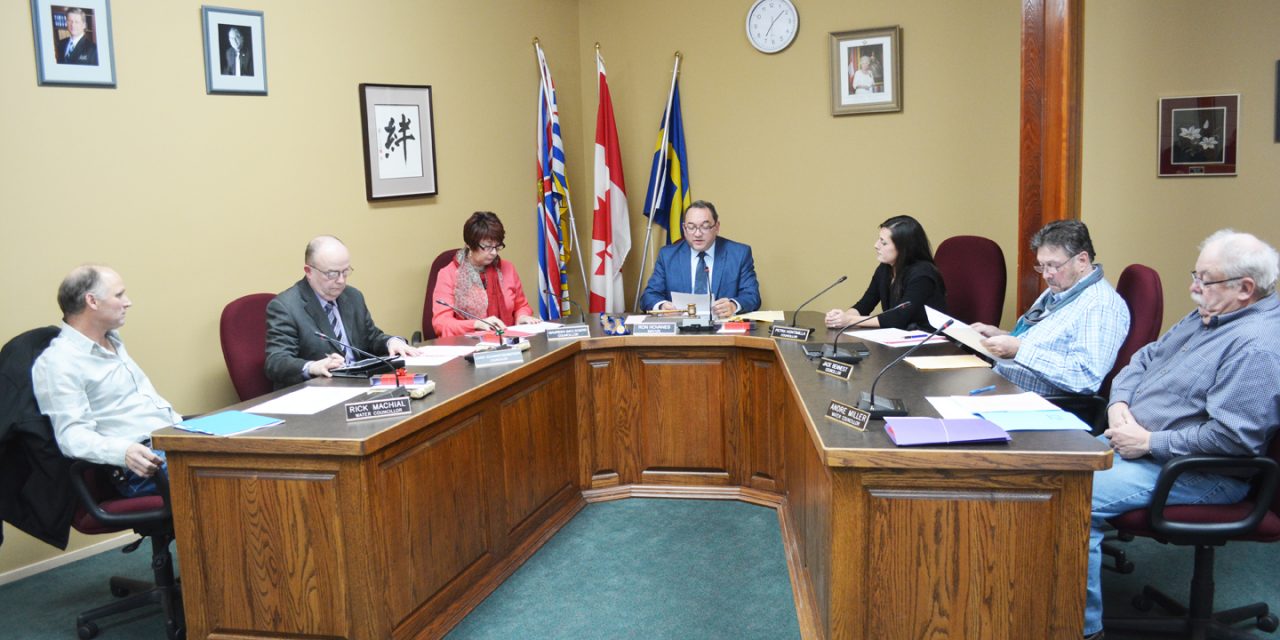
Last Friday, John Ingram, a senior planner with the consulting firm EcoPlan, and Graham Farstad, a senior planner with Arlington Group, made another presentation to town council to discuss progress on formulating the final OCP document for the Town of Oliver.
Ingram and Farstad have been working on developing the town’s new OCP for the past several months.
An OCP is a planning document that provides policies on a broad range of topics, including land use, transportation, housing, parks and infrastructure.
Official Community Plans designate land for specific purposes like commercial/retail, residential, park and industrial. Local governments like the Town of Oliver use OCPs to help guide and support decision-making on a number of important community matters, including economic development, transportation, recreation and environmental protection.
Effectively, OCPs provide a blueprint and map for a community’s future and are created to guide decisions on planning and land use management by establishing a long-term vision, supporting goals and policies to achieve them.
Ingram said the original plan was to have the final OCP finalized by next March, but such good progress has been made he expects that timeline to move up to December or January.
“We’ve spent a lot of time working on this over the summer months,” he said.
Time and time again during surveys and responses from members of the public, three themes continue to surface, which include economic development, downtown renewal and sense of place (with the downtown as the key), said Ingram.
“Those three issues are far and away the key messages that we keep getting,” he said.
Allowing for changes in zoning that would encourage downtown redevelopment would be crucial in the final OCP, he said.
Town councillors and local residents should realize that 75 per cent of policies that are detailed in the current OCP won’t change as part of this process, he said.
One discussion focused on the “Fritz property” located at the south end of town.
There has been an application to the town to change the zoning that would allow a demonstration vineyard, wine tasting room, restaurant and bed and breakfast operation, said Ingram.
The land in question would have to be removed from the Agricultural Land Reserve by the Agricultural Land Commission.
Mayor Ron Hovanes and members of council seemed to agree changing the current designation to agricultural/commercial would be the best use for this parcel of land.
Hovanes said council would not make any final designation on this land until more specifics were finalized about its use and the ALC had agreed to remove the land from the ALR.
“We have been pretty responsible in this town . . . we haven’t been ripping up trees,” he said.
The future potential development on Tucelnuit Lake was also discussed.
Several people who already own houses on the lake have made it clear they wouldn’t support any kind of development outside of large single-family homes and Hovanes said he could not support this.
“The question is should we allow other densities on the lake … why tie all development to single-family homes on larger lots?” he said.
There is the potential to develop dozens of multi-use units on the east side of the lake, which Hovanes supports.
“I don’t want to close the door by going low density … I want to leave the door open,” he said.
There were three public hearings about development of Tuc-el-nuit Lake and current homeowners were very vocal about opposing any multi-use housing developments, but that didn’t change his mind, said Hovanes.
“I think there should be more choices available,” he said.
Council was also unanimous in its support to not allow for any asphalt or gravel operation to operate near the downtown core now or in the future.
Following the two-hour meeting, Ingram said the next steps are for he and Graham to incorporate council’s concerns into the OCP and then present those revisions to lawyers to see if all legal questions are answered.
Council would then hold one final public hearing before proceeding with first and second reading to start the process to make the new OCP a legal and binding policy document.
By Keith Lacey