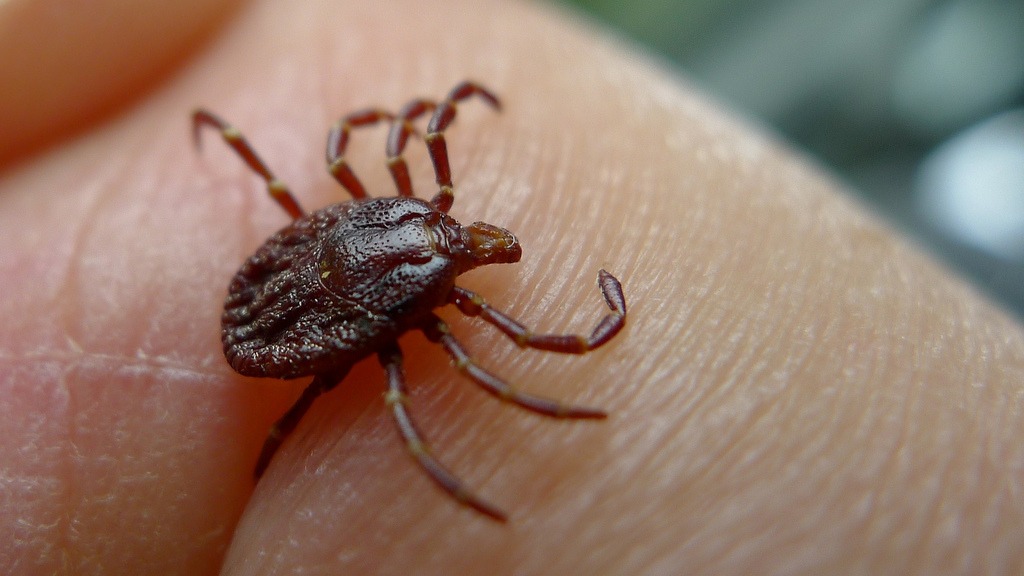

(Photo: Flickr)
As the weather starts to warm up, more time is spent outdoors. But that also means a higher possibility of tick bites. Interior Health is reminding people in their region to be tick-aware.
Ticks are small bugs, about the size of a sesame seed, which feed on the blood of humans and animals and sometimes transmit diseases. They are prevalent throughout B.C.’s interior and are typically found in tall grass and wooded areas.
Signs of many tick-borne infections can be quite similar and include fever, headache, muscle pain and rashes.
Wood ticks, the species most commonly found in the Interior region, do not carry Lyme disease bacteria. But they can carry other diseases such as Rocky Mountain spotted fever.
Lyme disease is transmitted by Ixodes ticks which are more common throughout coastal B.C., but can be present in the Interior as well.
While less than one per cent of Ixodes in B.C. carry Lyme disease, Interior Health is suggesting that people learn to recognize the symptoms. Along with fever, headache and muscle pain, those infected with Lyme disease will often develop a rash that looks like a “bull’s eye” target, expanding from the site of the tick bite.
Some ticks also have toxins that can cause temporary muscle weakness and paralysis if left attached for several days, but once the tick is removed the symptoms fade.
It is important to remove ticks from people and pets immediately. To do so, wear gloves and use needle nose tweezers to grasp the tick close to the skin, and then pull it straight out without squeezing. After removing the tick, clean the area with soap and water.
Although most tick bites are harmless, it is important to watch for signs of illness and see a doctor as soon as possible if symptoms of Lyme disease occur. Ticks can be saved and tested for the disease as well.
Interior Health has a few tips for preventing tick bites and tick-related illness:
- Walk on cleared trails when in tall grass or wooded areas.
- Cover up by wearing a hat, long sleeves and pants.
- Wear light-coloured clothing to spot ticks easily.
- Tuck pant legs into socks or boots.
- Apply insect repellent containing DEET on uncovered skin.
- Check clothing and scalp (covered or not) when leaving an area where ticks may live.
- Have a shower after returning from areas where ticks may live.
- Regularly check household pets for ticks.
To keep ticks away from your home and yard:
- Keep your lawn short and remove and fallen leaves and weeds.
- Keep a buffer area such as a wood-chip or gravel border between your lawn and wooded areas or stone walls.
- Keep play equipment or play zones away from wooded areas.
- Trim tree branches to allow more sunlight in your yard.
- Keep wood piles and bird feeders away from the house.
- Widen and maintain trails on your property.