By Don Urquhart, Times Chronicle
A stunning new narrated video jam-packed with historical and current photos and video, laden with historical anecdotes spectacularly details the planning and construction of Oliver’s famous “ditch” irrigation canal from its inception in the 1920s up to today.
“Oliver’s Irrigation Ditch: Lifeline of a Community” is a project of the Oliver and District Heritage Society Museum and Archives with the idea of producing a video about the irrigation canal as much about creating something that would serve tourism purposes as it would be educational.
“The point was to not just entertain and inform, but also to chronicle as well,” adds Darren Halsted, Executive Director of the ODHSM.
The project has been a couple years in the making with the ODHSM getting involved after Rick Knodel RDOS Area “C” Director (recently deceased) contacted the heritage body to pitch the idea of somehow preserving the gradually fading history of the canal.
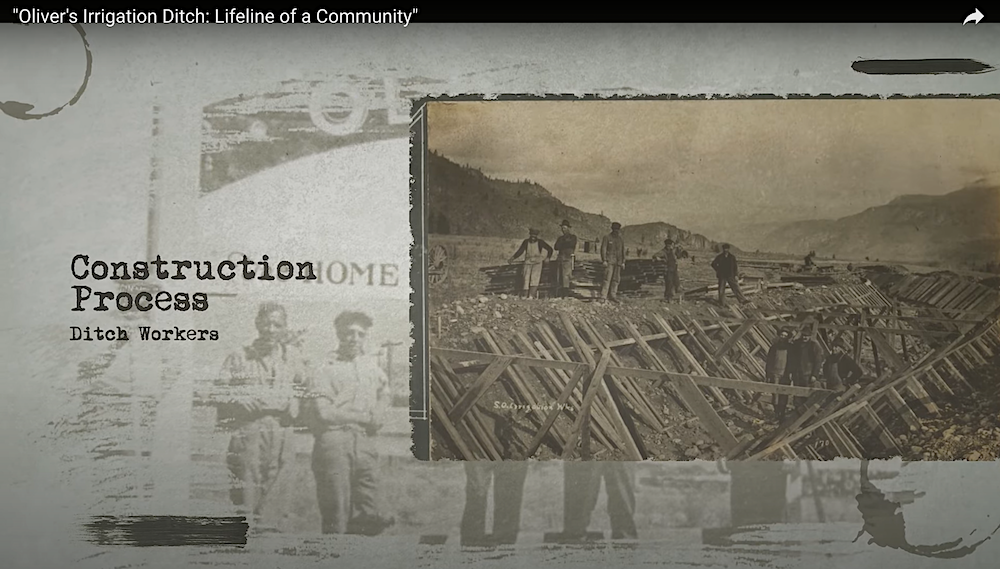
A screen grab from the video showing the early construction process.
Halsted said part of Knodel’s pitch centred on the absolute uniqueness of the irrigation canal and its vital importance to Oliver, particularly in its early days, in creating the ability of the valley to sustain an agriculture industry.
Knodel’s concern was that parts of the canal had been moved underground, other parts had disappeared due to modernization and some were just no longer in use and as such the collective knowledge about the canal was dwindling with each passing year.
“We were, I guess, the obvious people to come to contact, because we have a lot of photographs, a lot of resources in our archive and our museum,” Halsted said. Importantly Knodel said the money would not come from general taxation, but rather from various heritage resources and grants.
And so, armed with a budget of $24,000 the ODHSM set about hiring a professional writer, voice-over actor and videographer with the final product coming out in Nov. 2024.
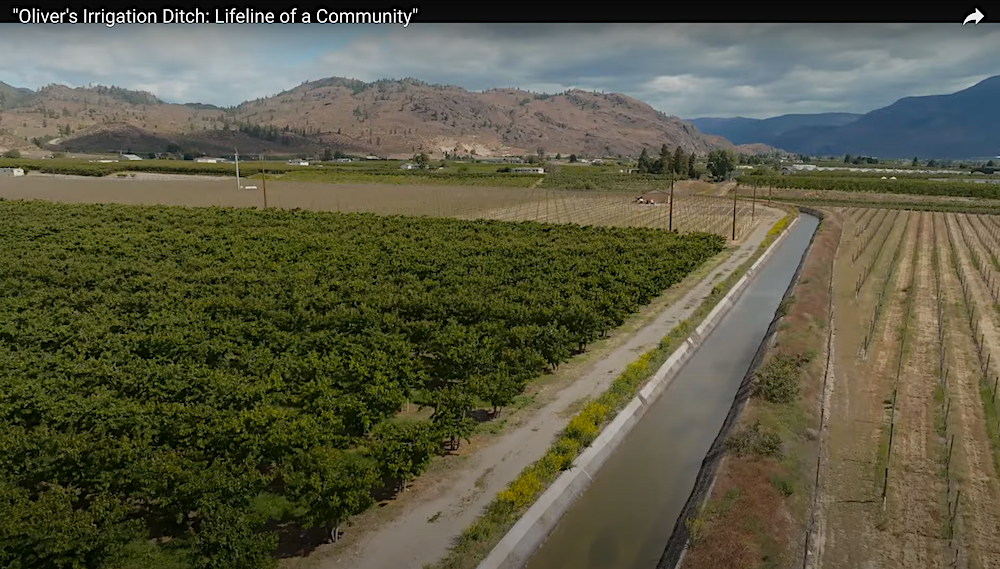
At 36 minutes in length it’s longer than originally planned in terms of entertaining and informing, but “at the same time, we thought well there’s a lot of information here and so we went for a longer version, fulfilling the chronicling aspect he said.
“Obviously people will pick and choose what they want to view, but I think it meets the brief and we’re really excited about it.”
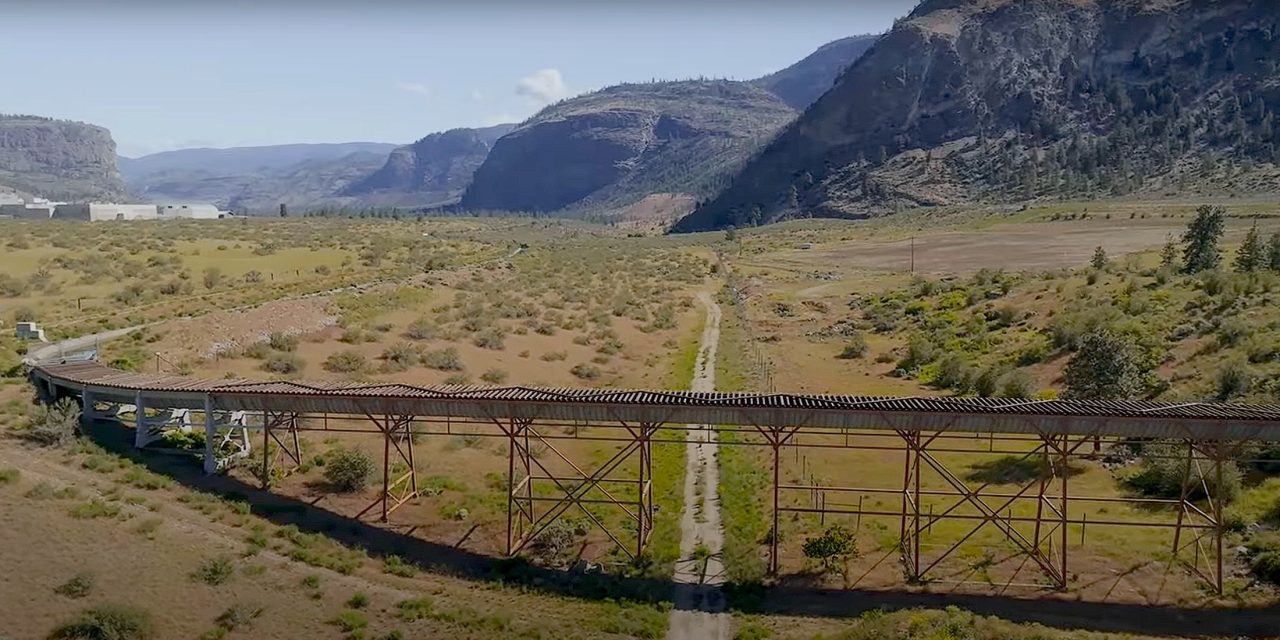
It’s hard to argue with his excitement given the lush views of the valley many of which were taken using a drone, the intermingling of historical photos and an “oh I didn’t know that!” kind of history lesson that doesn’t feel like a lesson at all.
The final product – undeniably slick and professional – involved a bit of all hands on deck at various points, Halsted notes. Aside from the video professionals, the effort included Halsted along with Alec Wolff, Archives Assistant at the ODHSM, volunteers, and even board members.
Interviews were conducted with people who had worked on the “ditch” and with Clarence Louie, Chief of the Osoyoos Indian Band, among others. Feedback so far has been very positive Halsted says, with effort now going into spreading the word via traditional and social media.
“Oliver’s Irrigation Ditch: Lifeline of a Community” can be viewed on the Oliver & District Heritage Society website (oliverheritage.ca/history-of-the-canal-ditch-project) or on YouTube (youtube/RdtHyfDHqDA?feature).