By Madeline Baker, Times Chronicle
A special group of South Okanagan students got to experience authentic conservation field work earlier this year thanks to a series of field trips organized by several South Okanagan Similkameen Conservation Program partners.
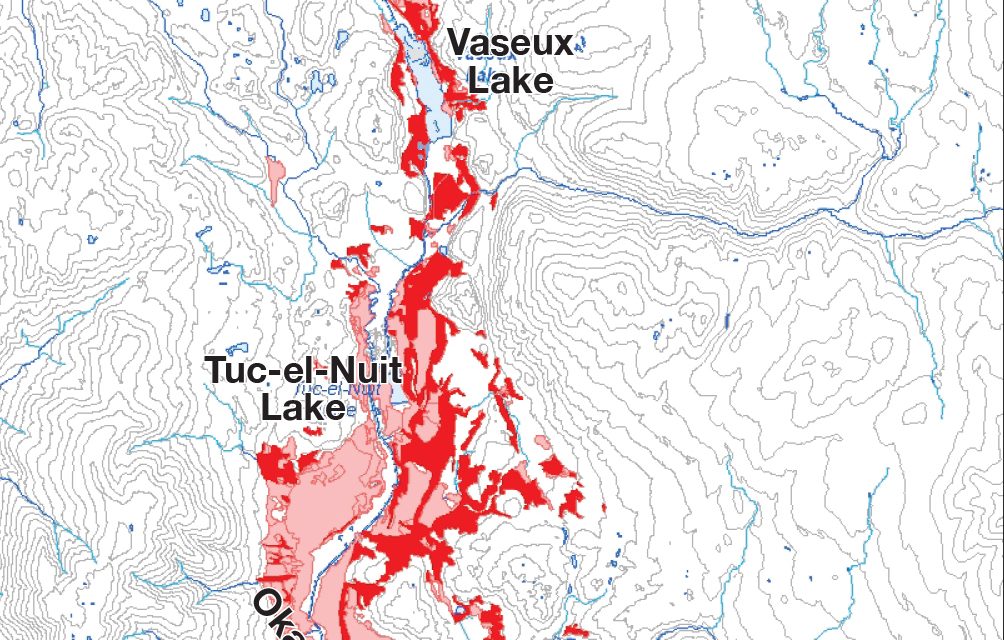
The Antelope-brush restoration field trips, which were coordinated and led by Allison Dietrich, brought over 125 students from the region to three Nature Trust protected areas near Vaseux Lake for both theoretical and experiential lessons on conservation and stewardship.
Practical knowledge sessions included information on animal tracking, scat and skull identification, identification of local versus invasive plants and how to eliminate invasives, and snake smart practices while working in the unique South Okanagan habitat.
As for hands-on work, the students got to dig right into restoration efforts by planting about 150 Antelope-brush seedlings, then monitoring and caring for them over several weeks. “This program used an action-based stewardship approach to help students learn … and engage meaningfully as part of the solution,” said Dietrich.
The program also taught larger concepts in environmental sustainability, not just the nitty-gritty processes involved in protecting an ecosystem. For example, one lesson offered a traditional and historical view of conservation by inviting knowledge-keeper Anona Kampe to deliver an ecological knowledge and storytelling session.
Biodiversity and connectivity were also vital concepts highlighted in every lesson, as program lead Orville Dyer explained: “Preservation of this habitat is essential to sustaining biological diversity in British Columbia.”
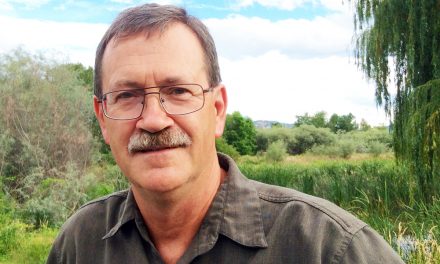
Dyer is a retired biologist who has studied the Antelope-brush ecosystem for over two decades. He has created a large, multi-year program to conserve, restore, and manage the ecosystem in the South Okanagan valley, of which this educational field program is only the beginning.
“This project builds on over 30 years of efforts to conserve and protect Antelope-brush habitat by South Okanagan conservation partners,” said Dyer. “Continuing this work now is critical to understanding how to best move forward to conserve and restore this endangered natural resource.”
Said conservation partners included provincial and federal entities like the Ministries of Forests, Lands, Natural Resources and Rural Development and of Environment and Climate Change Strategy, the Canadian Wildlife Service, Parks Canada, BC Parks, Nature Trust of BC, and Nature Conservancy of Canada.
There were also many invaluable local partners including South Okanagan Similkameen Conservation Program, Osoyoos Desert Centre, Penticton Indian Band, En’owkin Centre, Nk’Mip Desert Cultural Centre, Okanagan Similkameen Stewardship Society, and Okanagan and Similkameen Invasive Species Society.
The Antelope-brush needle and thread grass ecosystem stands as one of the most vulnerable in the already endangered South Okanagan valley ecosystem, which is one of the most endangered in Canada. It is considered imperiled on a global level and red-listed at a provincial level.
As the South Okanagan valley holds nearly all of the Antelope-brush ecosystem in Canada and supports 42 other at-risk species, and even protected sites have seen degradation from invasive species and wildfire, conservationists in the area have a special responsibility to pass on to future generations in their field.
“Stewardship is a shared community responsibility and teaching our youth how to care for their environment is one of the most important ways we can invest in their future,” said Dietrich, who was happy to report that it also proved to be very popular with its participants.
“We are very pleased this initial pilot program has been so successful. There is definitely interest from all of the teachers involved this year to take part in stewardship education projects next year and in years to come.”
With many of those teachers planning to extend the program to encompass a full year beginning in September, Dietrich hopes that they will be able to expand their capacity and involve more students in the future.