The Park Rill Floodplain, 151 acres of ecologically important land, will now be added to the White Lake Basin Biodiversity Ranch conservation complex in the South Okanagan.
The land, located approximately three kilometres northwest of the community of Willowbrook, will preserve habitats for species at risk including the Lewis’s Woodpecker, Peregrine Falcon and Western Screech Owl.
As connectivity of habitats is critically important for fostering biodiversity, the conservation of this property will add to the resilience of wildlife in the ecosystems all around, according to the Nature Trust of BC, a non-profit land conservation organization.
“Park Rill Floodplain protects additional critical habitat for species at risk and helps sustain a viable biodiversity ranching operation. Expanding this Nature Trust conservation complex will play a vital role in maintaining habitat connectivity and ecological resiliency,” said Nick Burdock, Okanagan Conservation land manager.
The South Okanagan contains native grasslands which are a hotspot for biodiversity, and host a large number of at-risk species in B.C. However, grasslands are quite rare, covering less than one per cent of B.C.’s land base.
The Park Rill Floodplain property supports many species of conservation concern and provides critical habitat for federally listed species at risk.
In addition to at-risk birds, the landscape is also inhabited by endangered American Badgers, and the smallest rabbit species in B.C., the Nuttall’s Cottontail. Black bears and Mule Deer also wander around the area in the winter time.
Some at-risk amphibians and reptiles include Western Tiger Salamander, Great Basin Spadefoot, Great Basin Gopher Snake, and Western Rattlesnake.
“The diversity of species and habitats protected by this project exemplifies the importance of the native grasslands within the South Okanagan,” said Dan Buffett, CEO of the Habitat Conservation Trust Foundation.
“The Nature Trust of BC has a sterling track record for protecting, managing and restoring these and other critical habitat types in B.C. For that reason, the Habitat Conservation Trust Foundation is a proud funding partner of the Nature Trust and of our shared goals of conserving fish, wildlife and their habitats through the protection and conservation of B.C.’s natural landscapes.”
Although it’s difficult to find low-land habitats unaffected by development, three quarters of Park Rill Floodplain remains in a relatively natural state.
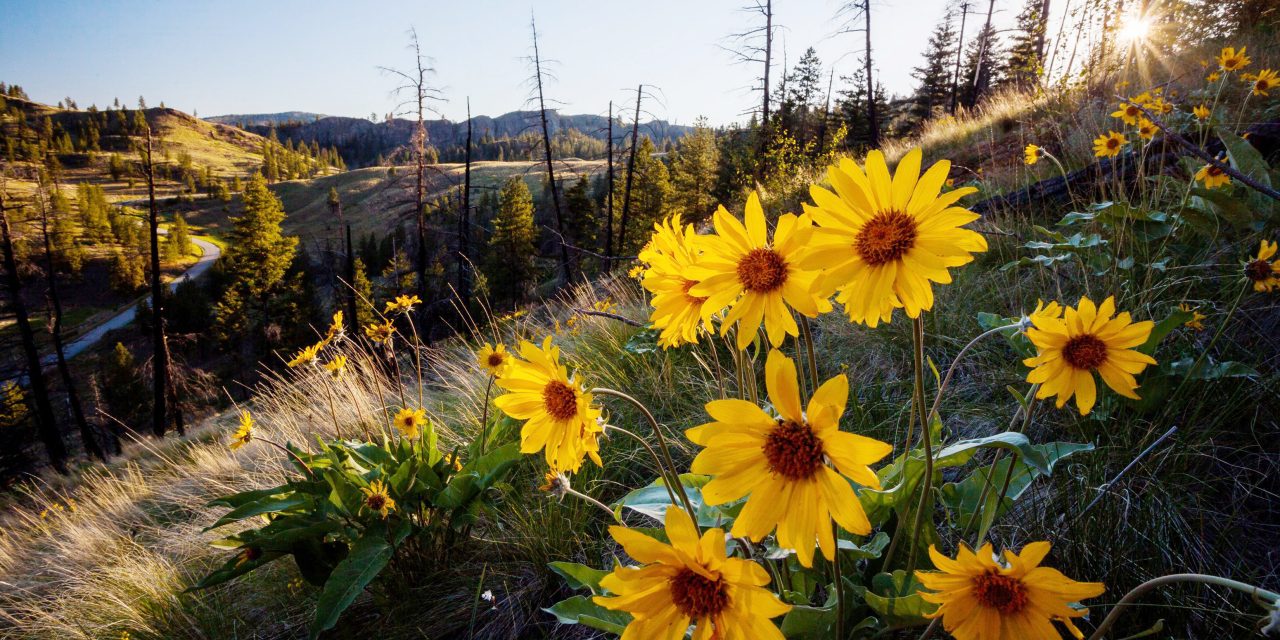
This allows the landscape to support six sensitive ecosystems including: sagebrush steppe, open coniferous woodland, seasonally flooded fields, wet meadow, sparsely vegetated rocky outcrops, and importantly, grasslands.
The remaining quarter of the area is a cultivated floodplain surrounding Park Rill Creek, however, with the conservation of this land by The Nature Trust of BC, it can be restored to a natural state.
With the conservation of the Park Rill Floodplain, the home of these species and many more are protected in perpetuity.
Expanding the protected areas within Okanagan grasslands will serve to maintain its rich biodiversity for generations to come.