Don Urquhart, Times-Chronicle
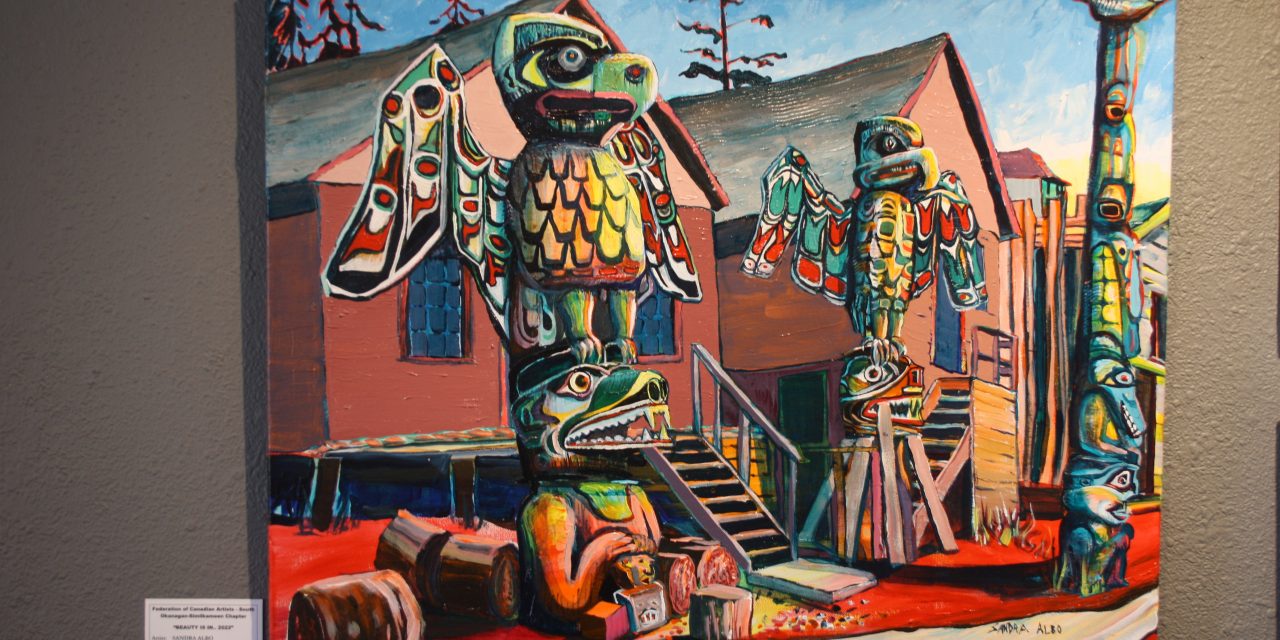
In yet another sign that things are tiptoeing back to normal, The Art Gallery Osoyoos is welcoming the return of the Federation of Canadian Artists juried show featuring 38 pieces by 15 artists. Submitted artwork for the South Okanagan Similkameen chapter’s show is selected by three independent jurors from the FCA, two in Vancouver and one in Banff, Alberta.
The show has been an annual feature at the local gallery for over a decade, save of course the last couple of COVID years.
This Saturday at 1 p.m. the top three artworks as chosen by the jurors will be recognized in a presentation. Unlike some of the larger juried shows, there is no prize money, but rather it’s “all about the recognition,” says exhibition chair and participating artist Michael Jorden. “If you make your living as an artist, which is as hard to do in Canada as making a living as a musician, having sales is important. Most of us just love art and we want to be the best we can before we die,” he adds wryly.
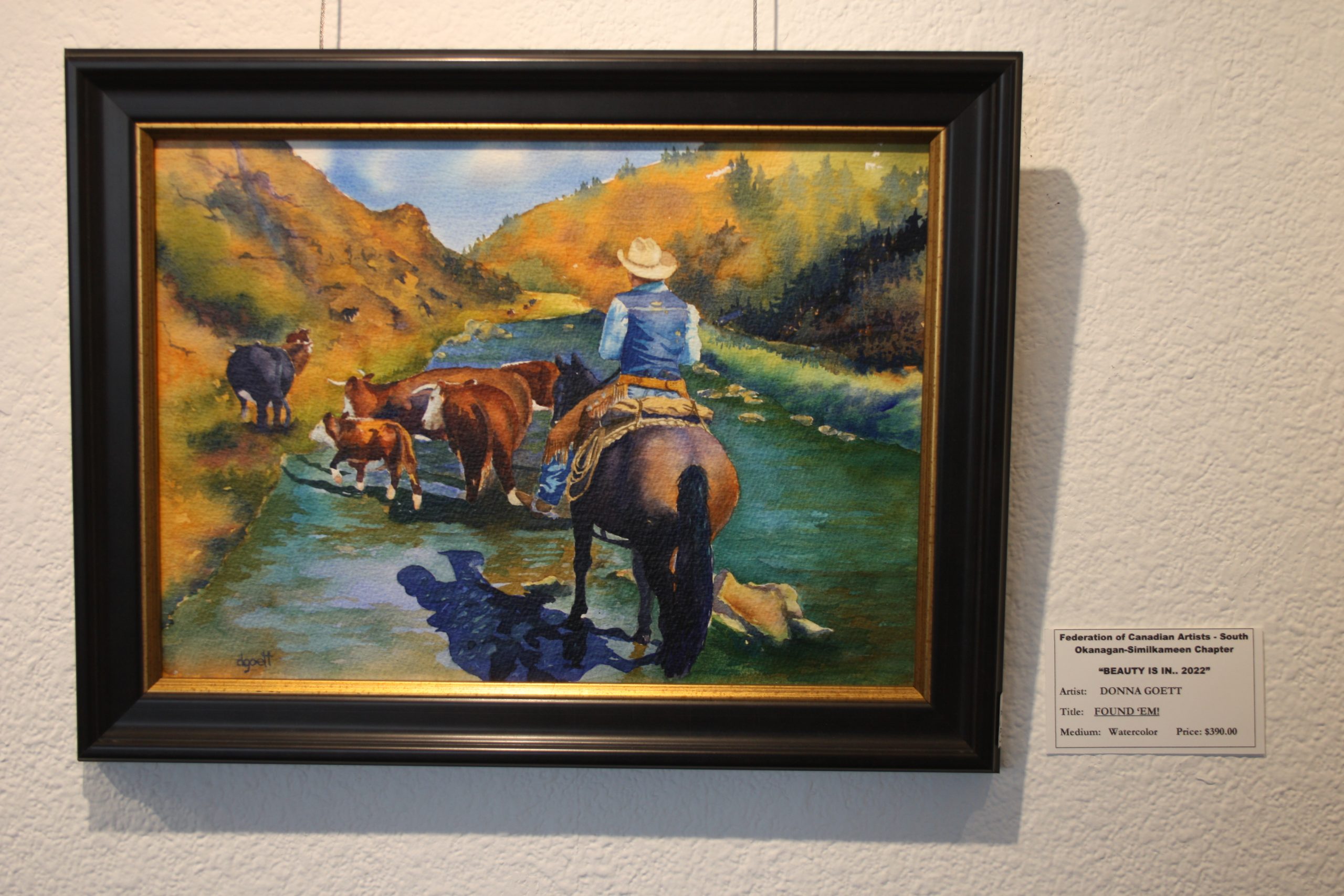
“There is a wide range of subject matter and media, we’ve got everything from acrylic to oil and watercolour,” Jorden says. The discussion quickly pivots to watercolour, as this medium has seen its ups and downs over time. Typically watercolours would have been painted on acid-free paper but because watercolours are subject to fading due to exposure to ultraviolet light they have traditionally needed to be mounted on an acid-free mat under glass, Jorden explains.
But interestingly enough, works under glass became very problematic in the last 20 or 30 years. There was a huge print market boom in the 1990s which crashed when it turned out that buying a signed and numbered print for thousands of dollars hoping it was going to appreciate in value turned out to be an incorrect assumption with prints ending up going for pocket change. “Unfortunately it took all works under glass including traditional watercolour down with it,” Jorden says.
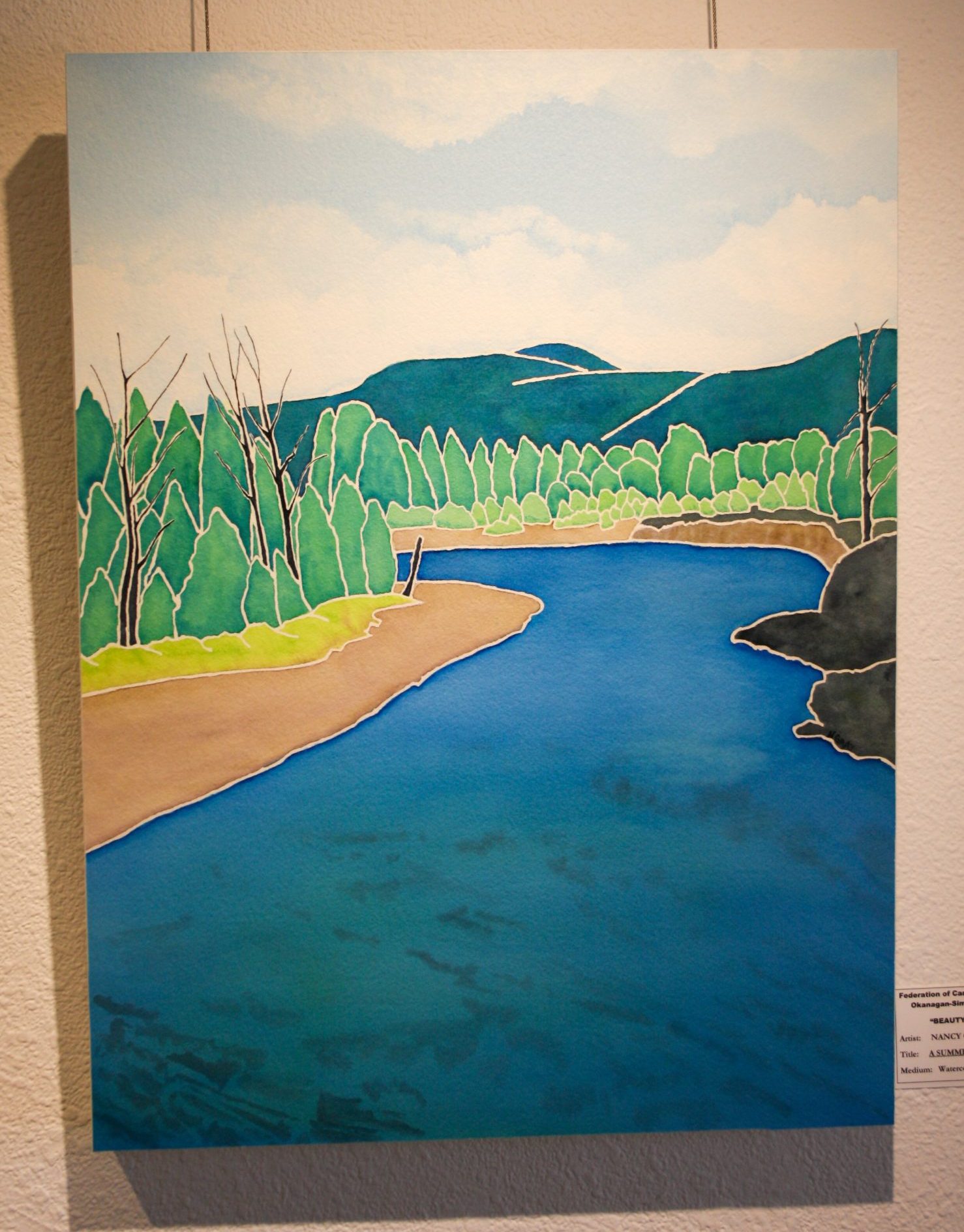
But continual advances in materials science have turned out to be a real boon for watercolour artists as there are now a number of options for protective coatings for artwork, some completely invisible to the naked eye. Jorden also points to one particular piece which features watercolour on canvas, also enabled by materials advances as traditionally it wasn’t possible or practical to use canvas for this medium. “This is an interesting piece,” he says, pointing to a transparent watercolour on canvas. “This is something that five years ago was unheard of but they now produce a kind of canvas that allows you to paint watercolour on it.”
For Jorden, he likes working with oils. “I am an oil painter. I like the traditional media and I can work with oils and watercolours whereas acrylics just completely defeat me,” he chuckles. He adds that he’s a ‘tonalist’ as compared to a ‘colourist’. “I primarily think in terms of dark and light, and colour comes later,” he says.
Acrylics have come to dominate, comprising over 50 per cent of the medium choice, he says, a choice made all the easier by its many advantages. Being essentially plastic it lasts practically forever, “probably outlasting the pyramids,” Jorden conjectures with a laugh. They’re also very stable, relatively user-friendly, are water-soluble and water cleanup is a plus too. And Jorden adds, for colourists they are easy to work with because you pretty much “get the colour you want straight out of the tube.”
The art of course isn’t just on the wall, the actual hanging of the art is, really an art in itself. “We’re trying to hang works that don’t compete with each other but support and work off of each other. This wall itself can be read as a composition as well and that includes things like the negative spaces between the artworks being somewhat regular,” he says, adding that pieces all need to be hung in about an hour and a half.” This job is the responsibility of gallery curator Claudia Punter, along with Jorden.
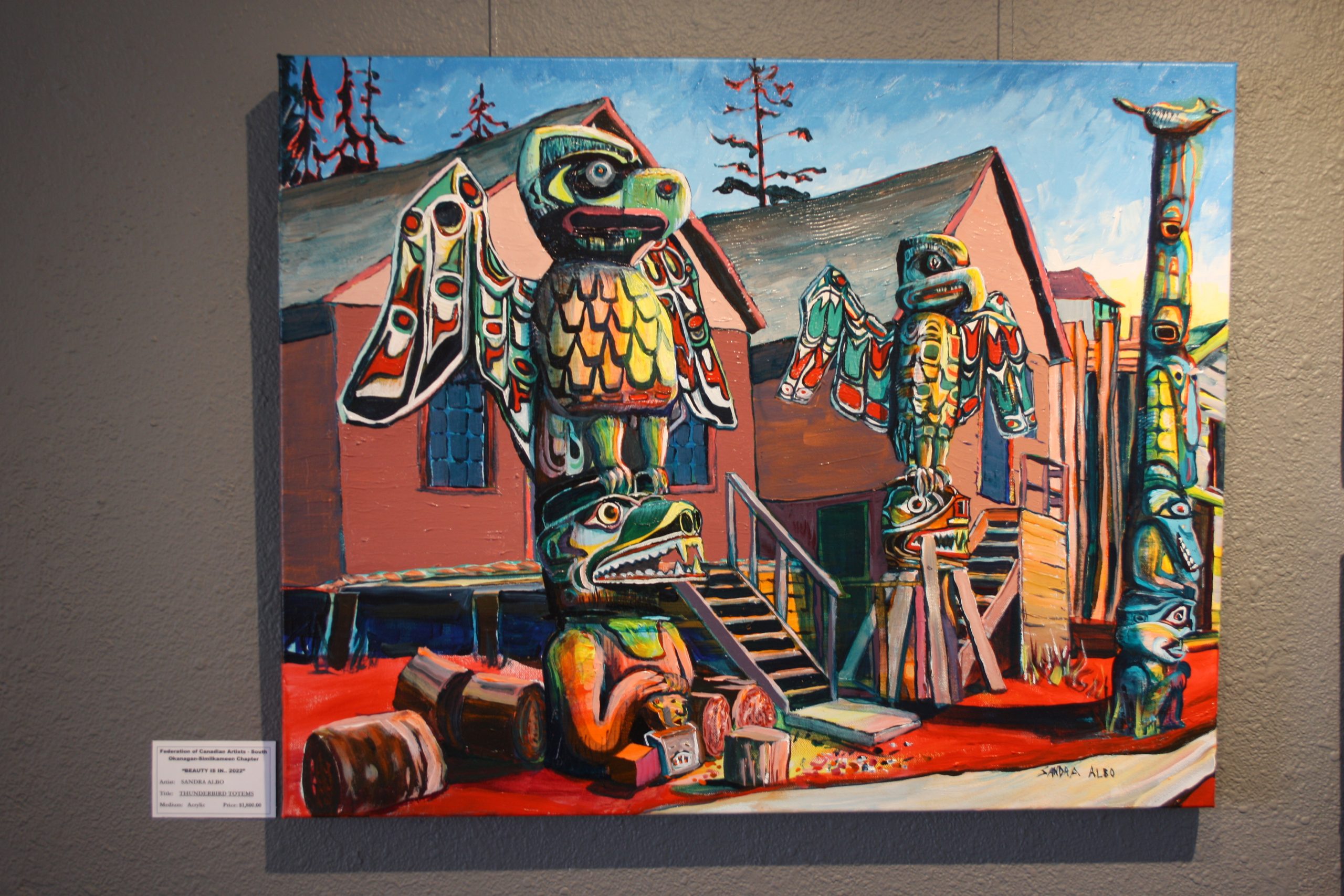
As we discuss the various artwork we stop at one particular piece which is acrylic on canvas but it’s got a resin surface on it giving it an almost luminous quality that immediately draws your eye to it. Next to it is another example of a ‘modernized’ traditional watercolour. Demonstrating the earlier conversation about the evolution of watercolour this piece is a transparent watercolour on paper, mounted on board and then sealed with a matt transparent protective coating.
The FCA-SOS show is on from March 12 to April 2 and all relevant COVID protocols apply including indoor masking. The gallery is still on non-summer hours and is open from noon to 4 p.m. from Tuesday to Saturday.