Although sustainability itself is a simple concept, applying sustainable ideas to our own lives can get a bit confusing. Especially when articles flood our timelines with (often conflicting) moral lessons.
Oliver local, Tracy Lydiatt, is here to provide some clarity around this problem. In her free online course, ‘How to Source Your Food Sustainably,’ she aims at providing a “knowledge bridge” to make complicated sustainability theory into practice advice for people.
The four-part masterclass will focus the issues within our global food system and understand ways in which we can apply sustainable living in our own lives through simple means. There are about 80 people already registered in the class from across Canada and the U.S.
Lydiatt is a sustainability specialist with a number of accolades under her belt. She has a masters degree in Strategic Leadership Towards Sustainability and has spoken at TEDx three times about sustainability.
This is the first time she will be doing a course on the subject through Sustainable Living School.
The global food system, Lydiatt explains, is structured in a large scale which makes it very inflexible. So if and when there’s a slowdown in demand, the effects are drastic.
“When the economy slowed down in March last year, the knock-on effect backwards is that farmers had to destroy millions of pounds of food that nobody was buying.” explains Lydiatt, adding that the forward problem is when there’s a shortage of a crop (perhaps due to a natural disaster), it hikes the prices way up.
The result of this large scale structure is an extremely fragile food system.
The course also keys in on the risk of food toxins that we intake without even knowing. Many major food producers grow their crops in a large monoculture, and end up having to use chemical-based pesticides to protect the vegetation, according to Lydiatt.
Many of these pesticides are also odourless and colourless, making it that much harder to avoid them.
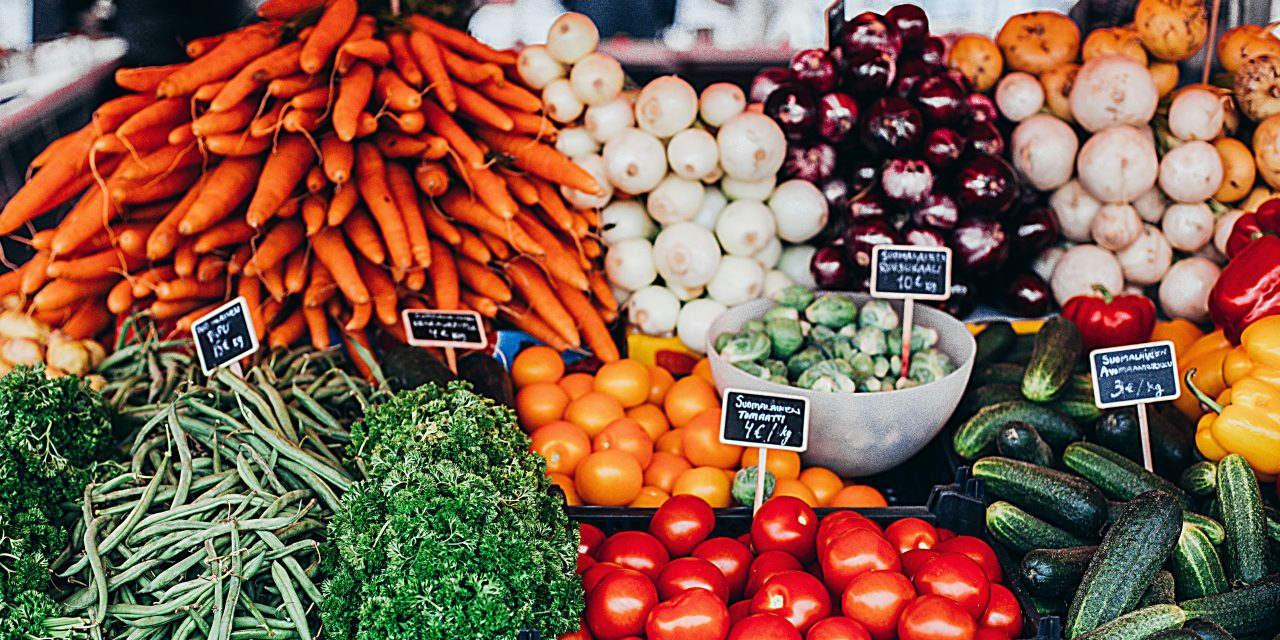
“We are disconnected from our food sources, grocery stores are incredibly convenient, and mask or hide those problems. We don’t ever see it. We just see whether there’s carrots or no carrots for sale on the shelf,” says Lydiatt.
With this heightened uncertainty around where our food comes from, Lydiatt’s course attempts to clear the fog. In an ideal world, everyone would buy locally from food produced in the region but it’s unrealistic considering most people don’t have that option.
“One of the biggest misconceptions is that you have to grow your own food or have a farm. And it’s a great gold standard to think about, but it’s really not possible for so many people for so many reasons,” says Lydiatt.
“I think there needs to be a stronger message of you need to do what you can in your context, and that’s a huge contribution as well. If everybody started doing that, the cumulative effect would be incredible.”
One of the ways Lydiatt hopes to help people is bring her vast knowledge to the table to show them the big picture problem, but also link it directly to them. For example, she mentions that many people are concerned about plastic waste these days, and so part of the course will talk about how to use bulk buying as a method to use plastic pollution.
“I hope to inspire people to understand that they do have places in their lives that they can make changes, and connected with those tools and strategies,” says Lydiatt.
‘How to Source Your Food Sustainably’ takes place online from April 6-12. Those interested can still sign up and stream the lessons on-demand until April 18.
Alternatively, Lydiatt will be doing another course under the same topic from May 10-16. To sign up for the class, visit: https://courses.sustainableliving.school/courses/may-2021-free-food