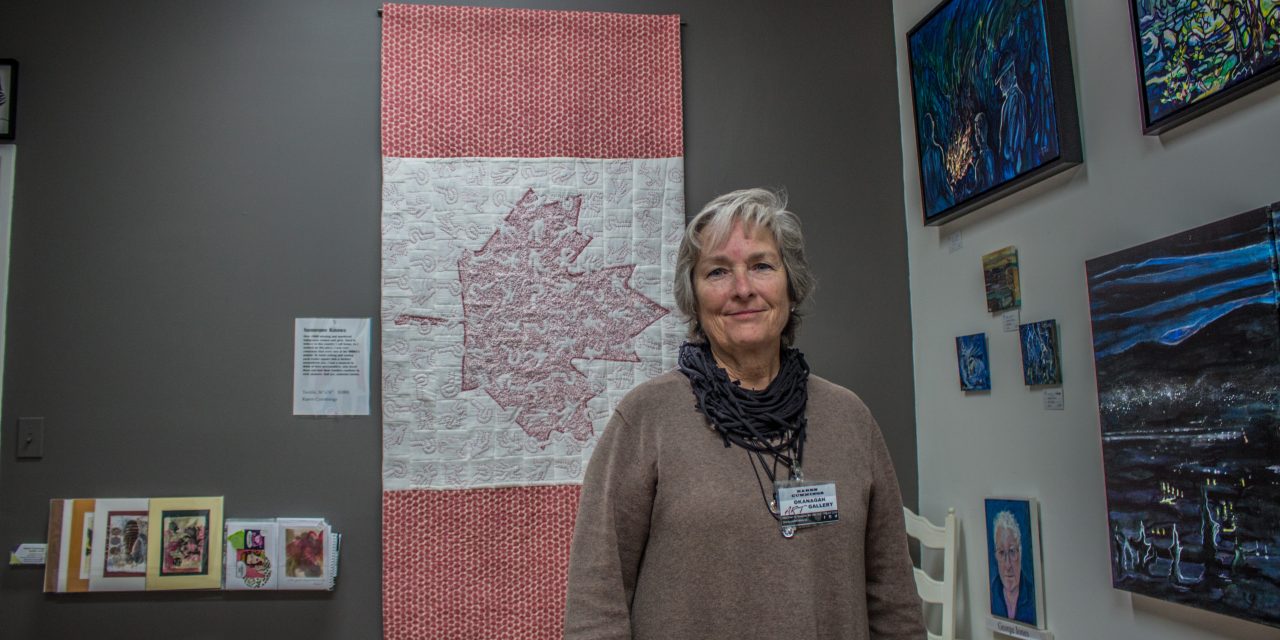
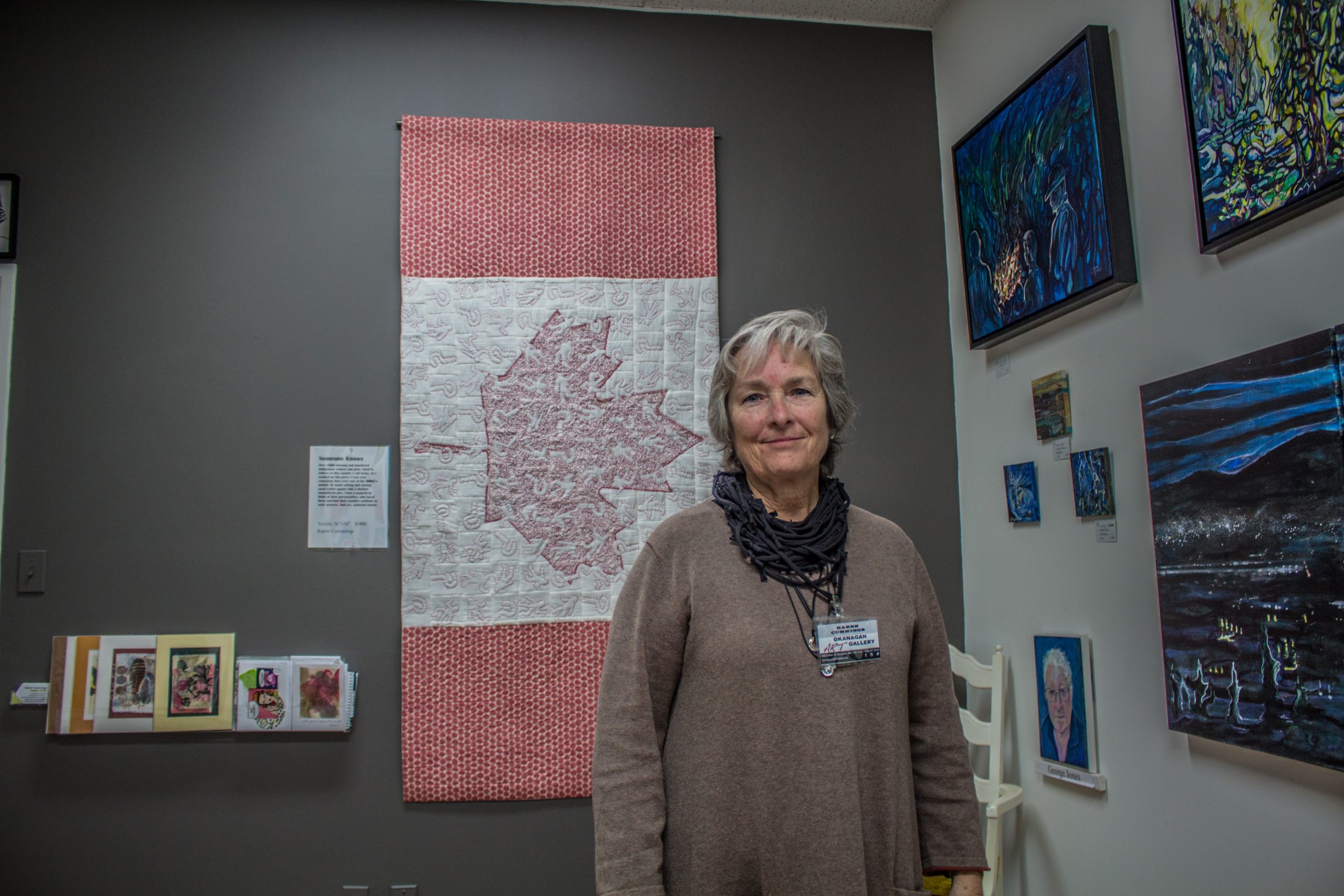
Hedley artist Karen Cummings’ new art piece at the Okanagan Art Gallery, titled “Someone Knows,” addresses Canada’s missing and murdered Indigenous women. (Vanessa Broadbent / Osoyoos Times)
By Vanessa Broadbent
Osoyoos Times
Canada’s missing and murdered Indigenous women are the inspiration behind a new art piece showing at the Okanagan Art Gallery in Osoyoos.
“Someone Knows,” a textile piece by Hedley artist Karen Cummings, aims to inspire awareness and conversations surrounding the epidemic facing Canadian Indigenous women and girls.
The piece is a standard-size Canadian flag, created completely from thrifted fabric.
The flag’s white stripe is 122 quilted squares with either a question mark or an outline of a body stitched onto the square with red thread.
• Read more: The Little Girl from Osoyoos: New Winnipeg-published picture book has local roots
In the two years Cummings worked on the piece, her vision for it changed: she initially optimistically planned to stitch 4,000 squares – one for every missing or murdered Indigenous woman – and each piece was neatly and symmetrically connected.
“I didn’t want it to look tidy so I started mis-matching all the seams so that each square got its own place,” Cummings said.
“I felt that was important because I wasn’t dealing with a situation where 4,000 women were killed at once – it’s one woman who’s been killed at a time and that means that there are 4,000 people out there who know about that one woman’s murder.”
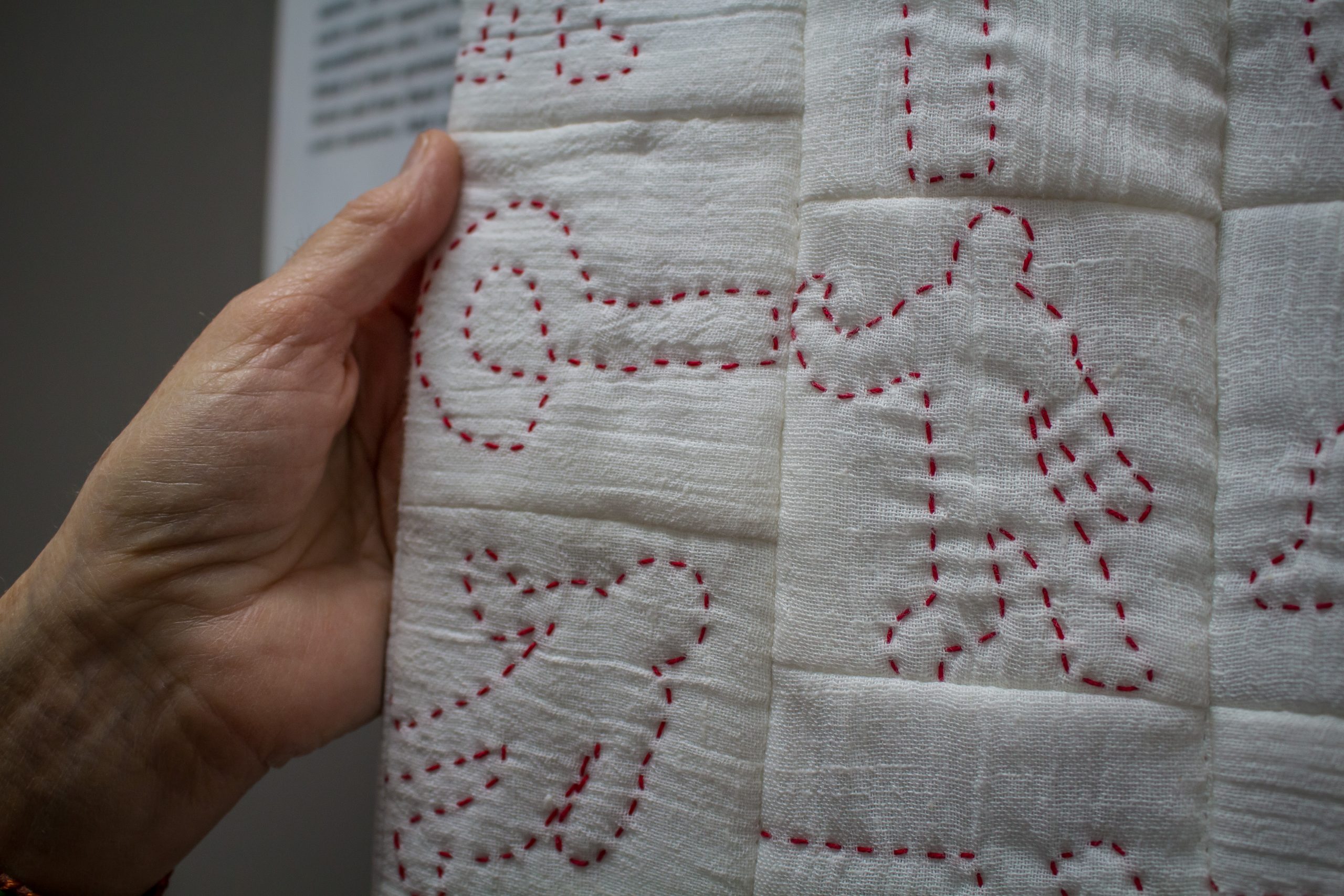
Hedley artist Karen Cummings’ new art piece at the Okanagan Art Gallery, titled “Someone Knows,” addresses Canada’s missing and murdered Indigenous women. (Vanessa Broadbent / Osoyoos Times)
While the National Inquiry for Missing and Murdered Indigenous Women and Girls final report released in June states that no reliable estimates for exactly how many Canadian Indigenous women have been missing or murdered, estimates range between 4,000 and 5,000.
A 2014 report ordered by former Prime Minister Stephen Harper’s administration found that 1,181 Indigenous women went missing or were murdered between 1980 and 2012.
“To think about the women, many of them were mothers or wives, sisters, all of those things, they had whole, complete personalities and lives and the sad part is that nobody knows,” Cummings said.
“I can’t imagine what that feels like to have someone from your life disappear because you would constantly search for them, think you saw them, think you’re going to hear from them – all of those continuing thoughts that are hopeful, knowing really in reality that they’re dead.”
• Read more: Empty Bowls: Osoyoos Potters’ final year of involvement in popular fundraiser
It took balance to symbolize the epidemic facing Indigenous women and its place within Canada’s history in a respectful way, Cummings said.
“Canada is a great place to live and we love Canada, we’re proud as Canadians, but that doesn’t mean that our history has been 100 per cent pure or stellar,” she said.
“Going forward we must continue to address this issue and other issues that will continue to make us a better country. It may not be easy for us and it may inconvenience us and it may put some hardships on some of us but we need to solve the problem.”
“Someone Knows” is on display at the Okanagan Art Gallery until Nov. 15. After that, Cummings is showing it at the Downtown Eastside Centre for the Arts in Vancouver.