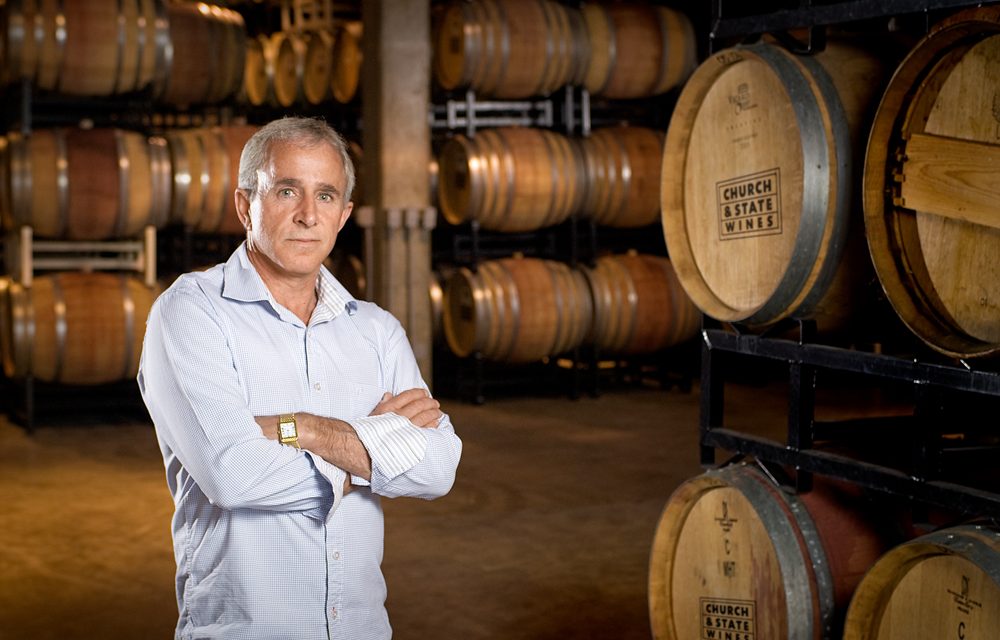

Kim Pullen from Church and State Wines in Oliver fears that allowing some grocery stores to sell certain wines will be disastrous for BC’s wine industry.
Some British Columbia winemakers are warning that the provincial government’s decision to allow grocery stores to sell wine will hurt small- and medium-sized wineries.
Kim Pullen is the proprietor of Oliver’s Church and State Wines, and a spokesperson for the B.C. Alliance for Smart Liquor Retail Choices. The alliance feels that recent changes to liquor laws allowing some grocery stores to sell certain wines is disastrous for the province’s wine industry.
“When you start moving wine or alcohol into grocery stores it’s a complete game changer. It will change everything that has to do with the retailing of wine,” Pullen said. “Grocery stores are dramatically different in the way they sell than a private liquor store or one of the VQA liquor stores.”
He explained that while independent liquor stores have a breadth of knowledge and expertise, grocery stores aim simply to offer goods at the lowest price point.
Pullen explained with price as a primary focus, big wineries that produce their product for less are at an advantage, and will likely get most grocers’ business.
“The grocery store channel favours large producers who have sufficient economies of scale to work on low profit margins,” the alliance said in a recent press release. “Only the larger wine producers will benefit.”
In other jurisdictions where the switch from small retailers to grocery stores was made—such as New Zealand and California—small- and medium-sized wineries losing shelf space in grocery stores were able to adapt by selling their products directly to their customers.
But in Canada, laws restrict wineries’ ability to sell out of province.
“We’re not going to be able to even engage in trying to rebuild our businesses through direct-to-consumer marketing” Pullen said, adding that he believes this will lead to a market monopoly by a few major wineries.
“I think somebody needs to sit back and say ‘do we want an industry or not?’ And if we want an industry, do we want four or five monster players, or do we like this collection of small and medium-sized wineries?”
Rob Verbaan is an assistant manager at Buy-Low Foods in Oliver. Although he doesn’t speak on behalf of the company, his experience managing the store leads him to believe that some of the alliance’s concerns aren’t valid.
He explained that grocery stores have incentive to stock local products if consumers look for them. He pointed to his store’s produce section, where a number of local fruits and veggies are sold, and said he doesn’t think wine would be any different.
“If we were doing that [selling wine] we wouldn’t be any different I think in grocery than we are in produce. We get lots and lots of produce from local suppliers, so I don’t think it will be any different with wine than it would be with produce.”
Verbaan also guessed the issue wouldn’t end up being a big deal in Oliver because both of the town’s grocery stores are close enough to private liquor stores that the new laws would not allow them to sell most liquor.
While that is true, the restriction doesn’t apply to VQA wines, which are made 100 per cent in British Columbia. This means that technically Oliver could see wine on grocery store shelves in the future.
Verbaan hasn’t heard anything about that from his company, but personally thinks it’s a good thing.
“Canada’s only really just catching up to the world. It’s that way in the rest of the world. Canada is one of the few countries that is not that way. You go to Europe, you go to the grocery store you get your wine, you get your beer, you get your hard liquor, you get your groceries and you go home,” he said.
According to Attorney General Suzanne Anton, only a few licences permitting B.C. grocery stores to sell wine have currently been issued. The B.C. Alliance for Smart Liquor Retail Choices doesn’t want to see any more, and is calling for an immediate moratorium on new licences.
Pullen stressed he is not against the idea of selling wine in grocery stores, he’s “opposed to doing it without further study, and without the opportunity to put in some checks and balances.”
He said the alliance would like to see the government to “take a pause” of six months and do more study of the long-term impacts of allowing wine in grocery stores.
He said he would like to see a working group established to do that, composed of representatives from the wine industry, the retail industry and people who have studied the issue in the past.
Government representatives could not be reached for comment by the Chronicle’s press deadline.
By Trevor Nichols