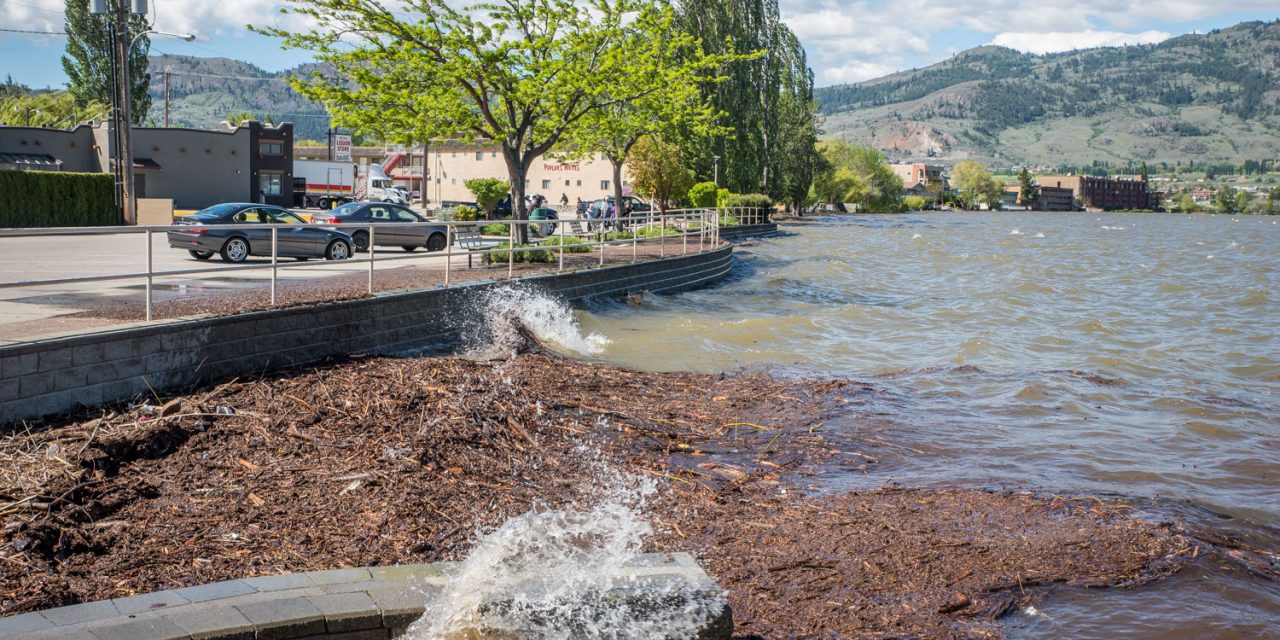
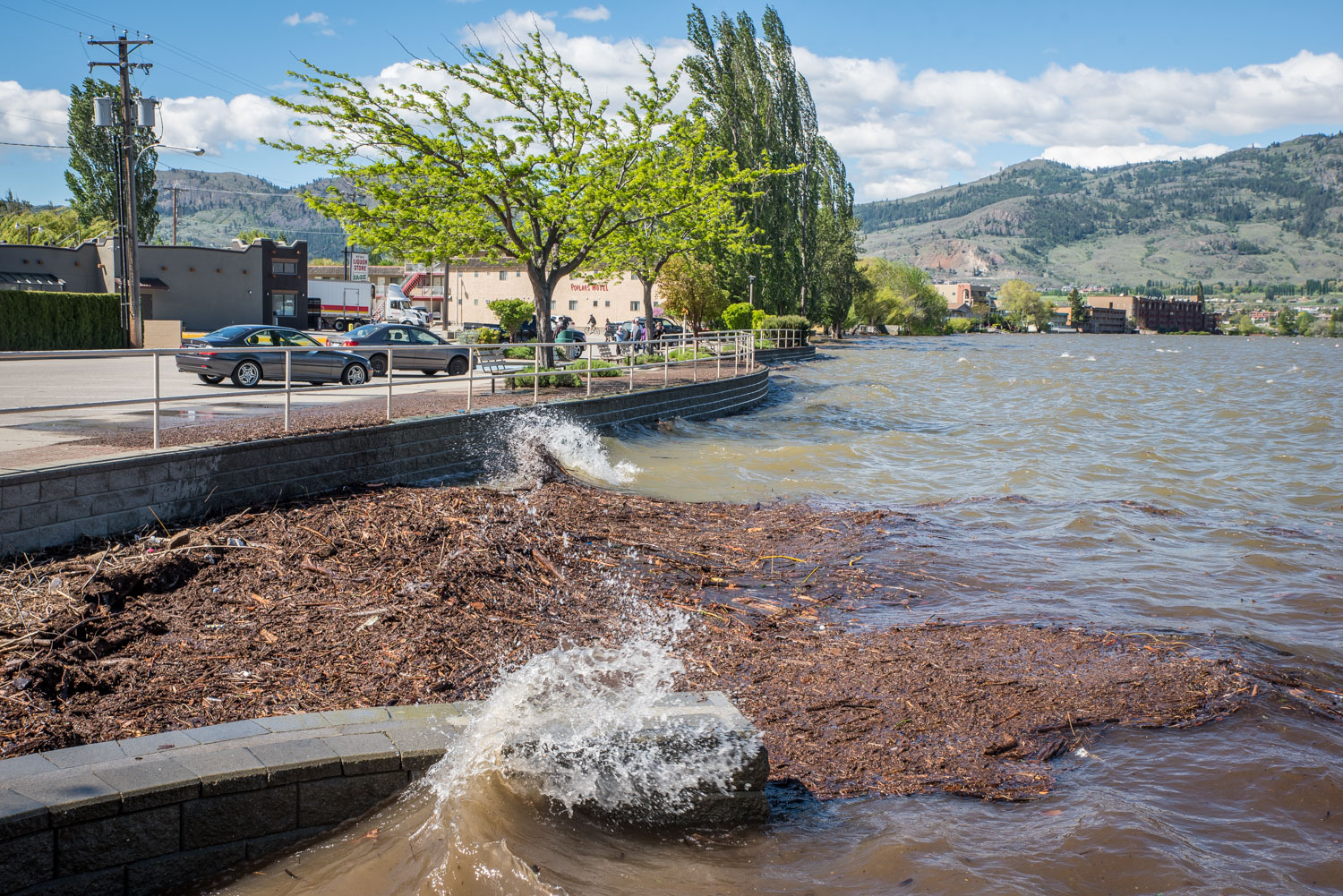
In mid-May Osoyoos Lake hit 916.39 feet above sea level and Cottonwood Beach was completely under water. (Richard McGuire photo)
Lyonel Doherty
Aberdeen Publishing
Floodwaters move fast, so prepare now for potential high water this spring.
That’s the advice from the regional district as it braces itself for the annual freshet.
They advise people in flood-prone areas to develop a household plan, build an emergency kit and connect with their neighbours.
Re-assess your property to determine if you need permanent works (sandbags) to protect your home. Always seek professional advice and appropriate permission, regional officials say.
“When building new structures, ensure flood construction levels are followed,” the RDOS advises.
Think about items you can move to safety, and know how to turn off your electricity and water. Check your insurance coverage, and make plans to stay with friends if necessary.
Property owners must take preventative measures to protect their homes because it’s nobody else’s mandate to do this.
• Read more: Time to rethink approach to floods, speaker says
The regional district only has the ability to undertake emergency measures when a state of local emergency is declared. It does not have jurisdiction on roads, right-of-ways, highways or creeks.
A three to seven-day emergency kit should include the following: First aid kit, prescriptions and medications, toiletries, AM/FM radio, food, water, pet needs, seasonal clothing, blanket, cell phone charger, spare batteries, pen and notepad, combination pocket knife, spare keys, whistle, waterproof flashlight, cash, ID, passport, credit card, copies of insurance and other important documents.
In addition to an emergency kit at home, people should have a “grab-and-go” bag (first aid kit, medications and important documents) for your work and vehicles.
During an emergency, you and your pets may be on your own for several days. So preparing for your pet is just as important as preparing for the human members of your family.
Complete the PreparedBC Household Preparedness Guide, make a pet plan, note veterinarian information, pack for your pets and talk to your neighbours. For more information on this, visit www.cdart.org/beprepared.htm.
For more tips and resources, visit these websites: www2.gov.bc.ca, www.emergencyinfobc.gov.bc.ca, and www.rdos.bc.ca.