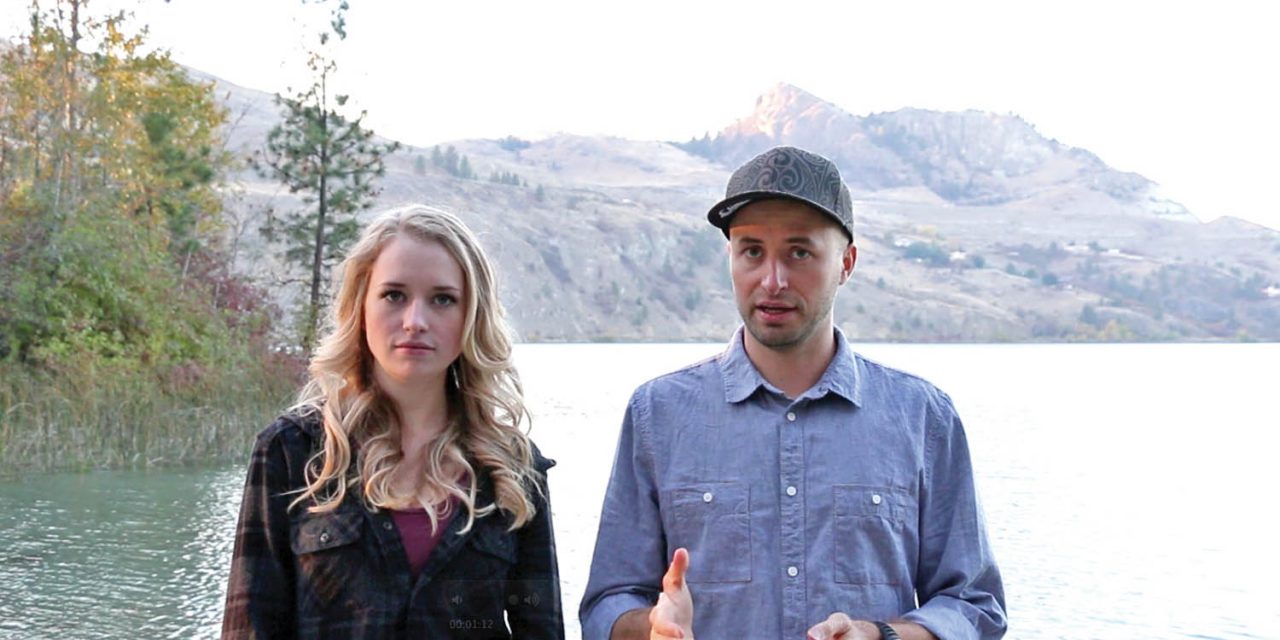
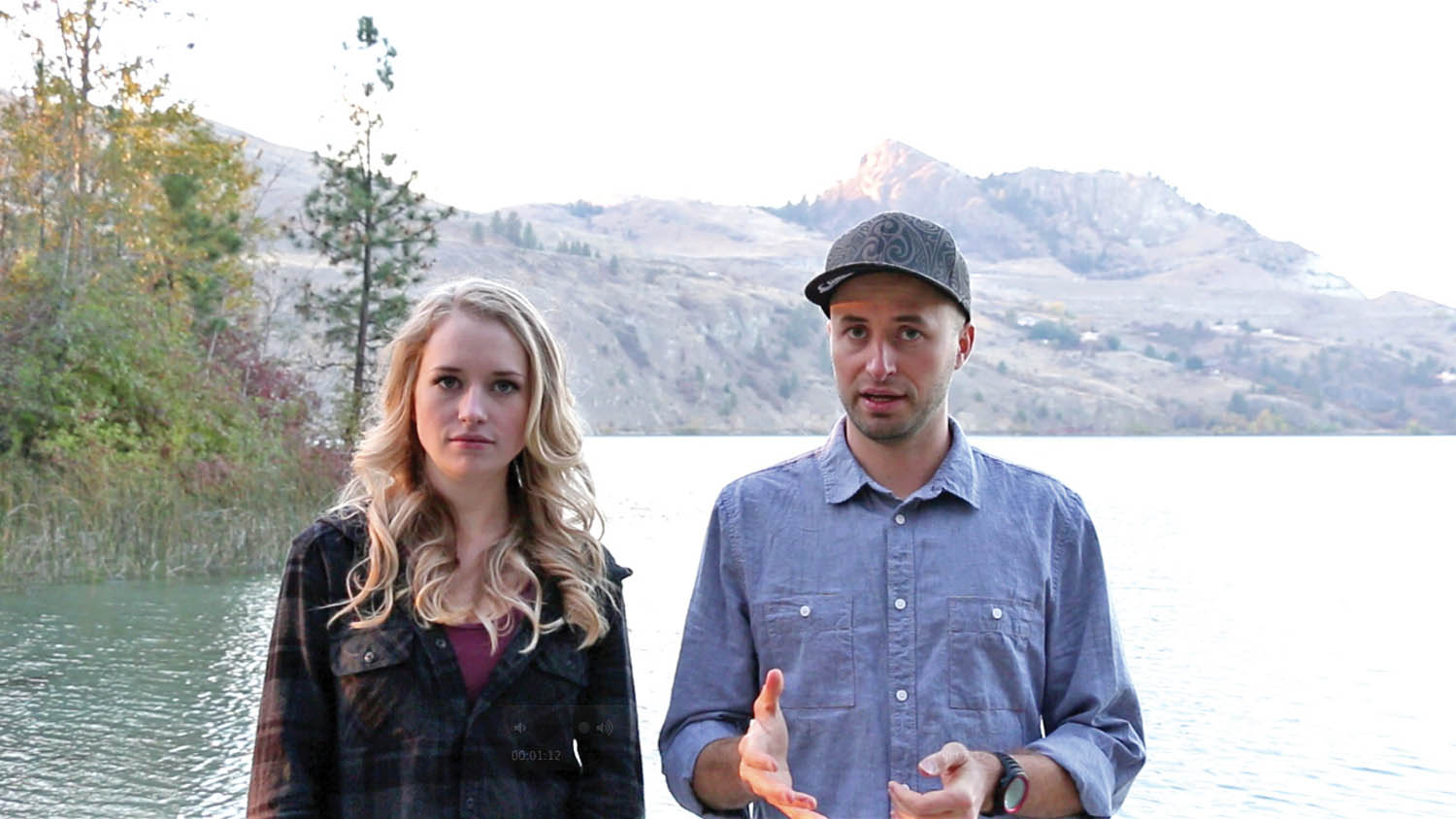
Brynne Morrice (right) made the film Mussel Threat with help from his sister Eilidh Morrice-Ashdown (left), his co-producer. The film uses strong images to show the environmental destruction caused by zebra and quagga mussels elsewhere and to argue for inspection stations at B.C.’s borders. (Photo supplied)
A new short film graphically shows the destruction that invasive mussels could bring to B.C.’s waterways and calls the province’s recently announced mussel program “clearly not enough.”
Brynne Morrice, who splits his time between New York City and the Okanagan, made the film after seeing a billboard about the mussel threat a couple summers ago and then educating himself on the issue.
The film, Mussel Threat: Protecting B.C.’s Freshwater, premiered last week at a news conference in Kelowna.
Morrice has also posted it to Vimeo, where people can view it online for free.
The part-time New York actor and filmmaker, who is originally from Vernon, raised more than $5,000 on the crowdfunding website Kickstarter – including $2,000 in the first three days.
The campaign began last November when Morrice posted a video of himself talking with his sister, Eilidh Morrice-Ashdown, who later co-produced Mussel Threat with him.
The two set out to interview dozens of people on both sides of the border.
Many of those interviews, including one with former Osoyoos Mayor Stu Wells, didn’t make it into the film as Morrice struggled to keep it under six minutes long.
“I wanted people to watch it and not say, ‘Oh, that’s too long. I’ll watch that later,’ and never watch it,” he said. “We really want people to see it.”
There are, however, interviews with such people as Anna Warwick Sears, executive director of the Okanagan Basin Water Board (OBWB) and Heather Larratt, an Okanagan aquatic biologist, who calculated the annual costs to mitigate a mussel infestation of the Okanagan at $43 million a year.
He speaks to residents of the West Kootenay community of Christina Lake about the value they place on their water and the threat that mussels pose.
Most chilling, however, are the interviews and film footage from places where zebra or quagga mussels have already taken hold, including on Lake Mead in Arizona.
People there, he said, have been dealing with mussel damage since 2007 and they’re weary, as mussel shells now coat everything in the lake.
“It’s a nightmare for them to deal with,” he said. “It’s completely changed the lake.”
What struck Morrice the most was the magnitude of the destruction caused by these invasive species that originated in Eastern Europe and have been spread throughout North America by recreational boaters.
“In Lake Michigan, which is one of the first places that got infested, there are now over a quadrillion quagga mussels,” Morrice says. “We can’t even really fathom how much that is, because 1,000 trillion becomes a quadrillion and that’s only mussels. They are literally carpeting the lake bottom from shore to shore.”
The mussels have killed off sport fish like trout and salmon in the waterways they’ve invested. Their feces can cause a blue-green algae that creates a toxin poisonous to animals and people. Swimming beaches are shut down as a result of the toxin and water treatment facilities can’t handle it.
The B.C. provincial government announced on March 31 that it is committing $1.3 million over three years to fund three roving inspection stations throughout the province.
Morrice insists this isn’t good enough and at the end of the film he asks viewers to urge the B.C. government to do more by establishing permanent inspection stations at entry points into the province.
This is what the OBWB has been calling for.
“It’s like putting up a fence with holes in it,” he says. “It needs to be an unbroken wall of defence. All it takes is one boat to destroy our waters. They will be stopping some boats, but that’s not really a strategy because that’s just hoping to get lucky. “There’s still a very high likelihood they will miss the one boat that comes across with mussels. Once it’s in one lake or river it’s going to be just about impossible to stop it spreading.”
Morrice plans to use the internet to circulate the film, though he is considering a short tour of B.C. to show the film.
“It’s about getting it out there,” he said. “Whatever I can do to get it in front of as many people as possible, that’s the job right now.”
Although he’s put some of his own money into making the film, he hasn’t made a dollar from it and doesn’t plan to.
“It’s a personal project that I’m doing because I love B.C. and I love our lakes and rivers,” said Morrice. “It would break my heart if they were destroyed the way I’ve seen in places where it’s happened. It’s pretty upsetting.”
Mussel Threat can be viewed online at http://vimeo.com/protectourfreshwater.
RICHARD McGUIRE
Osoyoos Times
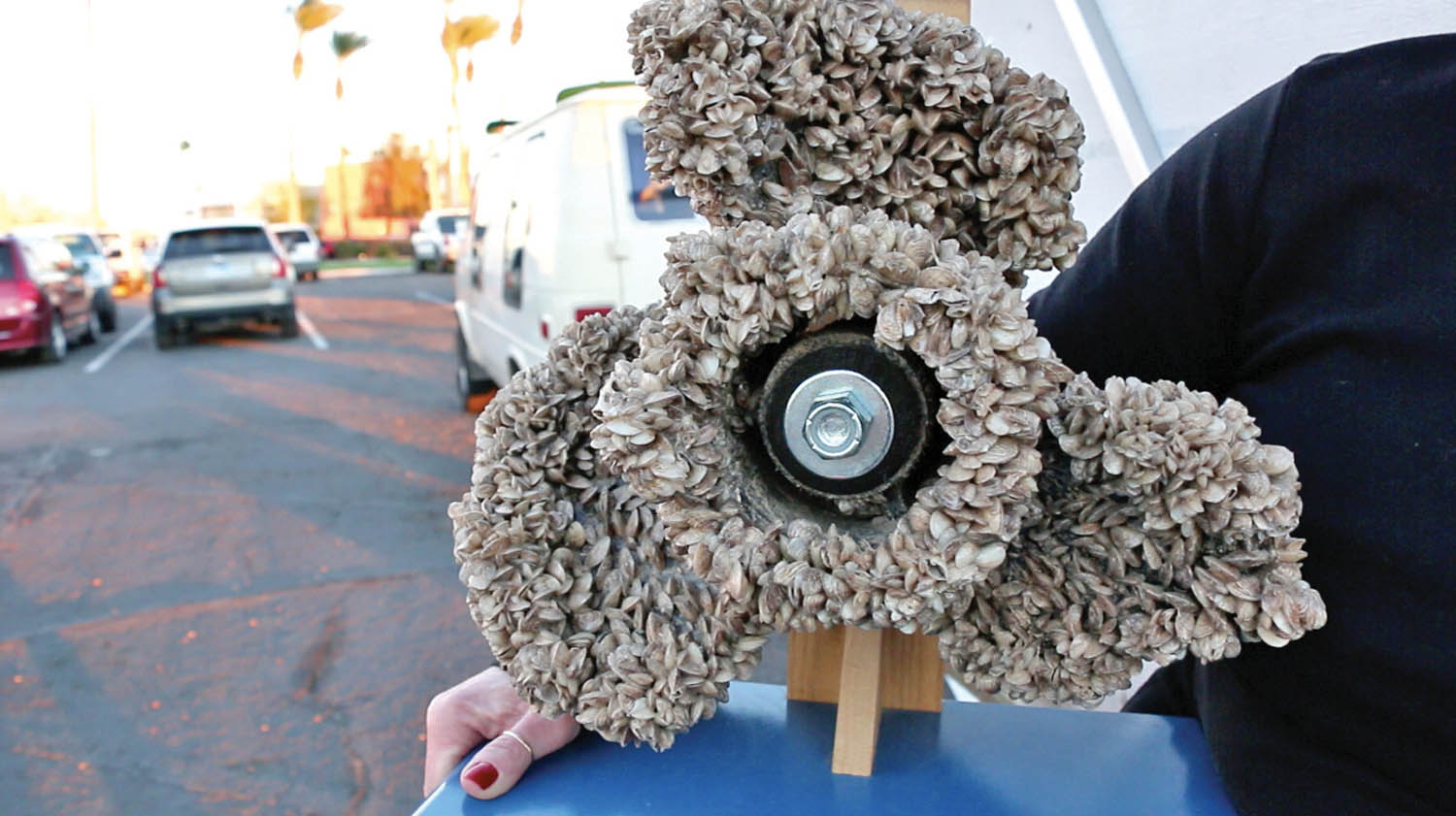
Invasive mussels cover a boat propeller. (Photo supplied)