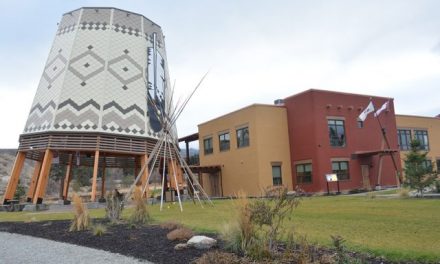

If approved by the Agricultural Land Commission, Phantom Creek, a winery being constructed on Black Sage Road, will have a restaurant and drinking establishment, and banquet facility. (Facebook)
By Lyonel Doherty
Aberdeen Publishing
The regional district has authorized a non-farm use application from Phantom Creek Estates winery to proceed to the Agricultural Land Commission (ALC).
At a recent meeting, regional directors voted to allow an eating and drinking establishment and banquet facility within the Agricultural Land Reserve (ALC) at 4315 Black Sage Road. But the ALC makes the final decision.
The applicant states that a fine dining winery restaurant at Phantom Creek Estates will support the winery and its sales and marketing objectives.
“It is only natural to have a restaurant to best showcase our wines,” the owner states. The owner added the banquet facility will further diversify their licensing and enable them to be comparable to other world class wineries. The facility will be used for viticulture and wine industry events, fundraisers and occasional weddings.
Regional district planner Chris Garrish said the board previously amended a bylaw to introduce a new definition of winery to include an eating and drinking establishment.
• Read more: Local winemakers excited about this year’s vintage
Garrish said regional staff still has many concerns regarding approval of restaurants and banquet facilities in the ALR. Some of these include: erosion of the agricultural land base due to larger structures and expanded parking; impact of more people, traffic and noise; complaints and conflicts with other types of agriculture; and pressure for other non-farm related amenities.
Garrish said such uses should be directed to the Town of Oliver (as the commercial hub for the area).
But the planner said they recognize the previous amendment and the fact Area C’s Official Community Plan encourages secondary, value-added uses on agricultural land.
But the current definition of winery is not seen to contemplate banquet facilities, Garrish said, adding the ALC does not allow the construction of facilities to support the holding of events or gatherings.
However, he noted the property owner will require an amendment to the zoning bylaw prior to undertaking the project.
Garrish said while regional administration has concerns regarding the proposal, it recommended the authorization to proceed to the ALC for its final decision.
Area C director Rick Knodel admitted he has mixed feelings about this application.
“To be honest, I’m not totally in favour of it,” he told the Chronicle, noting his concern about the continued loss of agricultural land.
• Read more: New executive chef bringing passion for Indigenous culinary to Spirit Ridge
But he stated it would have been improper for the board not to forward the application to the ALC considering the precedent that has been set with expanded wineries such as Tin Horn Creek and Burrowing Owl.
Knodel said he realizes the necessity of adding value to the agriculture industry, so he doesn’t see the Phantom Creek proposal as a big concern.
But it sticks in his craw that the ALR is slowly being whittled away.
He recalled all those houses around Tucelnuit Lake used to be farmland, but many of those farms had side businesses that were necessary for survival.
Pinder Dhaliwal, president of the BC Fruit Growers’ Association, said he supports the “value-added” approach that wineries are using to pair their products with food and other commodities.
“If you look around, everybody else has it, so why stop someone else (Phantom Creek) from doing it? It’s value-added . . . it’s something to bring people here, it’s great for tourism.”