Dale Boyd
Osoyoos Times
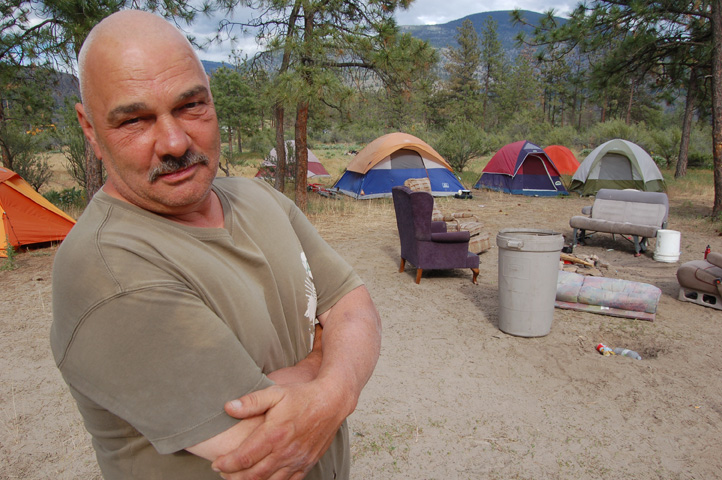
About 50 campers are expected to arrive at the Loose Bay campground on opening day May 1 as the regional district is now taking over operations of the campground annually occupied by seasonal agricultural workers.
The Loose Bay Campground Society, run by a group of orchardists and vineyard owners, managed the site until the society dissolved on Monday, leaving the Regional District of Okanagan-Similkameen (RDOS) running the campsite due to ministerial orders on handed down on April 23 relating to work sites during the state of emergency.
Liability and lack of resources forced the Loose Bay society to dissolve Monday, according to chair and orchardist Allan Patton, who is now advising the regional district.
The RDOS is now in the process of hiring a COVID-19 coordinator for the camp and working with the two staff members who are usually on site to be ready for the opening day.
“This is obviously a rapidly changing scenario, we’re still interested in having an orchardist or farm workers group be in charge of the camp, but regardless of what happens there because of that order from the public health officer we do have a responsibility to make sure we are in control of the prevention and inspection protocols that have come out for various types of camps,” said Bill Newell, CAO of the RDOS.
The RDOS is now liable and responsible for the site, Newell said, and are working in cooperation with the staff, AgSafeBC and the BC Fruit Growers Association (BCFGA), who typically conduct orientation for farm workers on the site, and will continue to do so this year. A BCFGA employee will be attending farms to provide training as well.
“We don’t have any experience running a campground, but we are going to be in the business,” Newell said.
Loose Bay is a public campground, limiting the ability of the regional district to control the site fully, according to community services manager for the RDOS, Mark Woods.
“So we are addressing this from an education and information perspective. (Campsite employees) are very familiar with their clientele and they’ve got a lot of returning people,” Woods said.
The campground can hold up to 300 people at maximum capacity, though it is unclear how many will be making use of the site this year.
The specific procedure if someone at the campsite is sick is being worked out “moment by moment,” Woods said.
“We’re talking about people who may or may not be interested in talking to us about it. To simply say then ‘fine you’re not allowed to stay here,’ that just puts them out into the community somewhere,” Woods said. “This is new territory for us so we are leaning on those agencies that are comfortable with this, Interior Health and all the various components of that large organization, we’re tapping in to them to see how we should work this through.”
The regional district is also exploring different self-isolation options either on-site or at local hotels.
“That’s how the Ministry of Agriculture has done it with temporary foreign workers, they’ve negotiated deals with hoteliers that are willing to have people in their rooms for really months on end because those foreign workers will be here for some time,” Woods said. “That’s a big process as we know, we don’t have a lot of rooms in the South Okanagan. Right now, it’s moment by moment.””
The regional district’s COVID-19 coordinator will provide orientation to campers who arrive on site, including checking their state of health and managing campers to ensure they are keeping their distance. Should a camper test positive for COVID-19, that’s a “different matter,” Newell said.
“I think we would be working with (Interior Health) on that.”
A request has been made to the province to have a mobile COVID-19 testing site available for the camp, but the response from the ministry did not give a definite answer, and the RDOS will be following up.
The two employees who normally run the campground are paid for with camp fees, while the regional district will be looking to the province for funding to cover the costs of the COVID-19 coordinator for the season.
Anecdotally, transient and foreign workers have already arrived in the South Okanagan.
“(Transient workers) will spread outright through the province, and rightly so, there’s farms right through the province that are smaller farms and don’t qualify for the foreign worker program, therefore they rely on the transient worker to stop through for a day or two, or three, a week, and fill voids” said Area C (rural Oliver) Director Rick Knodel. “So the employer responsibilities, that will be a huge training program.”
Discussions will have to continue surrounding the RDOS running Loose Bay, with the Crown tenure on the land coming to an end in a year.