By Sebastian Kanally, Times Chronicle
A new 10-year plan for Parks, Trails and Recreation has been approved by the Regional District of the Okanagan-Similkameen (RDOS) board to serve as a guiding document going forward.
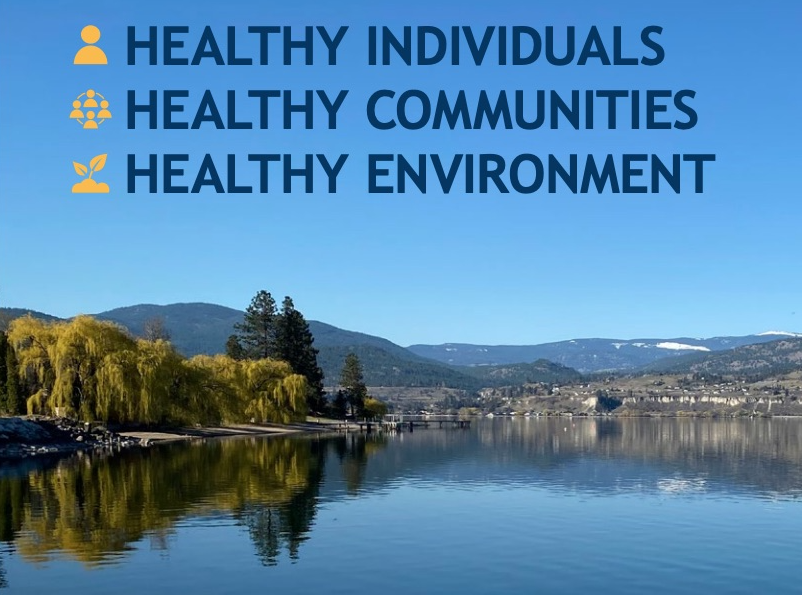
This master plan is known as “Healthy Individuals, Healthy Communities, Healthy Environment” and provides a long-term framework as a guide to future decision making in the region. The plan notes that great parks, trails and recreation systems don’t just happen, “they require strategic planning, appropriate investment, and proactive management.”
The plan was in front of the board to be “received as a guiding document”, not to be confused with “received for information”. This prompted Director for Area F, Riley Getens, to query, “what are we saying to staff by receiving a guiding document?” He also noted, “it’s massive, it should almost be three different plans with budgets attached to it.”
The plan is over 200 pages with different sections for Parks, Trails, Recreation, Desired Outcomes, Overarching Strategies and more.
Mark Woods, Senior Manager of Community Services, answered Getens’ question: “one of the primary uses for this is to give us some guidance towards the strategies deployed in that system, it talks about everything from acquisition to operation to how we share, so a lot of really good guiding principles.”
He further added that “it certainly would not limit what we do financially.” Plans will be developed, in accordance with these guiding principles and then when it has financial implications we bring it back in for consideration. “We will always use it as a foundation for decision making.”
The contract to create this plan was awarded to RC Strategies, in January 2021, to develop a 10-year Regional Parks, Trails, and Recreation master plan.
While this plan provides specific direction for regional services (e.g. regional parks, regional trails) it will also serve as a framework to ensure regional alignment and priority setting as electoral areas deliver local parks, trails and recreation services.
In order to gather input and build support for the plan, “a diverse engagement process” involving over 1,000 residents, stakeholders, parks and recreation commissions, and elected officials as well as staff from the Regional District, local, and provincial governments, was implemented.
A total of 821 of these respondents have a primary residence in the region, which broke down to 12 in Rural Osoyoos, 15 in Rural Oliver, 14 were in the town of Oliver, and four were from town of Osoyoos.
There were multiple desired outcomes for the plan, including, “active, healthy living and connected communities”, “inclusive and equitable access”, “climate change adaptation and resilience”, “truth and reconciliation”, to name just a few.
It is noteworthy that one of these is truth and reconciliation, and of the respondents to the engagement process, only one person each in the Penticton Indian Band, Osoyoos Indian Band, and Lower Similkameen Indian Band reserves were present in the results. This can be compared to 33 people outside of the RDOS that have recreation properties being considered.